
Latest Post




Quality Management Courses



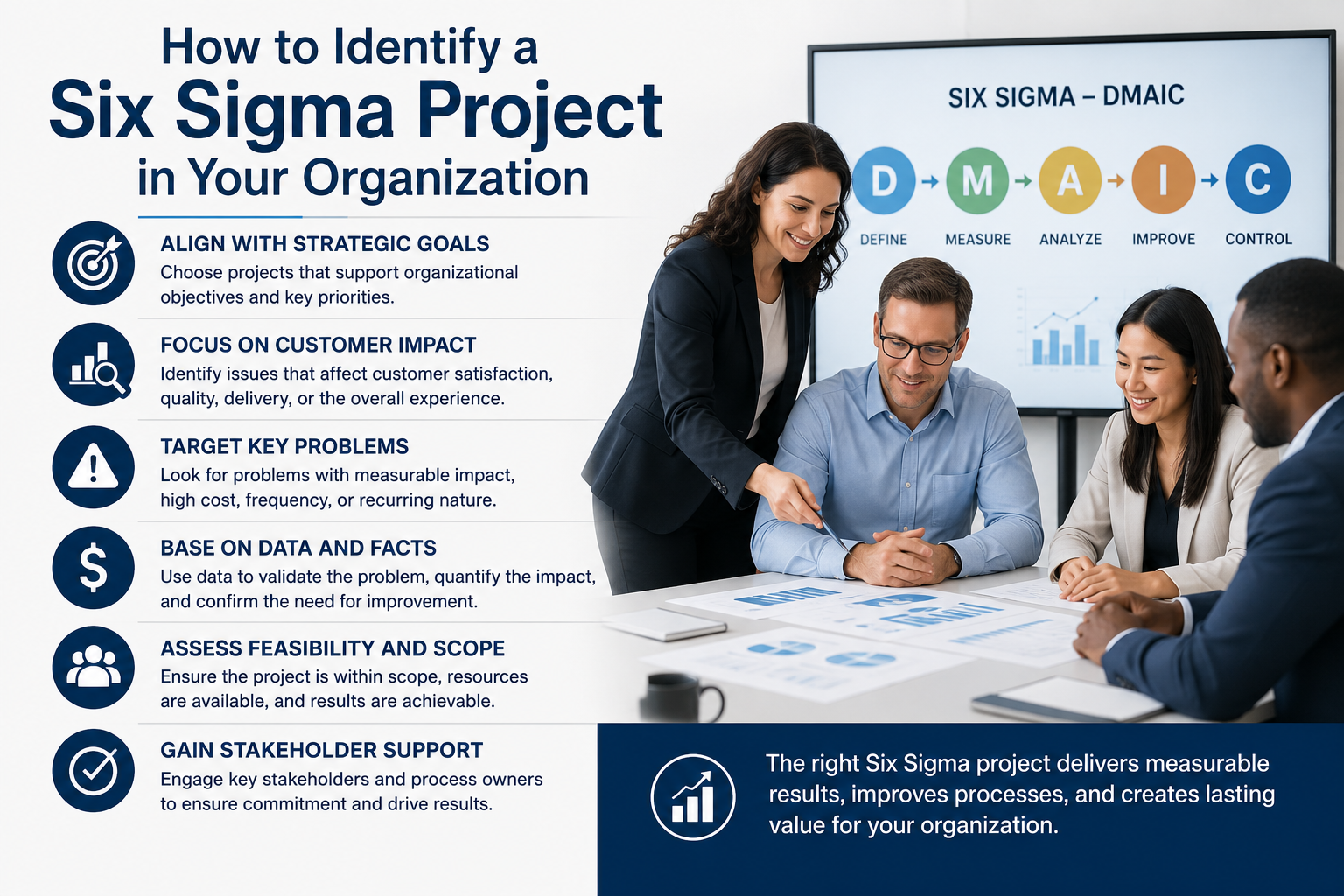

How to Identify a Six Sigma Project in Your Organization
In today’s competitive business landscape, organizations are continuously seeking ways to improve efficiency and reduce waste. One of the most effective methodologies for achieving these goals is Six Sigma. However, the first step towards a successful Six Sigma initiative is the careful selection of a project. In this guide, we will explore how to identify a Six Sigma project in your organization, ensuring that your efforts yield measurable results.
Understanding Six Sigma Project Selection
Before diving into the specifics of project identification, it’s essential to understand what Six Sigma entails. Six Sigma is a data-driven approach that focuses on improving processes by identifying and eliminating defects, thereby enhancing quality. The success of Six Sigma projects hinges on selecting the right projects that align with an organization’s strategic objectives.
Why is Project Selection Important?
Choosing the right Six Sigma project is crucial for several reasons:
Steps for Six Sigma Project Identification
Now that we understand the importance of selecting the right project, let’s delve into the steps for identifying a Six Sigma project within your organization.
Step 1: Identify Organizational Goals
The first step in the Six Sigma project selection process is to identify the overarching goals of your organization. This could include objectives such as:
By aligning potential Six Sigma projects with these goals, you can ensure that your efforts contribute to the overall success of the organization.
Step 2: Gather Data
Data is at the core of Six Sigma methodology. To identify potential projects, gather relevant data that highlights areas needing improvement. This could include:
Analyzing this data can help pinpoint specific problems that a Six Sigma project could address.
Step 3: Engage Employees
Employees are often the best source of insight regarding operational issues. Conduct brainstorming sessions or surveys to gather their input on potential areas for improvement. This engagement not only helps identify potential projects but also fosters a culture of collaboration and ownership.
Step 4: Prioritize Potential Projects
Once you have a list of potential projects, prioritize them based on factors such as:
Creating a scoring system can help in objectively evaluating each project’s potential value.
Step 5: Validate Project Selection
Before finalizing a Six Sigma project, validate your selection with stakeholders. Present your findings and rationale for the selected project and seek feedback. This step ensures that everyone is on board and increases the likelihood of project success.
Common Areas for Six Sigma Project Identification
Some common areas where organizations can identify Six Sigma projects include:
1. Manufacturing Processes
In manufacturing, there are often numerous opportunities for process improvement, whether it’s reducing cycle times, minimizing defects, or optimizing resource utilization.
2. Customer Service
Improving response times, reducing errors, and enhancing overall customer satisfaction are prime areas for Six Sigma projects in customer service departments.
3. Supply Chain Management
Identifying inefficiencies in supply chain processes can lead to significant cost savings and improved service levels.
4. Administrative Processes
Many organizations overlook administrative processes, but there are often opportunities to streamline tasks, reduce paperwork, and improve communication.
Measuring Success of Six Sigma Projects
After selecting and implementing a Six Sigma project, it’s vital to measure its success. Key performance indicators (KPIs) can help you track progress and outcomes. Common KPIs include:
Regularly reviewing these metrics will help you assess the impact of your Six Sigma project and identify areas for further improvement.
FAQs about Six Sigma Project Selection
What is the role of leadership in Six Sigma project selection?
Leadership plays a crucial role by providing support, resources, and alignment with organizational goals. Their involvement is essential for project success.
How do I know if a project is suitable for Six Sigma?
A project is suitable for Six Sigma if it involves processes that can be measured, improved, and controlled, leading to significant impacts on quality and efficiency.
Can small businesses implement Six Sigma methodologies?
Absolutely! Six Sigma can be adapted to fit organizations of all sizes. Small businesses can benefit immensely from reducing waste and improving processes.
What tools are available for Six Sigma project identification?
Several tools can assist in project identification, such as Pareto charts, fishbone diagrams, and process mapping techniques. These tools help visualize problems and prioritize solutions.
Conclusion
Identifying a Six Sigma project is a critical step towards achieving operational excellence. By following the outlined steps and focusing on areas that align with your organization’s goals, you can ensure that your Six Sigma initiatives are impactful and sustainable. Remember, successful Six Sigma projects not only improve processes but also foster a culture of continuous improvement within your organization.
If you're ready to embark on your Six Sigma journey, start by engaging your team and gathering data today. The benefits of improved efficiency and quality are just a project away!
Call to Action
Are you interested in implementing Six Sigma in your organization? Contact us today for expert guidance and support in selecting the right projects to drive success!