Latest Post



Quality Management Courses




Lean Six Sigma for IT and Software Development Teams
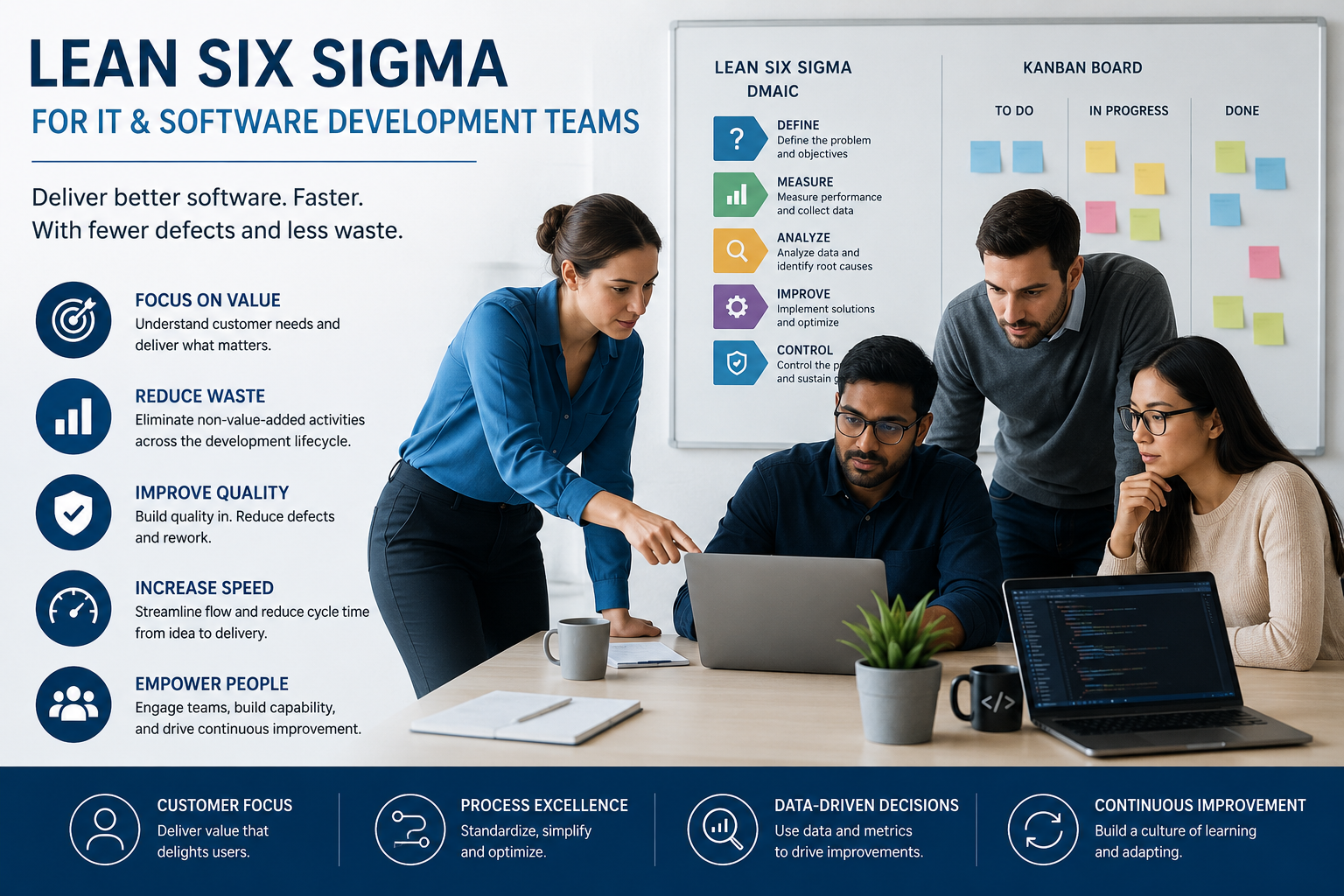
In the fast-paced world of technology, where software applications and IT solutions are crucial for business success, employing efficient methodologies can make all the difference. One such methodology that has gained popularity in the IT industry is Lean Six Sigma. This powerful combination not only enhances operational efficiency but also contributes to superior software development practices. In this blog, we will explore how Lean Six Sigma can be effectively implemented in the IT industry and software development teams.
Understanding Lean Six Sigma
Before delving into its application in the IT industry, it's essential to understand what Lean Six Sigma is. Lean focuses on eliminating waste and improving process flow, while Six Sigma aims to reduce variation and improve quality. Together, they provide a robust framework for improving processes, increasing efficiency, and delivering higher quality products and services.
Why Lean Six Sigma in the IT Industry?
The IT industry is notorious for its complexities and fast-changing environments. Software development teams often face challenges like missed deadlines, budget overruns, and quality issues. Implementing Lean Six Sigma can help in:
Implementing Lean Six Sigma in Software Development
Transitioning to Lean Six Sigma in software development requires a structured approach. Here are the critical steps to consider:
1. Define the Project Goals
Start by clearly defining the objectives of implementing Lean Six Sigma in your team. Whether it's improving delivery times, enhancing software quality, or reducing costs, having specific goals will guide your efforts.
2. Measure Current Processes
Gather data on current software development processes. Use metrics like cycle time, defect rates, and customer satisfaction to assess performance. This step is crucial for identifying areas of improvement.
3. Analyze the Data
Once you have collected data, analyze it to pinpoint inefficiencies and areas that require improvement. Tools like Pareto charts, cause-and-effect diagrams, and process maps can be instrumental in this analysis.
4. Improve Processes
With the insights gained from analysis, implement changes in your processes. Lean tools like value stream mapping can help visualize steps where waste can be reduced, while Six Sigma tools can assist in minimizing defects.
5. Control and Monitor
After implementing improvements, it's essential to monitor the changes to ensure they yield the desired results. Use control charts and regular audits to keep track of process performance.
Benefits of Lean Six Sigma in the IT Industry
Adopting Lean Six Sigma methodologies in the IT sector offers numerous benefits:
1. Increased Efficiency
By identifying and eliminating waste, teams can streamline their workflows, resulting in faster project completion and more efficient resource utilization.
2. Enhanced Quality
With a focus on reducing defects, Lean Six Sigma helps in delivering high-quality software, which in turn leads to increased customer satisfaction and loyalty.
3. Cost Reduction
Improved processes and reduced waste contribute to lower operational costs, allowing teams to allocate resources more effectively.
4. Better Team Collaboration
Lean Six Sigma encourages a collaborative culture within software development teams, which is essential for problem-solving and innovation.
Challenges of Implementing Lean Six Sigma in IT
While the benefits are significant, implementing Lean Six Sigma in the IT industry is not without its challenges:
1. Resistance to Change
Team members may be resistant to changing established processes. It’s essential to foster a culture of continuous improvement and involve everyone in the transition.
2. Training Needs
For successful implementation, team members need adequate training in Lean Six Sigma methodologies. Investing in training programs can mitigate this challenge.
3. Data Availability
Effective analysis requires access to accurate and comprehensive data. Ensure that data collection processes are in place before starting the Lean Six Sigma journey.
Case Studies: Success Stories in the IT Industry
Several organizations in India have successfully implemented Lean Six Sigma to enhance their software development processes:
1. TCS (Tata Consultancy Services)
TCS utilized Lean Six Sigma to improve its software development lifecycle. By reducing cycle times and enhancing quality, they achieved faster project delivery and increased customer satisfaction.
2. Infosys
Infosys adopted Lean Six Sigma to streamline its operations and reduce costs. The results were evident in their project completion rates and overall efficiency.
FAQs About Lean Six Sigma in the IT Industry
Q1: What is the primary goal of Lean Six Sigma in software development?
The primary goal is to enhance efficiency and quality by eliminating waste and reducing defects in the software development process.
Q2: How long does it take to implement Lean Six Sigma?
The timeline for implementation can vary based on the organization's size and complexity, but significant improvements can often be seen within a few months.
Q3: Is training necessary for Lean Six Sigma?
Yes, training is crucial for team members to understand Lean Six Sigma methodologies and effectively apply them to their projects.
Q4: Can Lean Six Sigma be applied to Agile methodologies?
Absolutely! Lean Six Sigma complements Agile practices by enhancing efficiency and quality while maintaining flexibility in software development.
Conclusion
Lean Six Sigma is not just a methodology; it’s a powerhouse of transformation for IT and software development teams. By focusing on efficiency, quality, and collaboration, teams can navigate the complexities of the tech landscape with greater success. If your organization is ready to embrace Lean Six Sigma, consider starting your journey today.
Call to Action: Are you interested in implementing Lean Six Sigma in your software development team? Contact us today for expert guidance and training tailored to your needs!