
Latest Post


Quality Management Courses




Lean Six Sigma for Small Businesses and Startups
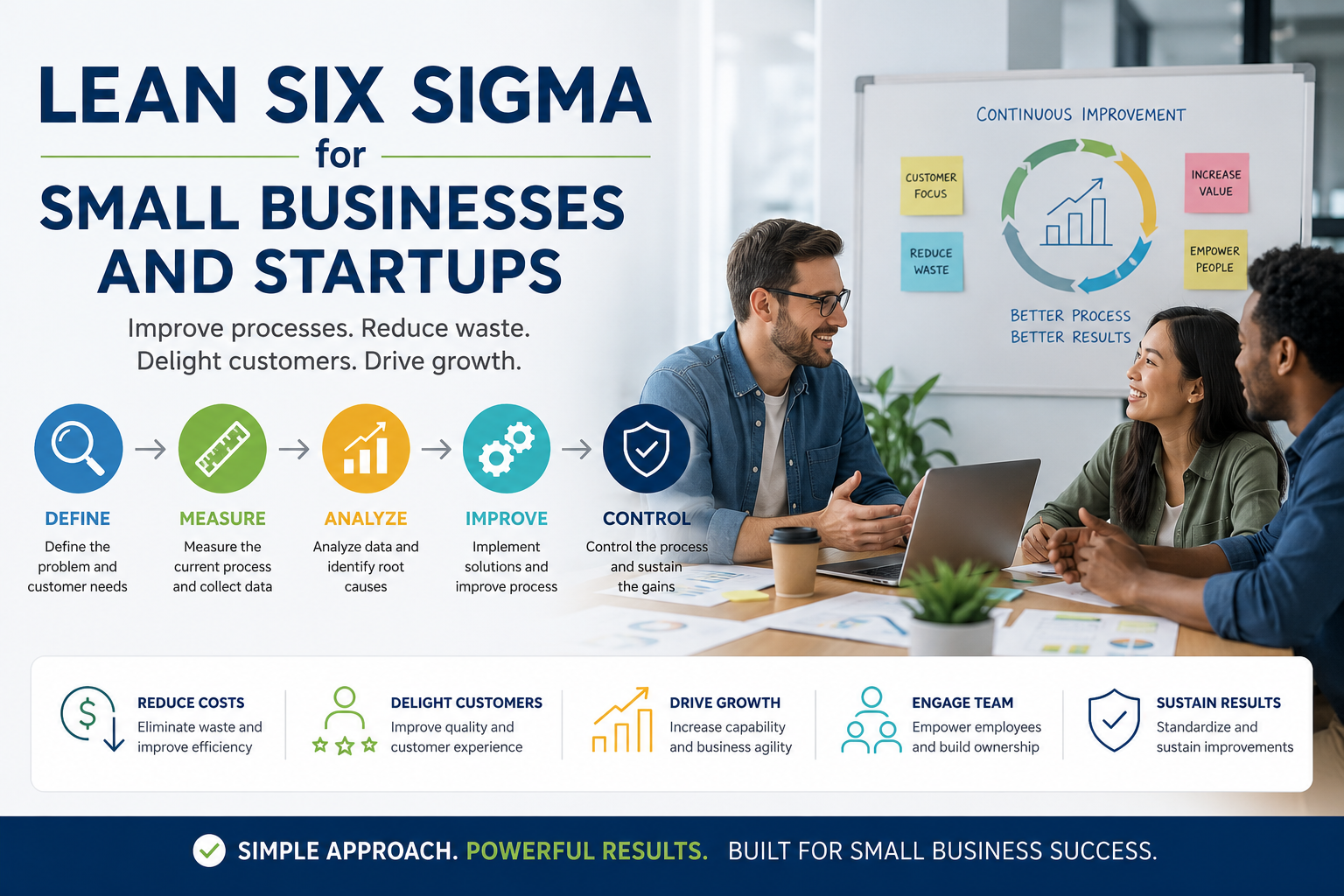
In today's competitive marketplace, small businesses and startups in India are constantly seeking ways to improve efficiency and quality. One proven strategy is Lean Six Sigma for startups, which combines two powerful methodologies: Lean, focused on eliminating waste, and Six Sigma, aimed at reducing variation and improving quality. This blog explores how Lean Six Sigma can benefit small and medium enterprises (SMEs) in India, providing practical insights and strategies for implementation.
Understanding Lean Six Sigma
Before diving into the practical applications of Lean Six Sigma for startups, it's essential to understand what this methodology entails. Lean Six Sigma is a data-driven approach that emphasizes quality improvement and operational excellence. The key goals are:
The Importance of Lean Six Sigma for Startups
For startups and small businesses, adopting Lean Six Sigma principles can be a game changer. Here are some compelling reasons why:
1. Cost Reduction
Startups often operate on tight budgets. By implementing Lean Six Sigma practices, businesses can identify and eliminate wasteful processes, leading to significant cost savings. This allows startups to allocate resources more effectively, thereby enhancing profitability.
2. Improved Product Quality
Quality is critical for customer satisfaction and retention. Lean Six Sigma helps startups streamline their processes, reduce defects, and ensure consistent quality. This not only boosts customer loyalty but also enhances brand reputation.
3. Enhanced Efficiency
Efficiency is vital for the survival of any startup. Lean Six Sigma methodologies facilitate the identification of bottlenecks and inefficiencies in processes, enabling businesses to optimize their operations and improve overall productivity.
4. Data-Driven Decision Making
Data is the backbone of Lean Six Sigma. By leveraging data analytics, startups can make informed decisions that drive better outcomes. This approach mitigates risks and allows businesses to adapt to changing market conditions swiftly.
Implementing Lean Six Sigma in Your Startup
Now that we understand the benefits, let’s explore how small businesses and startups can effectively implement Lean Six Sigma:
1. Define Your Goals
Start by identifying specific objectives. Are you looking to reduce waste, improve product quality, or enhance customer service? Clear goals will guide your Lean Six Sigma initiatives.
2. Train Your Team
Training is crucial for successful implementation. Invest in Lean Six Sigma training for your team members. Consider certifications or workshops that equip them with the necessary skills and knowledge.
3. Map Your Processes
Use process mapping to visualize workflows. This helps in identifying inefficiencies and areas needing improvement. Engage your team in this exercise to gather insights from those directly involved in the processes.
4. Analyze Data
Collect and analyze data related to your processes. Look for patterns, trends, and areas of concern. Tools like Pareto charts and fishbone diagrams can be beneficial in this analysis.
5. Implement Improvements
Based on your findings, develop and implement solutions to address identified issues. This may involve redesigning processes, introducing new technologies, or enhancing communication among team members.
6. Monitor and Control
After implementing changes, it’s essential to monitor progress continuously. Use key performance indicators (KPIs) to assess the effectiveness of your improvements. Make adjustments as needed to ensure sustained success.
Challenges of Implementing Lean Six Sigma for SMEs
While the benefits are clear, implementing Lean Six Sigma can pose challenges, especially for small businesses:
1. Resistance to Change
Employees may resist new processes or changes to established routines. It’s crucial to communicate the benefits of Lean Six Sigma and involve your team in the change process to minimize resistance.
2. Limited Resources
Startups often face resource constraints. Adequate planning and prioritization are essential to ensure that Lean Six Sigma initiatives do not overwhelm your operations.
3. Lack of Expertise
Small businesses may lack in-house expertise in Lean Six Sigma methodologies. Consider hiring consultants or partnering with local organizations that specialize in Lean Six Sigma training.
Success Stories of Lean Six Sigma in Indian Startups
Many startups in India have successfully implemented Lean Six Sigma principles, leading to remarkable improvements:
1. Zomato
Zomato, a leading food delivery startup, adopted Lean Six Sigma methodologies to streamline its operations. By optimizing delivery processes and reducing order errors, they significantly improved customer satisfaction and operational efficiency.
2. Oyo Rooms
Oyo Rooms utilized Lean Six Sigma principles to enhance the quality of its services. Through rigorous process analysis and quality control, they were able to reduce customer complaints and improve overall guest experiences.
FAQs About Lean Six Sigma for Startups
1. What is Lean Six Sigma?
Lean Six Sigma is a methodology that combines Lean principles, focused on waste reduction, with Six Sigma, aimed at reducing variability in processes, to improve efficiency and quality in organizations.
2. How can Lean Six Sigma benefit small businesses in India?
Lean Six Sigma can help small businesses in India reduce costs, improve product quality, enhance operational efficiency, and make data-driven decisions, leading to better overall performance.
3. Do I need specialized training to implement Lean Six Sigma?
While specialized training can be beneficial, there are many resources available for small businesses to learn Lean Six Sigma principles. Consider workshops and online courses to build your team’s skills.
4. Can Lean Six Sigma be applied to all industries?
Yes, Lean Six Sigma can be adapted to various industries, including manufacturing, service, healthcare, and more. Its principles are universal and can be customized to meet specific industry needs.
5. How long does it take to see results from Lean Six Sigma initiatives?
The time frame for seeing results can vary based on the complexity of the processes and the extent of changes implemented. However, many organizations report noticeable improvements within a few months of implementation.
Conclusion
Lean Six Sigma offers a robust framework for small businesses and startups in India to enhance efficiency, improve quality, and drive customer satisfaction. By embracing these methodologies, startups can navigate the challenges of a competitive landscape and position themselves for long-term success. If you are a small business owner looking to improve your operations, consider integrating Lean Six Sigma principles into your strategy.
Are you ready to take your startup to the next level with Lean Six Sigma? Explore training options, consult with experts, and start your journey towards operational excellence today!