
Latest Post


Quality Management Courses




In today’s competitive landscape, businesses in India are striving for operational excellence and efficiency. One of the most effective methodologies for achieving business process improvement is Lean Six Sigma. This approach not only streamlines processes but also enhances quality and reduces waste. In this blog, we will explore how Lean Six Sigma can be utilized for lean business process improvement, process optimization, and fostering a culture of continuous improvement.
Understanding Lean Six Sigma
Before diving into the specifics of business process improvement, it’s essential to understand what Lean Six Sigma entails. Combining the principles of Lean manufacturing and Six Sigma, this methodology focuses on improving performance by eliminating waste and reducing variability. Lean emphasizes maximizing value by minimizing waste, while Six Sigma focuses on quality control and reducing defects.
The Principles of Lean Six Sigma
Steps to Implement Lean Six Sigma for Business Process Improvement
Implementing Lean Six Sigma requires a structured approach. Here are the key steps to achieve effective business process improvement:
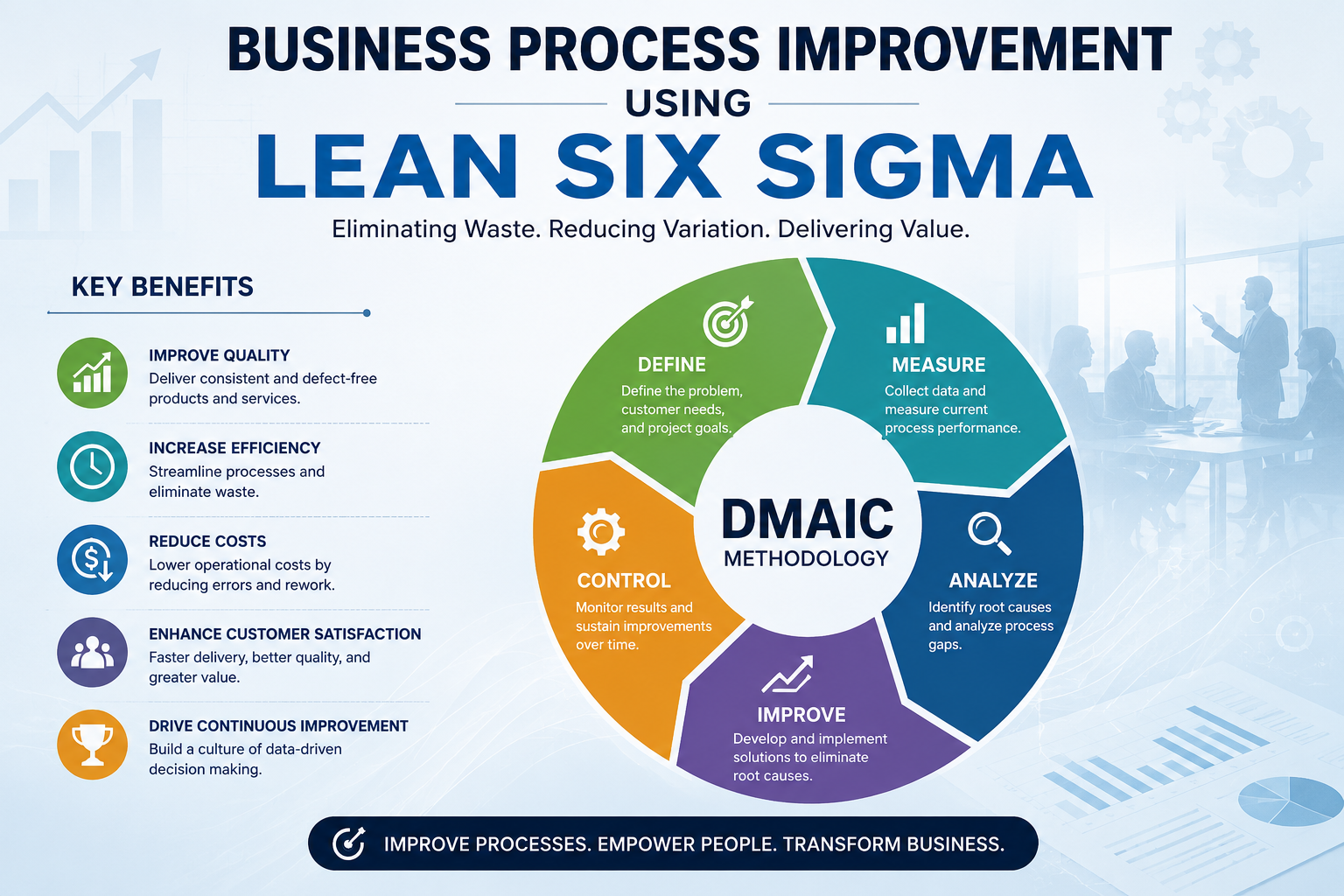
1. Define the Problem
Start by identifying the specific problem you want to solve. This could be related to delays, quality issues, or customer dissatisfaction. Be clear about the objectives you want to achieve through the improvement process.
2. Measure Current Performance
Collect data to understand the current state of your processes. Use tools like process mapping and value stream mapping to visualize workflows. This step is crucial for identifying inefficiencies and areas for process optimization.
3. Analyze the Data
Once you have gathered the necessary data, analyze it to identify the root causes of inefficiencies. Techniques such as Pareto analysis and fishbone diagrams can help you pinpoint issues that need to be addressed.
4. Improve the Process
Based on your analysis, develop solutions to eliminate waste and enhance quality. This may involve redesigning processes, implementing new technologies, or providing additional training to employees.
5. Control the Improvements
After implementing changes, it’s essential to monitor the new processes to ensure they are working effectively. Establish key performance indicators (KPIs) to track progress and make adjustments as necessary.
6. Foster a Culture of Continuous Improvement
Lean Six Sigma is not a one-time effort but a continuous journey. Encourage employees to regularly seek ways to improve processes and recognize their contributions. This culture of continuous improvement will drive long-term success.
Benefits of Lean Business Process Improvement
Adopting Lean Six Sigma for business process improvement offers numerous benefits, particularly for businesses in India:
Real-Life Examples of Lean Six Sigma in India
Many Indian companies have successfully implemented Lean Six Sigma to achieve operational excellence. Here are a few notable examples:
1. Tata Steel
Tata Steel adopted Lean Six Sigma to improve its manufacturing processes. By focusing on waste reduction and quality enhancement, the company was able to increase productivity and decrease operational costs significantly.
2. Infosys
Infosys implemented Lean Six Sigma to streamline its service delivery processes. This approach not only improved efficiency but also enhanced customer satisfaction by delivering projects on time and within budget.
3. Mahindra & Mahindra
Mahindra & Mahindra utilized Lean Six Sigma to optimize its supply chain management. The company achieved significant reductions in lead times and improved overall operational performance.
Challenges in Lean Six Sigma Implementation
While Lean Six Sigma offers substantial benefits, its implementation is not without challenges. Here are some common hurdles businesses may face:
FAQs About Lean Six Sigma and Business Process Improvement
What is the difference between Lean and Six Sigma?
Lean focuses on eliminating waste and improving flow, while Six Sigma aims to reduce variation and defects. When combined, they create a powerful methodology for business process improvement.
How long does it take to see results from Lean Six Sigma?
The time frame for seeing results varies depending on the scope of the project and the commitment of the team. Some improvements can be realized within a few months, while others may take longer to implement.
Can Lean Six Sigma be applied to service industries?
Absolutely! Lean Six Sigma is applicable in various sectors, including manufacturing, healthcare, finance, and IT services. Any process that can be measured and improved can benefit from this methodology.
Is Lean Six Sigma suitable for small businesses?
Yes, small businesses can greatly benefit from Lean Six Sigma. By implementing these principles, they can optimize processes, reduce costs, and improve customer satisfaction.
Conclusion
In conclusion, Lean Six Sigma is a powerful methodology for business process improvement that can lead to operational excellence and long-term success. By focusing on waste reduction, quality enhancement, and continuous improvement, businesses in India can achieve significant competitive advantages in today's market. If you’re ready to embark on your journey toward lean business process improvement, consider reaching out to a Lean Six Sigma expert who can guide you through the process.
Call to Action
Are you looking to enhance your business processes and achieve operational excellence? Contact us today to learn how Lean Six Sigma can transform your organization! Let's work together to drive continuous improvement and create a more efficient, effective workplace.