Latest Post
.png)
Quality Management Courses

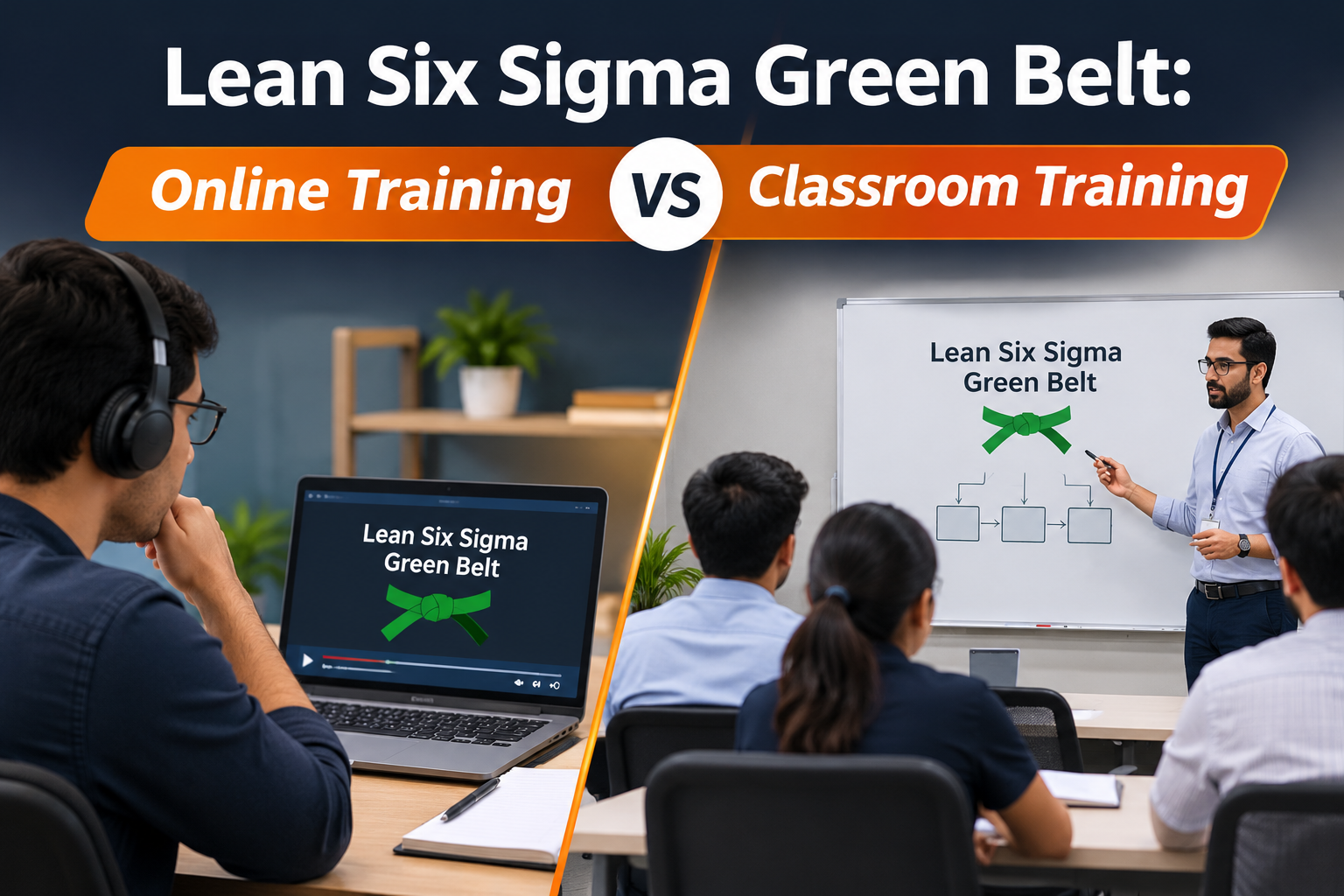

Five years ago, most people assumed a serious Green Belt course meant a week in a training room with a projector, printed handouts and a flip chart full of fishbone diagrams. Today, many professionals earn the same certification from home, joining live sessions after work or on weekends. Both routes can lead to a respected Green Belt. The question is which one will actually help you learn the tools well enough to use them on a real project.
This guide compares online and classroom Green Belt training honestly, including cost, learning quality, project support and recognition, so you can choose the format that fits your job, schedule and learning style.
Quick answer: Choose live online training if you need flexibility, want to avoid travel, and are disciplined enough to stay engaged on screen. Choose classroom training if you learn best with hands-on exercises, face-to-face discussion and fewer distractions. Both lead to the same certificate when offered by the same provider. Avoid purely self-paced video courses for Green Belt unless you already have a statistics background, because the statistical tools are much easier to learn with a live trainer.
The Four Ways to Learn Green Belt
"Online" is not one thing. Before comparing, it helps to separate the formats you will actually find.
Live Online (Virtual Classroom)
A trainer teaches in real time over Zoom, Teams or a similar platform. You can ask questions, join breakout rooms and work through exercises together. Sessions are often spread over weekends or evenings.
Self-Paced Online
Recorded videos, reading material and quizzes that you complete at your own speed. There is usually little or no live interaction with a trainer.
Classroom (In-Person)
Traditional face-to-face training at a training centre or hotel, typically over four to six consecutive days or several weekends.
Blended or Corporate In-House
A mix of classroom and online sessions, or training delivered at your company's premises for a group of employees, often linked to real projects in the organisation.
Online vs Classroom: Side-by-Side Comparison
FactorLive onlineSelf-paced onlineClassroomSchedule flexibilityGood (evening and weekend batches)ExcellentLimited (fixed days)Interaction with trainerGoodMinimalExcellentPeer learning and networkingModerateVery lowStrongHands-on group exercisesPossible with breakout roomsRareStrong (games, simulations, floor activities)Help with statistics and MinitabGood, with screen sharingLimited to videos and forumsExcellent, trainer can see your screen directlyTravel and accommodationNoneNoneOften required outside your cityDistraction riskModerate to highHighLowTypical costLower than classroomLowestHighestCompletion rateGoodOften lowHigh
Advantages of Online Green Belt Training
Learn Without Taking Leave
For most working professionals in India, getting five consecutive days off is the biggest obstacle to classroom training. Weekend or evening online batches let you learn without disrupting work, which is often why managers approve online training more readily.
No Travel Time or Cost
If you live in Faridabad and the classroom is in Gurugram, a daily commute through Delhi NCR traffic can easily eat two to three hours. For candidates in smaller cities, classroom training may mean travel and hotel costs on top of the course fee.
Access to Better Trainers
Online training removes geography. You can learn from an experienced Black Belt or Master Black Belt who may be based in another city, instead of choosing only from what is available locally.
Recordings for Revision
Many live online courses record sessions. Being able to rewatch the explanation of hypothesis testing or process capability before the exam is genuinely useful.
Lower Cost
Without venue and catering costs, providers can usually offer online batches at lower fees. For a detailed breakdown, read our guide to Lean Six Sigma certification cost in India.
Disadvantages of Online Training
Easy to Drift Away
Phones, emails and household interruptions are always one tab away. Many learners admit they "attended" sessions while answering work messages, and then struggle with the statistics later.
Weaker Hands-On Practice
Lean concepts such as flow, batch size and waste are often taught through physical simulations, for example assembling paper airplanes or Lego models in rounds. These exercises are memorable in a room and less effective on a screen.
Technical Problems
Unstable internet, power cuts and software installation issues, especially with Minitab, can interrupt learning. Have a backup connection and install software before the course starts.
Less Networking
Classroom batches often include people from manufacturing, banking, IT and healthcare. The informal conversations over lunch about how others apply Six Sigma are hard to replicate online.
Advantages of Classroom Green Belt Training
Deep Focus
Being physically away from your desk for several days creates a learning environment that is difficult to match at home. Most people absorb complex material faster when they are fully present.
Immediate Help with Difficult Topics
When a participant gets stuck on interpreting a p-value or a control chart, the trainer can walk over, look at the screen and explain on the spot. That instant support is the biggest advantage of classroom training for statistical tools.
Better Simulations and Group Work
Running a Lean simulation, building a fishbone on a wall chart, or mapping a value stream with sticky notes works best in person. These exercises make the concepts stick.
Stronger Professional Network
Classroom batches create relationships that often last beyond the course. Former batch-mates can become sources of advice, project ideas and even job referrals.
Disadvantages of Classroom Training
· Time off work: four to six consecutive days are hard to arrange for many professionals.
· Travel cost: commuting, fuel or hotel stays add to the total cost.
· Limited batch dates: classroom batches run less often, so you may wait longer to start.
· Pace: the class moves at a set speed, which may be too fast or too slow for some participants.
Does the Certificate Differ?
No. When the same provider offers both formats, the curriculum, exam and certificate are usually identical. The certificate does not state whether you studied online or in a classroom. Employers care far more about two other things: whether the certifying body is recognised, and whether you can show a completed project with measurable results.
What matters is that the course covers the full Green Belt body of knowledge, including DMAIC, measurement system analysis, process capability, hypothesis testing, regression, FMEA and control charts. Our guide to Green Belt tools and techniques lists what a strong course should include.
Which Format Suits You?
Choose Live Online If You:
· Cannot take several consecutive days off work
· Live far from a training centre or in a smaller city
· Are comfortable learning on screen and can find a quiet space
· Want to apply what you learn to your job between sessions
Choose Classroom If You:
· Find it hard to stay focused during long online sessions
· Are new to statistics and want close support
· Value networking with professionals from other industries
· Have employer approval for dedicated training days
Choose Self-Paced Only If You:
· Already have a strong background in statistics or analytics
· Are highly disciplined and need maximum flexibility
· Can find a mentor to support your project separately
Consider Corporate In-House Training If:
· Your company wants to train a team of five or more people
· You want training linked to real problems in your own processes
Three Learner Stories
Composite examples based on common learner profiles.
Arjun: IT Service Delivery Lead, Noida
Arjun managed a support team with rotating shifts and could not take a full week off. He chose a weekend live online batch, applied each week's tools to his team's incident data, and used the course to build a project on reducing ticket resolution time. The gap between sessions turned out to be an advantage, since he could test ideas at work before the next class.
Priya: Quality Engineer, Faridabad
Priya had tried a self-paced course and stopped halfway through the statistics module. For her Green Belt, she chose classroom training. Working through Minitab exercises with the trainer beside her finally made hypothesis testing click, and the Lean simulation helped her explain flow concepts to her shop-floor team.
A Pharma Plant in Baddi
A pharmaceutical manufacturer trained twelve supervisors through a blended programme: two classroom days at the plant for Lean simulations and project selection, followed by live online sessions for the statistical tools. Each participant worked on a live plant project, reviewed by the trainer at the end.
How to Succeed in Online Green Belt Training
· Treat it like a classroom. Block the time, close email, and keep your camera on if possible.
· Set up software early. Install Minitab or prepare Excel's Analysis ToolPak before day one. Our Minitab beginner's guide helps.
· Use real data. Bring a dataset from your work and practise each tool on it.
· Ask questions. Online trainers cannot see confused faces. Speak up or use the chat.
· Rewatch difficult topics. Use recordings to revise statistics before the exam.
· Pick a project early. Our guide on how to identify a Six Sigma project shows how.
Questions to Ask Before You Enrol
· Is the online batch live with a trainer, or recorded videos?
· How many participants are in each batch?
· Are sessions recorded for revision?
· Which software is taught, and is a licence or trial provided?
· Is project guidance included after the training?
· Is the exam included, and can it be taken online?
· Who is the trainer, and what real project experience do they have?
Frequently Asked Questions
Is an online Lean Six Sigma Green Belt certificate valid?
Yes. If the course is from a reputable provider and certified by a recognised body, an online Green Belt is just as valid as a classroom one. The certificate usually does not mention the training format.
Is online Green Belt training cheaper than classroom?
Usually, yes. Online batches avoid venue and travel costs, so fees are often lower. Self-paced courses are cheapest but offer the least support.
Can I learn Six Sigma statistics online?
Yes, with a live trainer who shares their screen and reviews your work. Self-paced video alone is much harder for most beginners.
How long does online Green Belt training take?
Live online programmes typically cover the same 30 to 40 hours as classroom courses, spread across several weekends or evenings instead of consecutive days.
Do employers prefer classroom-trained Green Belts?
Most employers do not distinguish between the two. They focus on the certifying body and, above all, on whether you have completed a real improvement project.
Which format is better for beginners?
Beginners usually do best with live online or classroom training, where they can ask questions as they go. Self-paced courses suit people who already have some statistical background.
Final Thoughts
The best Green Belt format is the one you will complete properly. Live online training offers flexibility with real teaching; classroom training offers focus and hands-on depth; self-paced courses suit only the very disciplined. Whichever you choose, make sure there is a skilled trainer, enough statistical practice, and support for a real project, because that is what turns a certificate into a career asset.
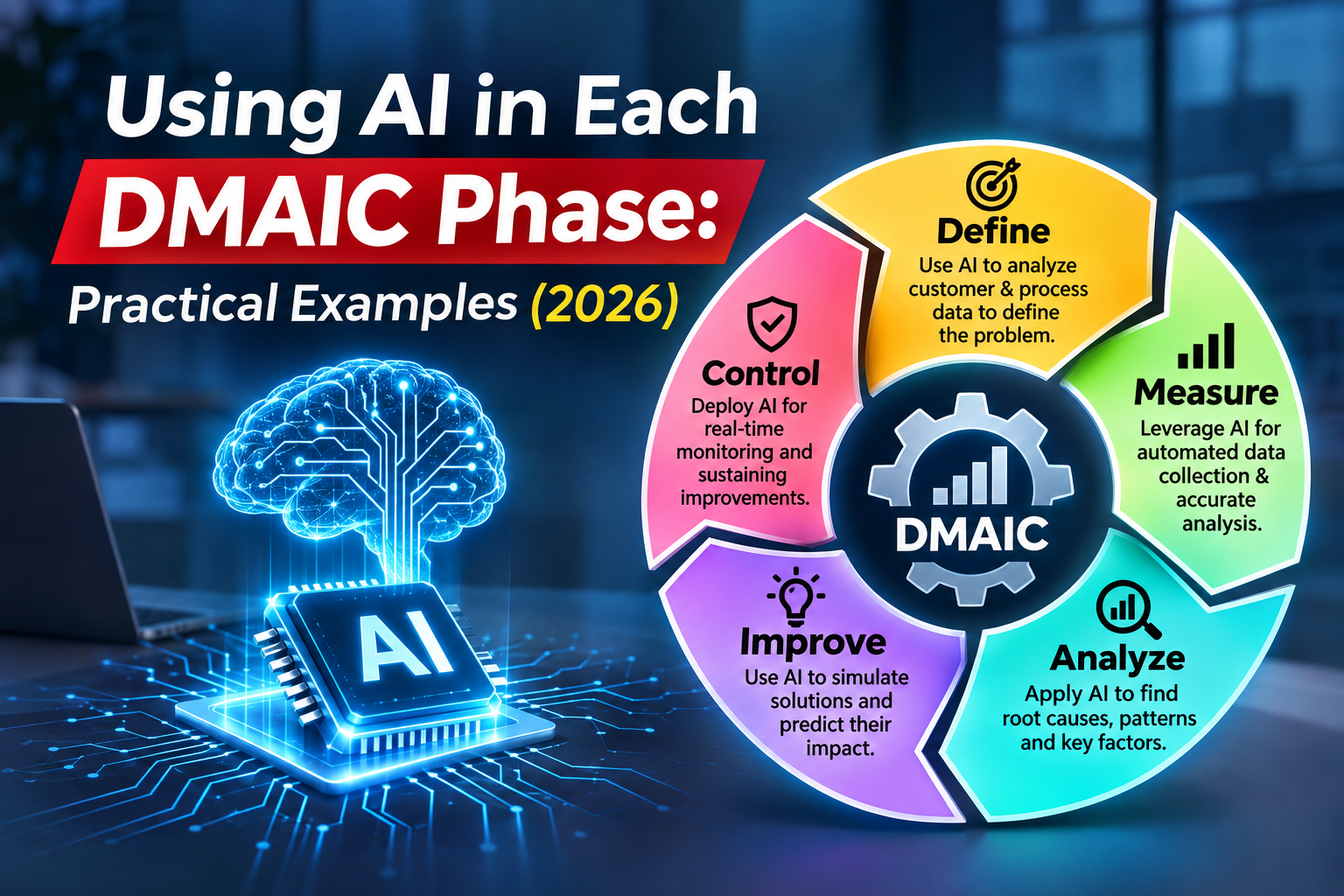
India Quality Services offers Lean Six Sigma Green Belt training in live online and classroom formats. If you are new to the field, start with our free White Belt or the Yellow Belt course. You may also want to read Yellow Belt vs. Green Belt, our Green Belt exam study guide, and how AI is changing improvement work in Using AI in Each DMAIC Phase.