

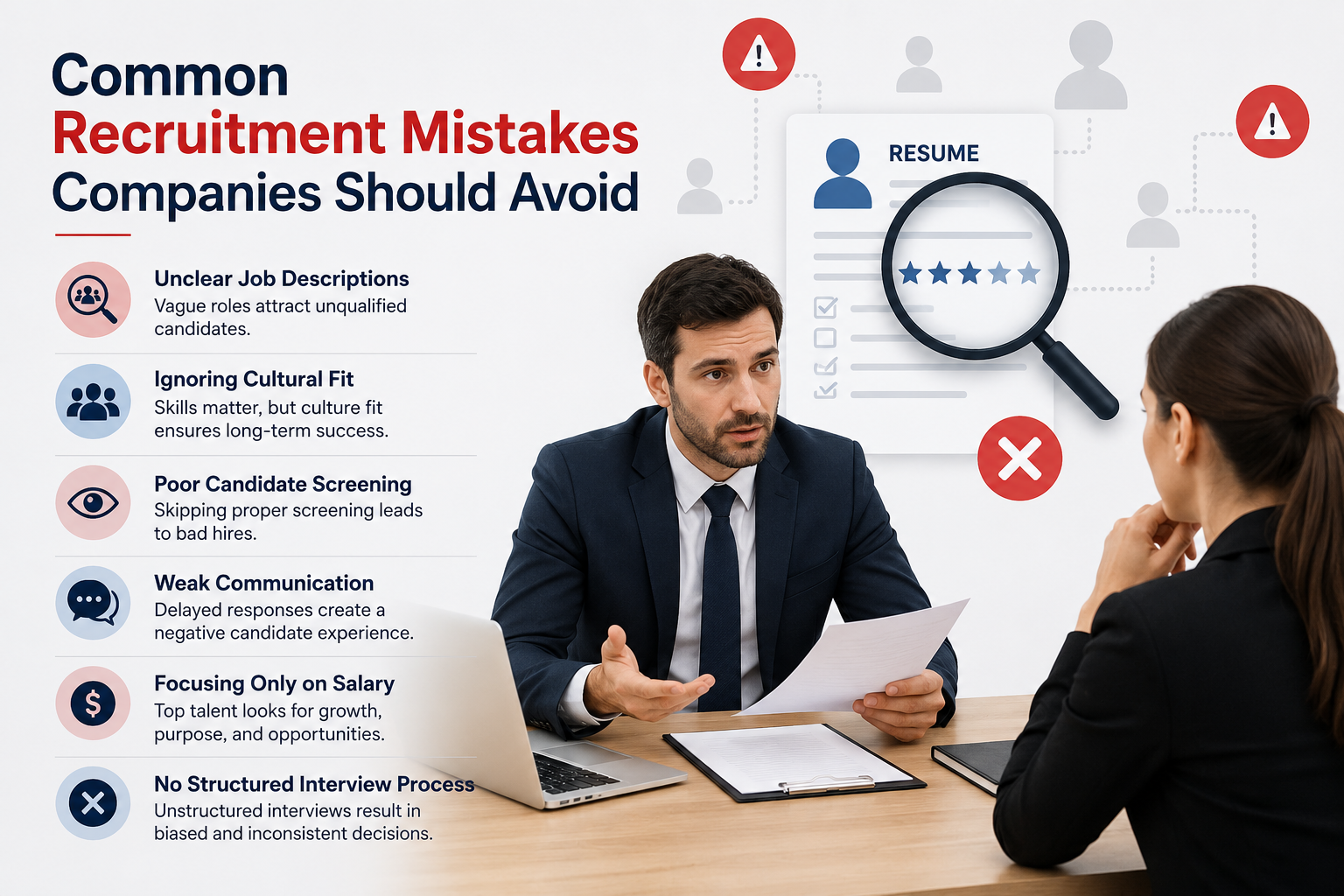

In the rapidly evolving job market of India, attracting and retaining the right talent is crucial for any organization aiming for success. However, many companies fall into common recruitment mistakes that can hinder their hiring process and overall organizational growth. In this blog, we'll explore these pitfalls and provide insights on recruitment best practices to help you navigate the talent acquisition landscape effectively.
Understanding Recruitment Mistakes
Before delving into the specific mistakes, it’s important to understand what recruitment mistakes are. Essentially, these are errors made during the hiring process that can lead to poor hiring decisions, wasted resources, and a negative impact on company culture. Avoiding these errors is crucial for enhancing your talent acquisition strategy.
Common Recruitment Mistakes to Avoid
1. Ignoring Job Descriptions
A well-crafted job description is the first step in attracting the right candidates. One of the most common hiring mistakes companies make is providing vague or overly generic job descriptions. This can lead to an influx of unqualified applicants and, consequently, wasted time during the screening process.
Solution: Ensure that job descriptions are clear, detailed, and specific. Include essential qualifications, responsibilities, and any preferred skills. This will not only attract the right talent but also set clear expectations for candidates.
2. Skipping Pre-Screening Steps
Many recruiters rush through the initial stages of the hiring process, missing out on pre-screening candidates effectively. This can lead to inviting unqualified candidates for interviews, which wastes time and resources.
Solution: Incorporate pre-screening assessments or questionnaires that align with the job requirements. This will help filter out unsuitable candidates before they reach the interview stage.
3. Overlooking Cultural Fit
While skills and experience are important, a candidate's cultural fit within the organization is equally crucial. Focusing solely on qualifications can lead to hiring individuals who disrupt team dynamics and company culture.
Solution: Assess candidates for alignment with your company values and culture during the interview process. This could include situational questions or scenarios that reflect your company’s work environment.
4. Failing to Use Technology
In today’s digital age, relying solely on traditional recruitment methods can be a significant drawback. Many companies still use outdated recruitment techniques, which can limit their reach and effectiveness.
Solution: Leverage technology by using Applicant Tracking Systems (ATS), job boards, and social media platforms to streamline the recruitment process. This will not only save time but also widen your talent pool.
5. Neglecting Candidate Experience
Candidate experience is often overlooked, yet it plays a vital role in attracting top talent. Poor communication, long hiring processes, and lack of feedback can lead to a negative impression of your company.
Solution: Keep candidates informed throughout the hiring process. Provide timely feedback and maintain open lines of communication. A positive candidate experience can enhance your employer brand and attract more talent in the future.
6. Rushing the Hiring Process
In the race to fill a position, many companies rush the hiring process, leading to hasty decisions. This can result in hiring the wrong candidates, which can be costly in the long run.
Solution: Take the time to conduct thorough interviews, assessments, and reference checks. Consider implementing a structured interview process to ensure consistency and fairness.
7. Ignoring Diversity and Inclusion
Diversity and inclusion are not just buzzwords; they are essential for fostering innovation and creativity within teams. Ignoring this aspect can lead to a homogeneous workforce that lacks diverse perspectives.
Solution: Actively seek to create a diverse candidate pool by using inclusive language in job descriptions and expanding your recruitment channels. Promote an inclusive workplace culture that values all backgrounds and experiences.
Recruitment Best Practices
Now that we’ve identified common recruitment mistakes, let’s explore some best practices that can enhance your hiring process.
1. Develop a Structured Hiring Process
Establish a clear and structured hiring process to ensure consistency and fairness. This includes defining the steps from job posting to onboarding, allowing all stakeholders to understand their roles.
2. Utilize Employee Referrals
Encourage your current employees to refer candidates for open positions. Employee referrals often lead to higher-quality hires and can enhance team cohesion.
3. Continuous Training for Recruiters
Ensure that your HR team is well-trained in the latest recruitment trends and techniques. Continuous learning can help them avoid common talent acquisition errors and improve their skills in evaluating candidates.
4. Monitor and Adjust Your Recruitment Strategy
Regularly review your recruitment strategy and metrics to identify areas for improvement. This includes analyzing the success of your hiring processes, candidate sources, and overall effectiveness.
Conclusion
Avoiding common recruitment mistakes is essential for any organization aiming to build a strong team. By implementing the best practices outlined in this blog, you can enhance your talent acquisition strategy and ultimately drive your organization’s success. Remember, the right hire can significantly influence your company culture and overall performance.
FAQs
What are the most common recruitment mistakes?
Common recruitment mistakes include vague job descriptions, skipping pre-screening, overlooking cultural fit, neglecting candidate experience, and rushing the hiring process.
How can I improve my recruitment process?
To improve your recruitment process, develop a structured hiring process, utilize technology, gather employee referrals, and ensure continuous training for your recruiters.
Why is candidate experience important in recruitment?
Candidate experience is vital as it influences candidates' perceptions of your company and can impact your employer brand. A positive experience can lead to better talent acquisition in the future.
How can I ensure diversity in my hiring process?
To ensure diversity, use inclusive language in job postings, broaden your recruitment channels, and promote an inclusive workplace culture that values diverse backgrounds.
If you’re looking to refine your hiring process and avoid common recruitment mistakes, consider reaching out to our team for expert advice and tailored HR solutions. Contact us today!