
In today’s competitive job market, organizations face the challenge of attracting and retaining top talent. As companies strive to build high-performing teams, they often find themselves evaluating various recruitment methods. Among these, two prominent strategies stand out: employee referral programs and recruitment agencies. But which hiring method truly works better? This comprehensive guide will explore the advantages and disadvantages of both approaches, helping you make an informed decision that aligns with your company’s hiring strategy.
Understanding Employee Referrals
Employee referral programs leverage the networks and relationships of existing employees. When current employees recommend candidates for open positions, it often results in a more efficient recruitment process. Here’s a closer look at how referral hiring works:
The Mechanics of Employee Referral
Typically, organizations provide incentives to employees who successfully refer candidates that are hired. This could be in the form of monetary bonuses, recognition, or other perks. The process usually involves:
Advantages of Employee Referrals
Employee referral programs offer several key benefits, which include:
Exploring Recruitment Agencies
Recruitment agencies are external firms that specialize in sourcing candidates for job openings. They often have a vast network of potential candidates and can help streamline the hiring process for organizations.
How Recruitment Agencies Operate
Recruitment agencies typically follow these steps:
Benefits of Using Recruitment Agencies
Recruitment agencies offer their own set of advantages, including:
Employee Referral vs Recruitment Agency: A Comparative Analysis
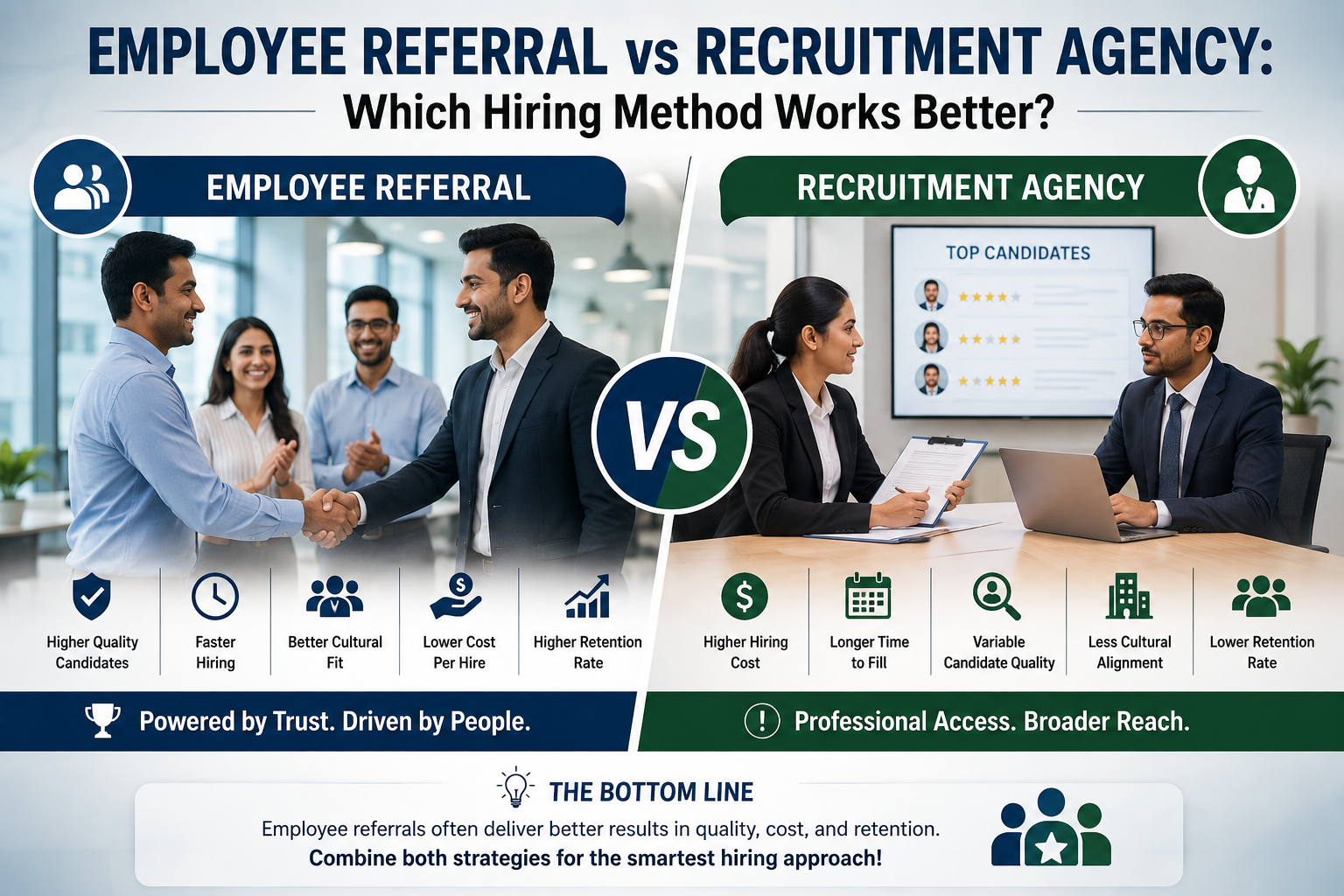
To help you decide which hiring method suits your organization, let’s compare employee referrals and recruitment agencies across various dimensions:
Cost
Employee Referrals: Generally more cost-effective, as companies save on agency fees and advertising costs.
Recruitment Agencies: Can be expensive due to commission-based fees, which may range from 15% to 25% of the hired candidate's salary.
Speed of Hiring
Employee Referrals: Tend to lead to quicker placements, as referred candidates are often pre-vetted by employees.
Recruitment Agencies: While they can expedite the process, the time taken to identify, screen, and present candidates may vary.
Quality of Hires
Employee Referrals: Often result in higher-quality hires who fit well within company culture.
Recruitment Agencies: Can provide a diverse range of candidates, but quality may vary depending on the agency’s expertise.
Cultural Fit
Employee Referrals: Referred candidates are usually more aware of the company’s culture and values, leading to better integration.
Recruitment Agencies: While they aim to find candidates that fit the culture, they may not have the same insight as current employees.
When to Choose Each Method
Deciding between employee referrals and recruitment agencies largely depends on your organization’s specific needs and circumstances:
When to Choose Employee Referrals
When to Choose Recruitment Agencies
Frequently Asked Questions (FAQs)
1. What is the primary benefit of employee referral programs?
The primary benefit is cost-effectiveness, as they typically reduce recruitment expenses while delivering quality hires who fit well with the company culture.
2. How can I encourage employees to participate in referral hiring?
Incentivize referrals through bonuses, recognition programs, and clear communication about open positions and desired candidate qualities.
3. Are recruitment agencies worth the cost?
While they can be expensive, recruitment agencies can save time and provide access to a broader talent pool, especially for specialized roles.
4. Can I use both methods simultaneously?
Yes, many organizations successfully implement both employee referral programs and recruitment agencies to maximize their hiring efforts.
Conclusion
In the battle of employee referral versus recruitment agency, there is no one-size-fits-all answer. Each method has its strengths and weaknesses, and the choice ultimately depends on your specific hiring needs and organizational culture. By understanding the nuances of both recruitment methods, you can develop a hiring strategy that not only fills positions but also builds a strong, cohesive team.
Ready to enhance your hiring strategy? Whether you opt for referral hiring or partner with a recruitment agency, the key is to align your approach with your company’s goals. If you need assistance crafting an effective recruitment strategy, feel free to reach out!