
Latest Post






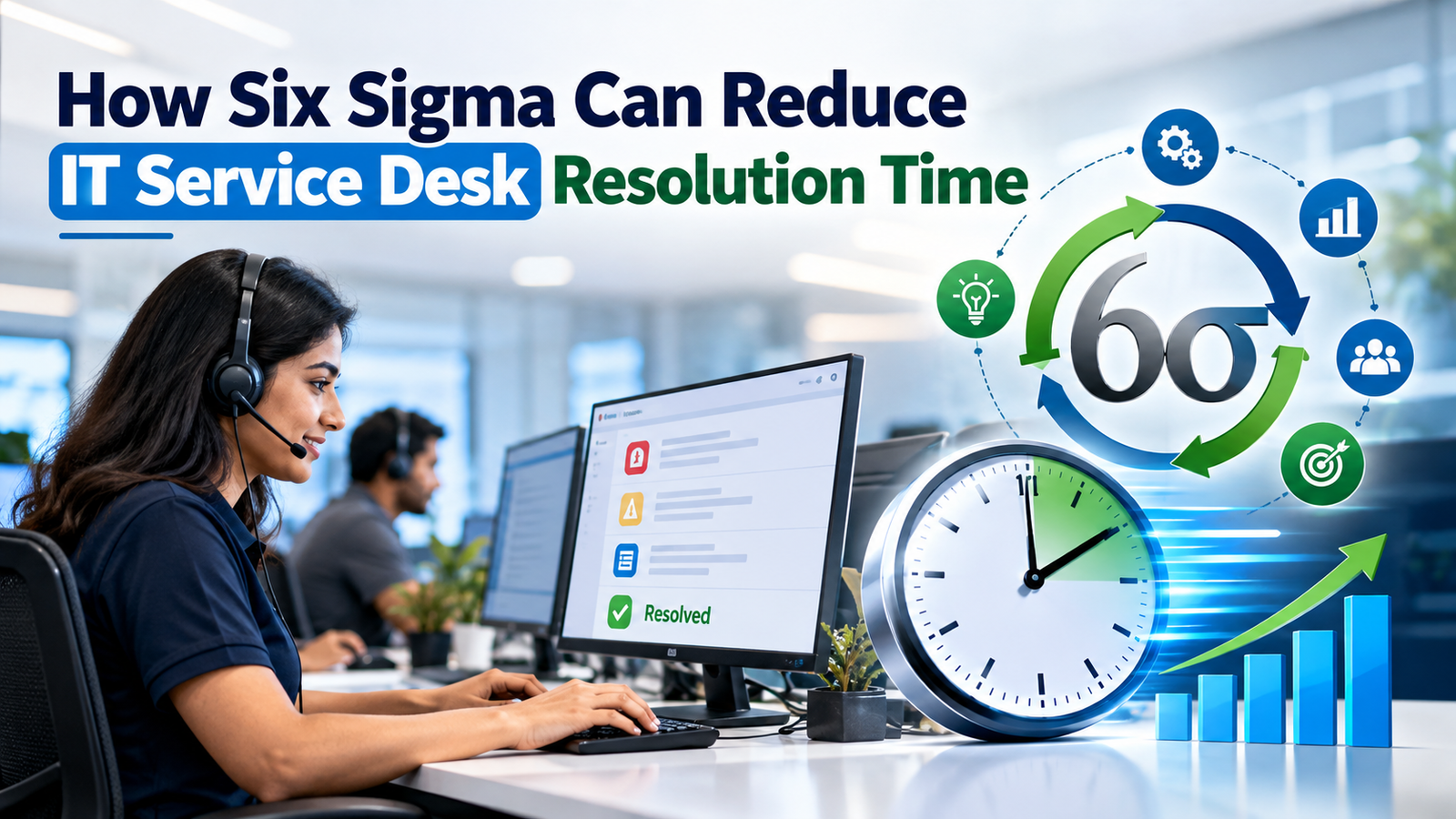

In today's fast-paced digital landscape, the efficiency of IT service desks is more crucial than ever. Companies are under constant pressure to deliver prompt resolutions to technical issues, ensuring minimal downtime for their operations. One of the most effective methodologies to enhance this efficiency is Six Sigma. In this blog, we will explore how Six Sigma can significantly reduce IT service desk resolution time and improve overall service quality.
Understanding Six Sigma
Six Sigma is a data-driven methodology aimed at improving processes by eliminating defects and ensuring quality. Originally developed by Motorola in the 1980s, it has since been adopted across various industries, including IT services. The primary goal of Six Sigma is to achieve a level of quality that reduces defects to fewer than 3.4 per million opportunities. This rigorous approach not only focuses on the end result but also emphasizes the importance of understanding and improving underlying processes.
The Importance of IT Service Desk Efficiency
The IT service desk is the backbone of an organization’s technical support. It serves as the first point of contact for employees facing IT-related issues. When resolution times are lengthy, it not only frustrates users but can also lead to significant operational downtime, loss of productivity, and increased costs. Hence, reducing resolution time is paramount for any organization aiming to improve its service desk efficiency.
How Six Sigma Works in IT Service Desks
To harness the power of Six Sigma in reducing resolution time, organizations must follow a structured approach known as DMAIC, which stands for Define, Measure, Analyze, Improve, and Control. Let's delve deeper into each stage:
1. Define
The first step is to clearly define the problem. In the context of an IT service desk, this could mean identifying the specific issues causing delays in resolution time. It’s vital to gather input from stakeholders, including service desk agents and end-users, to fully understand the pain points.
2. Measure
Once the problem is defined, the next step is to measure current performance. This involves collecting data on resolution times, types of incidents, and the frequency of various issues. By understanding the baseline metrics, organizations can identify areas that require improvement.
3. Analyze
After measuring, the analysis phase aims to identify the root causes of delays. This could involve examining the workflow, assessing the skills of the service desk staff, or scrutinizing the tools and technologies being used. Techniques such as Pareto analysis and cause-and-effect diagrams can be beneficial in this stage.
4. Improve
With a clear understanding of the issues, organizations can then brainstorm and implement solutions to enhance the service desk's efficiency. This might include process re-engineering, introducing automation tools, or providing additional training for staff to handle incidents more effectively. The goal is to streamline processes to reduce resolution time.
5. Control
The final phase is all about maintaining the improvements. Organizations must establish control mechanisms to ensure that the new processes are adhered to. Regular audits, feedback loops, and continuous training can help sustain the gains achieved through the Six Sigma initiative.
Benefits of Implementing Six Sigma in IT Service Desks
Implementing Six Sigma in an IT service desk can yield numerous benefits beyond just reduced resolution time:
Case Studies: Success Stories of Six Sigma in IT Service Desks
Several organizations have successfully implemented Six Sigma in their IT service desks, resulting in remarkable improvements:
Case Study 1: XYZ Corporation
XYZ Corporation faced significant delays in resolving IT incidents, impacting productivity across departments. By implementing Six Sigma, they identified that 60% of the delays were due to incorrect ticket categorization. After re-engineering their ticketing process and providing staff training, they reduced resolution time by 40% within six months.
Case Study 2: ABC Tech Solutions
ABC Tech Solutions utilized Six Sigma to streamline their internal support processes. After analyzing their data, they discovered that repetitive incidents were taking up substantial time. By creating a knowledge base and automating responses for common issues, they cut their average resolution time in half, leading to improved user satisfaction scores.
Common Challenges in Implementing Six Sigma
While the benefits of Six Sigma are substantial, organizations might face several challenges during implementation:
FAQs About Six Sigma and IT Service Desk
1. What is Six Sigma?
Six Sigma is a data-driven methodology aimed at improving processes by eliminating defects and ensuring quality in various industries, including IT services.
2. How does Six Sigma help in reducing IT service desk resolution time?
By following the DMAIC framework, organizations can identify root causes of delays, implement effective solutions, and maintain improvements, thereby reducing resolution time.
3. Is Six Sigma relevant for small businesses?
Absolutely! Six Sigma principles can be scaled to fit organizations of any size, providing significant benefits even for small businesses.
4. How long does it take to see results from Six Sigma implementation?
The timeline for seeing results can vary, but many organizations report improvements within a few months of implementing Six Sigma practices.
5. Do I need a certified Six Sigma professional to implement these practices?
While having a certified Six Sigma professional can be beneficial, it's not strictly necessary. Organizations can train existing staff to adopt Six Sigma methodologies effectively.
Conclusion
In summary, Six Sigma offers a structured approach to reducing IT service desk resolution time, leading to enhanced efficiency and improved user satisfaction. By defining problems, measuring performance, analyzing data, implementing improvements, and controlling processes, organizations can streamline their IT support services. As the demand for rapid IT support continues to grow, adopting Six Sigma may be the key to staying competitive in the ever-evolving digital landscape.
If you're looking to transform your IT service desk and reduce resolution times, consider implementing Six Sigma today. For more insights on Six Sigma and its applications in IT, feel free to reach out to us!
Call to Action: Ready to enhance your IT service desk? Contact us today for a consultation and discover how Six Sigma can help you achieve operational excellence!