Latest Post

Quality Management Courses



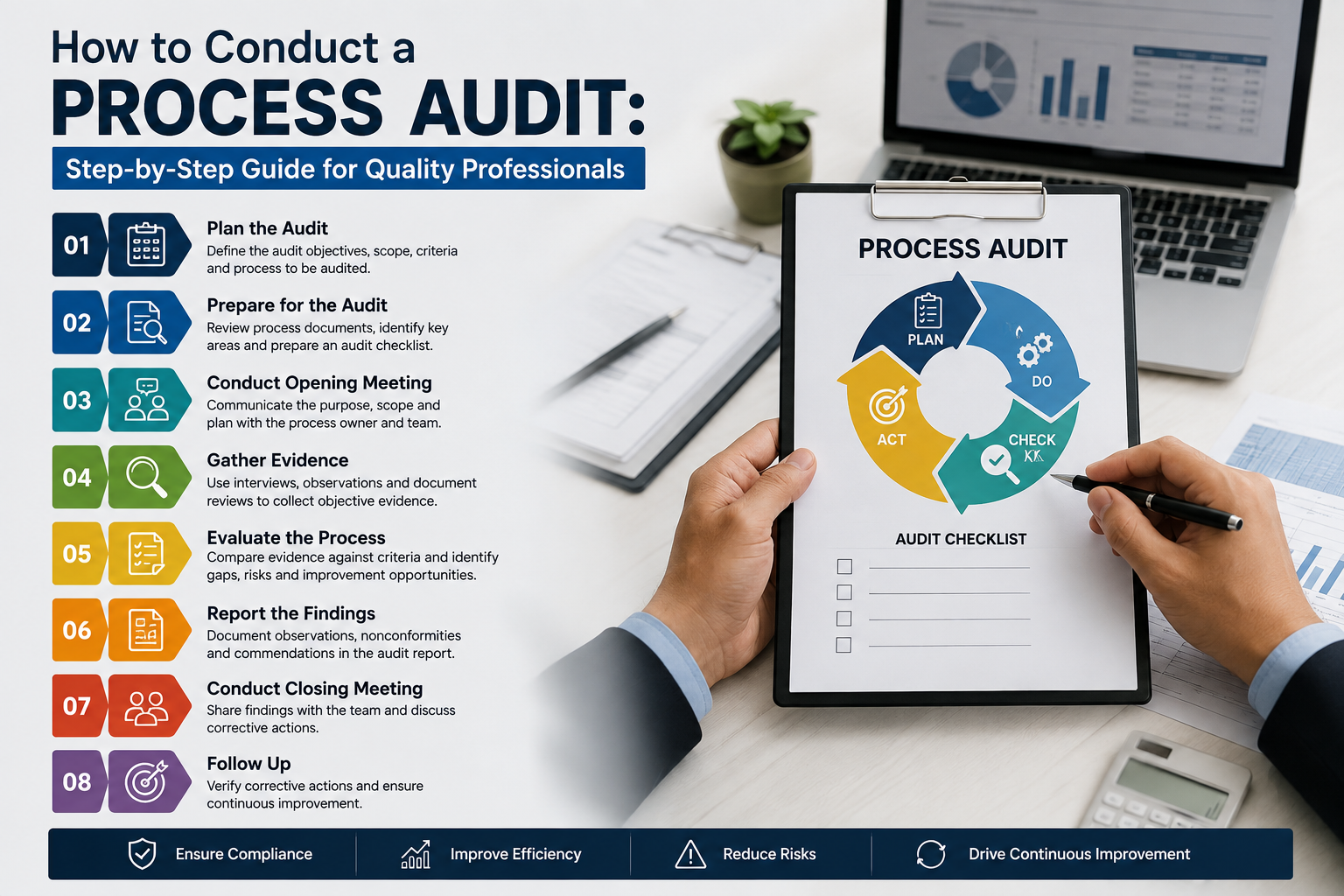

In today’s competitive landscape, ensuring that your processes are efficient and effective is vital for any organization's success. A well-executed process audit not only helps in identifying inefficiencies but also enhances the quality of products and services. In this blog, we will guide you through the steps on how to conduct a process audit, ensuring you have the necessary tools and knowledge to perform an effective internal process audit.
What is a Process Audit?
A process audit is a systematic examination of a process to determine its effectiveness and compliance with established policies, procedures, and regulations. It helps organizations identify areas for improvement while ensuring quality standards are maintained. The primary goal is to enhance operational efficiency, reduce waste, and improve overall quality.
Why is a Process Audit Important?
Conducting a quality process audit is crucial for several reasons:
Steps to Conduct a Process Audit
Conducting a process audit involves several well-defined steps. Here’s a practical guide on the process audit steps you should follow:
Step 1: Define the Audit Scope
Before diving into the audit, it's essential to define the scope. Determine which processes will be audited and the objectives of the audit. This helps in focusing your efforts and resources effectively.
Step 2: Gather Relevant Documentation
Collect all relevant documentation related to the processes being audited. This may include:
Step 3: Create a Process Audit Checklist
Develop a process audit checklist to guide your audit. This checklist should include key areas to assess, such as:
Step 4: Conduct the Audit
Now it's time to conduct the audit. This involves:
Step 5: Analyze Findings
After gathering all necessary information, analyze your findings. Identify strengths and weaknesses in the process, and document any discrepancies between the actual process and the defined procedures.
Step 6: Prepare an Audit Report
Compile your findings into a comprehensive audit report. This report should include:
Step 7: Follow-Up
The final step involves following up on the recommendations provided in the audit report. Ensure that there is accountability for implementing changes and monitor progress over time to assess the impact of the improvements.
Best Practices for Effective Process Auditing
To enhance the effectiveness of your process auditing, consider the following best practices:
Frequently Asked Questions (FAQs)
What is the difference between a process audit and a compliance audit?
A process audit focuses on the effectiveness and efficiency of a specific process, while a compliance audit assesses whether an organization adheres to external regulations and internal policies.
How often should a process audit be conducted?
The frequency of process audits can vary based on the organization’s needs, but it is generally recommended to conduct them at least annually or whenever significant changes occur in the process.
Can a process audit be conducted remotely?
Yes, with the right tools and technology, a process audit can be conducted remotely. Virtual meetings, screen sharing, and document sharing platforms can facilitate remote audits effectively.
Conclusion
Conducting a process audit is an essential practice for quality professionals aiming to enhance operational efficiency and ensure compliance. By following the process audit steps outlined in this guide, you can systematically evaluate your processes and implement improvements that lead to better quality outcomes.
Ready to start your first process audit? Download our process audit checklist today and take the first step towards quality excellence!
Call to Action (CTA)
If you found this guide helpful, please share it with your colleagues and fellow quality professionals. For more insights on quality management, subscribe to our newsletter and stay updated with the latest trends and best practices in process auditing.