
Latest Post
Quality Management Courses




In today’s fast-paced business environment, achieving operational efficiency improvement is crucial for organizations aiming to remain competitive. One of the most effective methodologies for enhancing process efficiency is Lean Six Sigma. This approach not only helps in identifying and eliminating waste but also focuses on reducing variation to improve process performance. In this blog, we will delve into how you can measure process efficiency using Lean Six Sigma metrics, and what process performance indicators you should consider.
Understanding Process Efficiency Measurement
Process efficiency measurement is the practice of assessing how well a business process converts inputs into outputs. It is essential for understanding how resources are utilized and identifying areas for improvement. Lean Six Sigma emphasizes the significance of data-driven decision-making, and measuring process efficiency is a critical first step in that journey.
By utilizing various Lean Six Sigma metrics, organizations can gain insights into specific processes, enabling them to pinpoint inefficiencies and implement effective solutions. This holistic approach not only enhances productivity but also improves overall customer satisfaction.
Key Lean Six Sigma Metrics for Measuring Process Efficiency
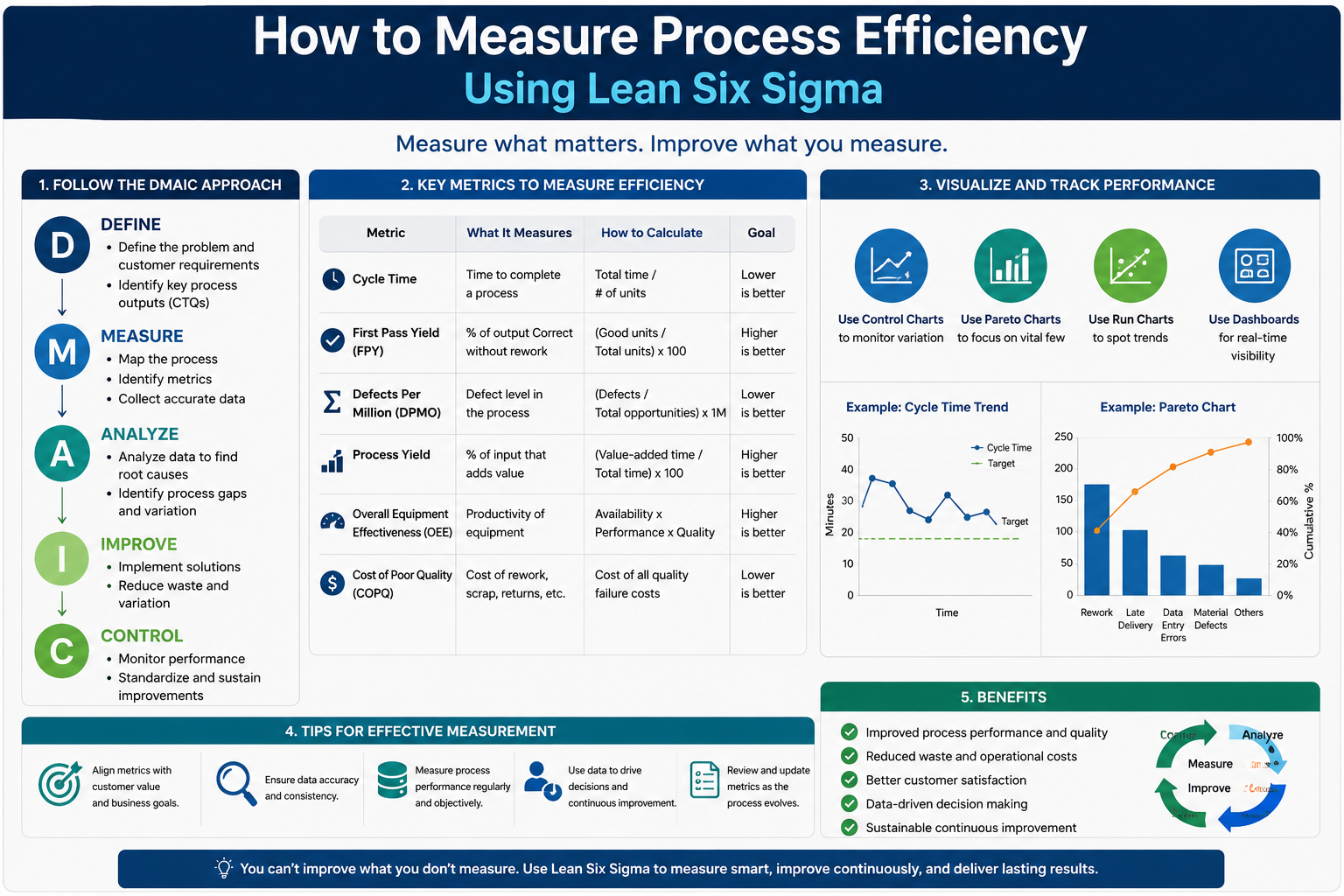
There are several Lean Six Sigma metrics used for process efficiency measurement. Here are some of the most vital ones:
1. Cycle Time
Cycle time refers to the total time taken to complete a process from start to finish. By measuring cycle time, organizations can understand how long it takes to deliver a product or service. Reducing cycle time can significantly lead to enhanced operational efficiency improvement.
2. Throughput
Throughput is the number of units produced or completed in a given time frame. It is a crucial metric for evaluating process capacity. Higher throughput indicates a more efficient process, while lower throughput may highlight bottlenecks or inefficiencies that need addressing.
3. First Pass Yield (FPY)
First pass yield measures the percentage of products or services that meet quality standards without requiring rework. A high FPY indicates efficient processes with minimal defects, while a low FPY suggests the need for improvement in quality control.
4. Defect Rate
The defect rate quantifies the number of defects in a process relative to the total units produced. A lower defect rate signifies a more efficient process. Lean Six Sigma focuses on reducing defects to improve overall quality and efficiency.
5. Overall Equipment Effectiveness (OEE)
OEE is a comprehensive metric that combines availability, performance, and quality to evaluate the efficiency of manufacturing operations. It helps organizations identify areas for improvement and optimize their processes.
Process Performance Indicators: A Comprehensive Overview
While Lean Six Sigma metrics provide valuable insights, it is also essential to consider broader process performance indicators that encompass various aspects of operations. Here are some key indicators to track:
1. Customer Satisfaction
Ultimately, the success of any process is measured by customer satisfaction. Regularly soliciting feedback and measuring Net Promoter Scores (NPS) can help organizations understand customer perceptions and identify areas for improvement.
2. Employee Engagement
Engaged employees are more productive and contribute to process efficiency. Assessing employee satisfaction through surveys can provide insights into workforce morale and areas that may require attention.
3. Cost of Poor Quality (COPQ)
COPQ measures the costs associated with failing to deliver quality products or services. This includes rework, scrap, and warranty claims. By monitoring COPQ, organizations can identify inefficiencies and take corrective action to enhance process performance.
4. Lead Time
Lead time is the time taken from receiving an order to delivering the product or service. Reducing lead time is vital for improving customer satisfaction and operational efficiency.
5. Return on Investment (ROI)
Measuring ROI for process improvement initiatives helps organizations understand the financial impact of Lean Six Sigma projects. A positive ROI indicates successful operational efficiency improvement efforts.
Implementing Lean Six Sigma for Process Efficiency Measurement
To effectively measure process efficiency using Lean Six Sigma, organizations should follow a systematic approach. Here are some steps to implement:
1. Define the Process
Clearly define the process you want to measure. Understanding the scope and boundaries is crucial for accurate measurement.
2. Collect Data
Gather relevant data on the selected Lean Six Sigma metrics and performance indicators. This may involve using software tools or manual tracking methods.
3. Analyze Data
Utilize statistical tools to analyze the collected data. This will help identify trends, patterns, and areas that require attention.
4. Implement Improvements
Based on the analysis, implement targeted improvements to enhance process efficiency. This may involve training employees, redesigning workflows, or investing in new technologies.
5. Monitor and Adjust
Continuously monitor the process and make necessary adjustments as needed. Regular reviews and updates ensure sustained improvement in process performance.
Conclusion
Measuring process efficiency using Lean Six Sigma is a powerful approach for organizations seeking to enhance their operational efficiency improvement. By leveraging various metrics and performance indicators, businesses can identify inefficiencies, implement effective solutions, and ultimately drive better results. Embrace Lean Six Sigma as a culture within your organization, and watch as your processes transform into models of efficiency.
FAQs
1. What is the primary goal of Lean Six Sigma?
The primary goal of Lean Six Sigma is to improve process efficiency by eliminating waste and reducing variation, leading to enhanced quality and customer satisfaction.
2. How do I get started with Lean Six Sigma?
Begin by understanding the principles of Lean Six Sigma, define the processes you want to improve, and engage your team in data collection and analysis. Training in Lean Six Sigma methodologies can also be beneficial.
3. Can Lean Six Sigma be applied to service industries?
Yes, Lean Six Sigma is applicable in various industries, including service sectors. The principles of waste reduction and process improvement can lead to significant enhancements in service delivery.
4. How often should I measure process efficiency?
It is advisable to measure process efficiency regularly, especially after implementing changes. This allows for continuous monitoring and adjustment as needed.
5. What tools can I use for Lean Six Sigma measurement?
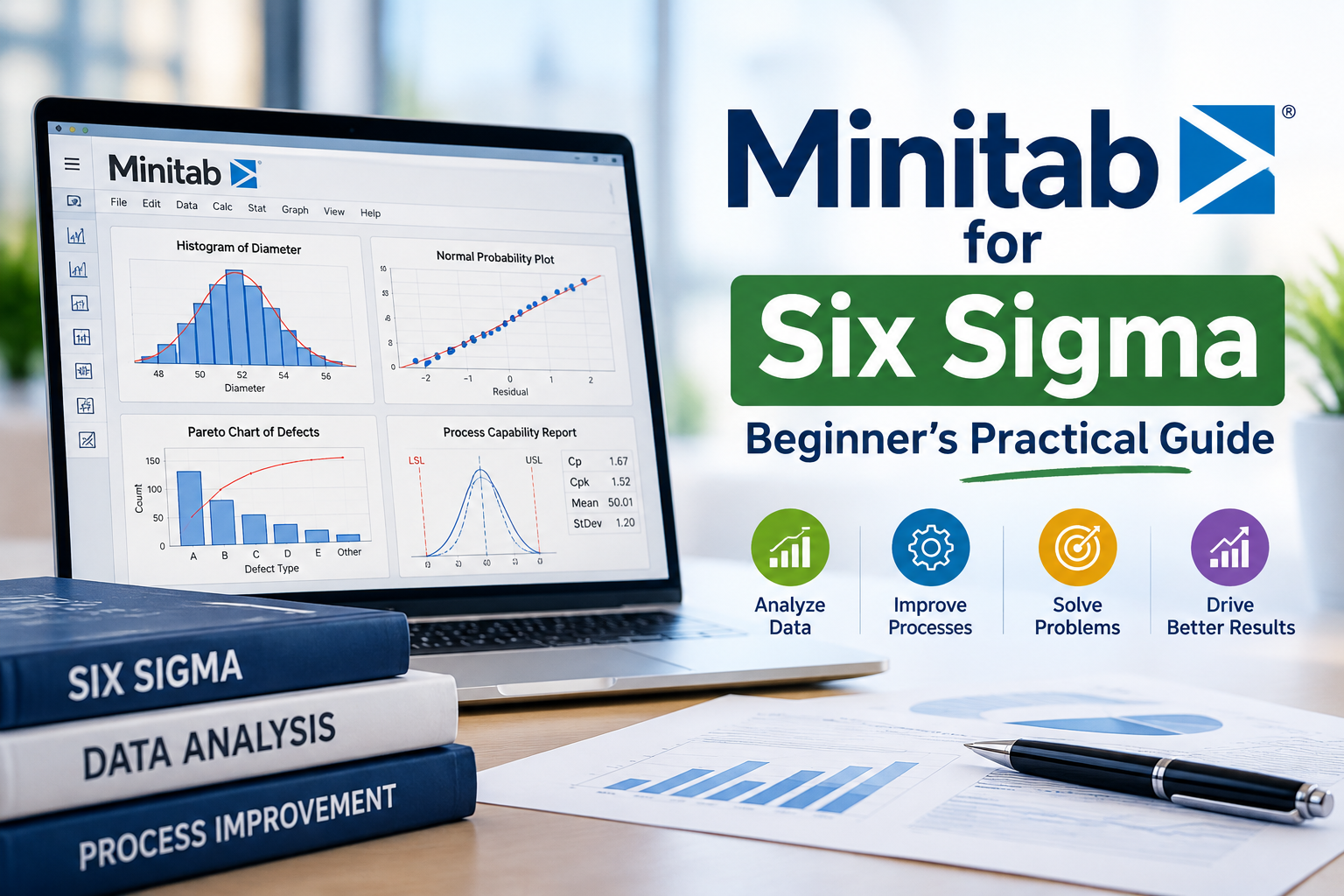
There are various tools available, including statistical software (like Minitab), Six Sigma templates, and process mapping tools that can help you analyze and measure efficiency.
Call to Action
Ready to transform your organization’s processes? Start implementing Lean Six Sigma principles today and unlock the potential for greater efficiency and customer satisfaction. If you need assistance or training in Lean Six Sigma, contact us now to enhance your operational excellence!