
Latest Post





Quality Management Courses



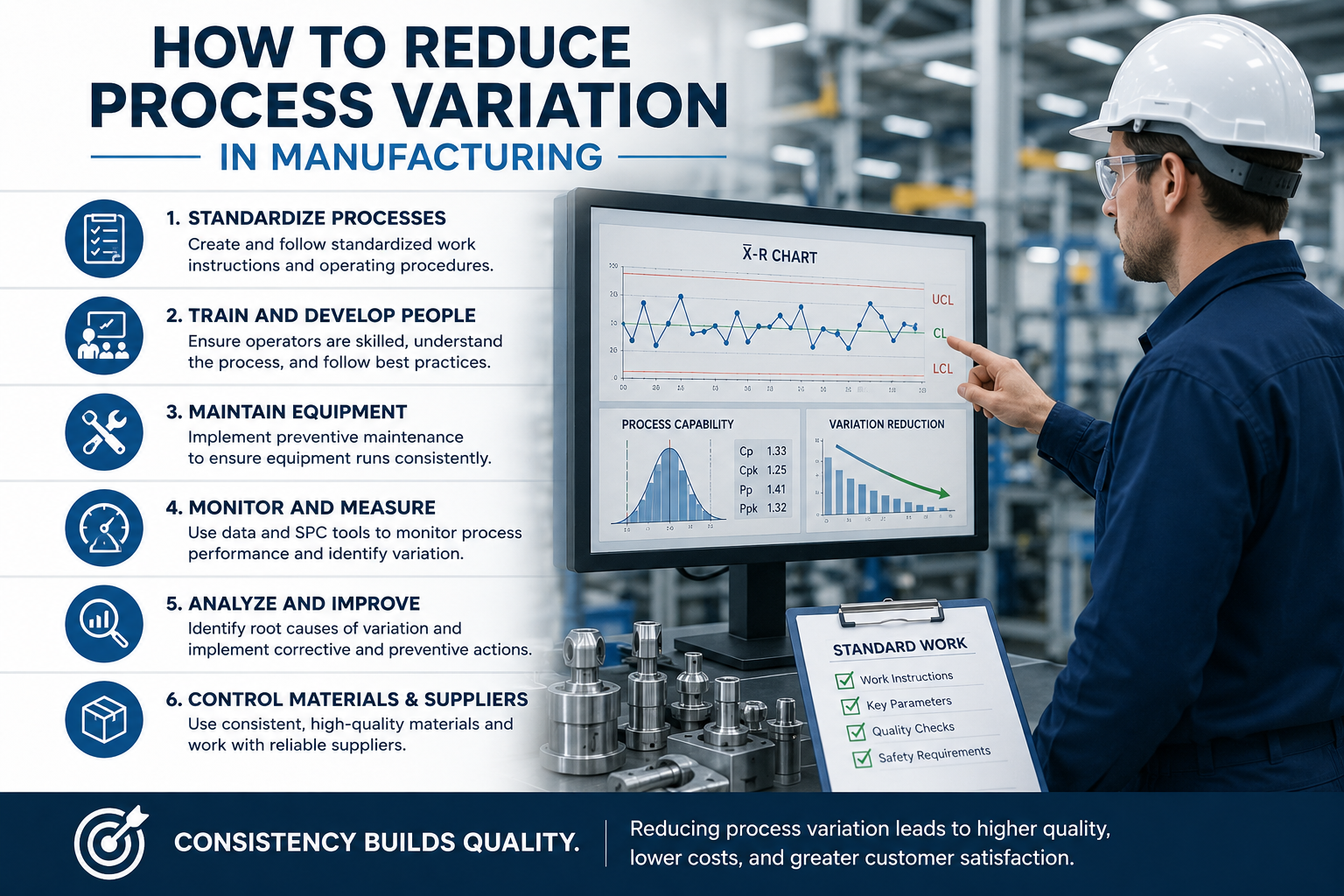

In the fast-paced world of manufacturing, ensuring consistent quality and efficiency is paramount. One of the most significant challenges manufacturers face is process variation. This not only affects product quality but can also lead to increased costs and reduced customer satisfaction. In this blog, we will explore effective strategies for process variation reduction in the manufacturing sector, specifically tailored for the Indian audience.
Understanding Process Variation
Process variation refers to the inherent fluctuations that occur during the manufacturing process. These variations can arise from various sources, including raw material inconsistencies, machine performance, and human factors. Understanding the types of variations is crucial for effective reducing defects in manufacturing.
Types of Process Variation
1. Common Cause Variation: These are variations that are inherent to a process. They are predictable and can be statistically analyzed.
2. Special Cause Variation: Unlike common causes, these variations arise from specific, identifiable factors. They can often be mitigated or eliminated with targeted interventions.
The Importance of Reducing Process Variation
Reducing process variation is vital for several reasons:
Strategies for Reducing Process Variation in Manufacturing
Now that we understand the implications of process variation, let’s explore effective strategies for manufacturing process variation reduction.
1. Implementing Six Sigma Methodology
Six Sigma is a data-driven approach that aims to minimize defects and process variation. It uses statistical tools and techniques to identify and eliminate the causes of defects. The DMAIC (Define, Measure, Analyze, Improve, Control) framework is fundamental to Six Sigma and provides a structured methodology for process improvement.
2. Standardizing Processes
Standard Operating Procedures (SOPs) are essential in manufacturing. By creating and adhering to SOPs, you can minimize variations caused by human error. Training employees on these procedures is critical to ensuring compliance and consistency.
3. Investing in Quality Control
Quality control measures such as regular inspections and testing can help identify variations early in the production process. By catching defects before they reach the final product, manufacturers can save time and resources. Consider adopting Statistical Process Control (SPC) techniques to monitor and control the manufacturing process.
4. Using Advanced Technology
Automation and smart manufacturing technologies can significantly reduce process variation. IoT devices and AI can collect real-time data, allowing for immediate adjustments and reducing human error. Additionally, implementing Machine Learning algorithms can help predict and mitigate potential variations before they impact production.
5. Engaging Employees
Employee engagement is crucial for process variation reduction. Encourage team members to participate in improvement initiatives and provide feedback on current processes. A culture of continuous improvement can lead to innovative solutions and enhanced efficiency.
Measuring Success
To ensure that your efforts in reducing defects in manufacturing are effective, it is essential to have measurable key performance indicators (KPIs). Some KPIs to consider include:
Challenges in Process Variation Reduction
While reducing process variation is crucial, it’s not without its challenges. Some common obstacles include:
Success Stories from Indian Manufacturers
Many Indian manufacturers have successfully implemented strategies to reduce process variation, leading to significant improvements in quality and efficiency. For instance:
Tata Steel: By adopting Six Sigma principles, Tata Steel has been able to enhance its manufacturing processes, reducing defects and achieving higher customer satisfaction.
Mahindra & Mahindra: This automotive giant has implemented advanced technology and quality control measures, resulting in reduced process variation and improved product quality.
FAQs
What is process variation in manufacturing?
Process variation refers to the fluctuations that occur during the manufacturing process, affecting the consistency and quality of the final product.
Why is reducing process variation important?
Reducing process variation is essential for improving product quality, lowering costs, and enhancing overall efficiency in manufacturing.
What strategies can be used for process variation reduction?
Effective strategies include implementing Six Sigma, standardizing processes, investing in quality control, using advanced technology, and engaging employees.
How does Six Sigma help in reducing defects in manufacturing?
Six Sigma uses data-driven methods to identify and eliminate the root causes of defects, thereby minimizing process variation and improving quality.
Conclusion
Reducing process variation in manufacturing is an ongoing journey that requires commitment, strategic planning, and the right tools. By implementing the strategies discussed above, Indian manufacturers can not only enhance product quality but also achieve greater operational efficiency. Start your journey towards process variation reduction today and reap the benefits of a more consistent and reliable manufacturing process!
Call to Action: If you’re ready to take the next step towards improving your manufacturing processes, contact us for expert guidance on implementing effective strategies for reducing defects in manufacturing. Let’s work together to achieve excellence in your operations!