Latest Post

Quality Management Courses



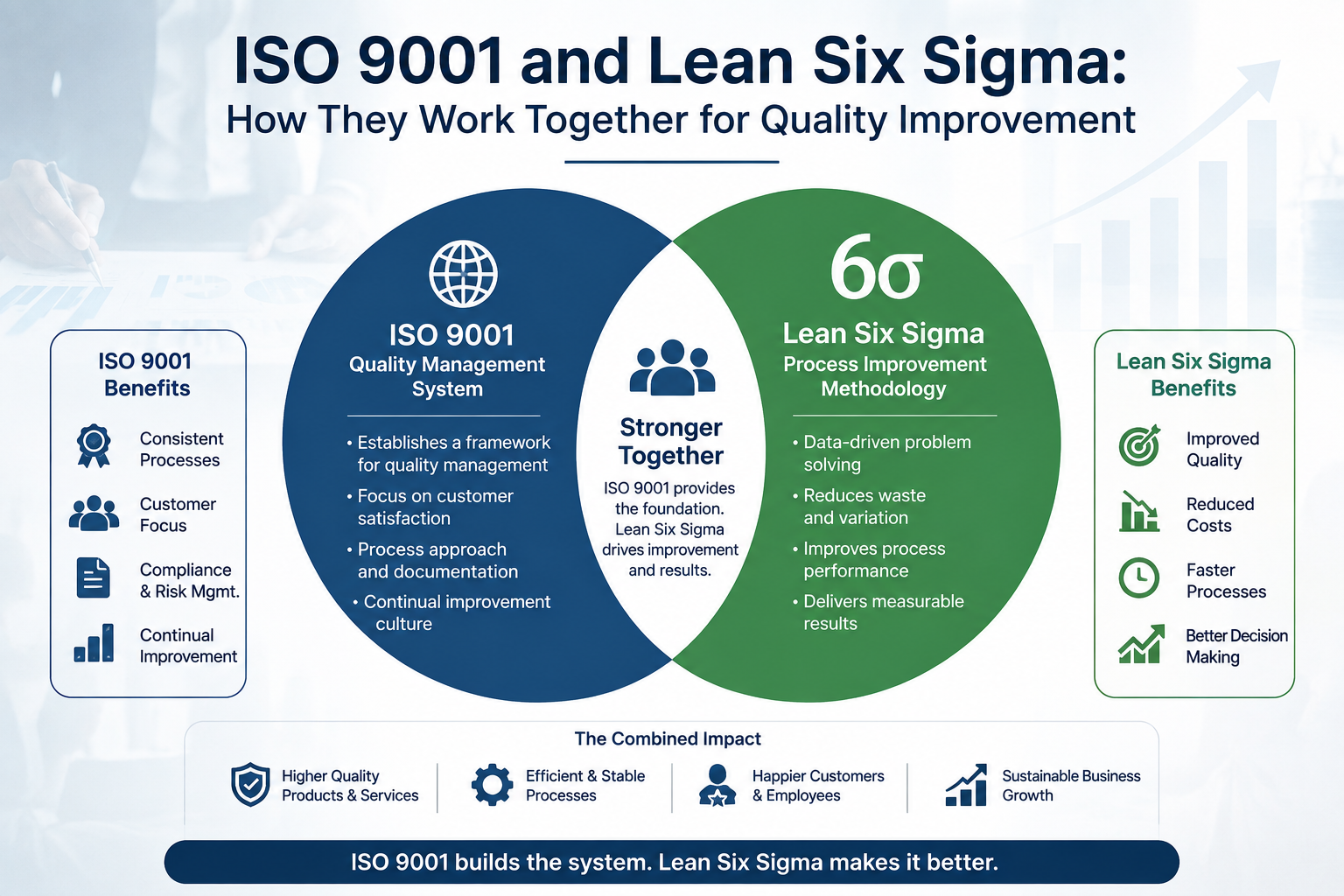

In the fast-paced world of business, achieving excellence in quality management is paramount. Two prominent methodologies that have gained traction in this regard are ISO 9001 and Lean Six Sigma. Both frameworks aim to enhance processes and improve overall quality, but they approach these goals from different angles. In this blog, we will explore how ISO 9001 and Lean Six Sigma work together to foster a culture of continuous improvement in organizations.
Understanding ISO 9001
ISO 9001 is an internationally recognized standard for quality management systems (QMS). Established by the International Organization for Standardization (ISO), it provides a framework for organizations to ensure they meet customer and regulatory requirements while continually improving their processes. The key principles of ISO 9001 include:
Exploring Lean Six Sigma
Lean Six Sigma is a methodology that combines the principles of Lean manufacturing and Six Sigma. Its primary focus is on eliminating waste (Lean) while reducing variability and improving quality (Six Sigma). Lean Six Sigma aims to enhance operational efficiency, reduce costs, and improve customer satisfaction. The core components include:
ISO 9001 and Lean Six Sigma: A Perfect Match
While ISO 9001 and Lean Six Sigma have distinct methodologies, they share common goals: improving quality, enhancing efficiency, and satisfying customers. Integrating these two approaches can create a robust framework for quality management that leads to significant process improvement.
Complementary Strengths
The strengths of each methodology complement the other effectively:
Implementing ISO 9001 and Lean Six Sigma Together
Integrating ISO 9001 and Lean Six Sigma into your organization’s quality management system can be a transformative process. Here’s how to get started:
1. Assess Current Processes
Begin by evaluating your existing processes to identify areas for improvement. This assessment should align with the requirements of ISO 9001 and the principles of Lean Six Sigma.
2. Train Employees
Provide training to employees on both ISO 9001 and Lean Six Sigma methodologies. Equip them with the necessary skills and knowledge to implement changes effectively.
3. Establish a Cross-Functional Team
Create a team that includes members from various departments. This collaboration ensures diverse perspectives and promotes a holistic approach to quality improvement.
4. Define Goals and Objectives
Set clear goals and objectives for your quality improvement initiatives. Ensure they align with both ISO 9001 requirements and Lean Six Sigma principles.
5. Use DMAIC for Problem Solving
Employ the DMAIC framework to tackle specific problems. This structured approach will help you define issues, measure performance, analyze data, improve processes, and control changes.
6. Monitor and Review
Regularly monitor and review the performance of your quality management system. Use data to assess the effectiveness of your initiatives and make necessary adjustments.
ISO 9001 vs Lean Six Sigma: Key Differences
While ISO 9001 and Lean Six Sigma share similar goals, they are not interchangeable. Here are some key differences:
Frequently Asked Questions (FAQs)
1. Can an organization implement ISO 9001 and Lean Six Sigma simultaneously?
Yes, organizations can implement both methodologies concurrently. Integrating Lean Six Sigma into an ISO 9001 framework can enhance the effectiveness of quality management initiatives.
2. What are the benefits of combining ISO 9001 and Lean Six Sigma?
Combining these methodologies leads to improved process efficiency, enhanced customer satisfaction, reduced waste, and a culture of continuous improvement.
3. Is ISO 9001 certification necessary for Lean Six Sigma implementation?
No, ISO 9001 certification is not mandatory for Lean Six Sigma implementation. However, having ISO 9001 certification can provide a strong foundation for Lean Six Sigma initiatives.
4. How long does it take to implement ISO 9001 and Lean Six Sigma?
The timeline for implementation varies based on the organization's size, complexity, and commitment to the process. Generally, it can take several months to a few years to achieve full integration.
Conclusion
In conclusion, the integration of ISO 9001 and Lean Six Sigma presents a powerful opportunity for organizations in India to enhance their quality management systems. By leveraging the strengths of both methodologies, businesses can drive significant improvements in efficiency, customer satisfaction, and overall quality. Whether you are a small enterprise or a large corporation, embracing these frameworks can set you on the path to sustainable success.
If you’re ready to embark on your journey towards quality improvement through ISO 9001 and Lean Six Sigma, contact us today for expert guidance and support!