Latest Post




Quality Management Courses




ITIL Framework Explained: Key Concepts, Processes & Service Lifecycle
In the fast-evolving world of Information Technology, managing services effectively is crucial for the success of any organization. One of the most recognized frameworks for IT Service Management (ITSM) is the ITIL Framework. In this blog, we will delve into the ITIL framework, explore its key concepts, processes, and the service lifecycle, while keeping the Indian audience in mind.
What is the ITIL Framework?
The ITIL framework, short for Information Technology Infrastructure Library, is a set of best practices aimed at aligning IT services with the needs of the business. Developed in the 1980s by the Central Computer and Telecommunications Agency (CCTA) in the UK, ITIL has evolved into a comprehensive framework that provides guidelines for managing IT services efficiently.
It is widely adopted across the globe, including India, where organizations are increasingly recognizing the importance of structured IT service management for improving efficiency and delivering value to customers.
Key Concepts of ITIL Framework
1. Service Management
At its core, the ITIL framework is about service management. Service management is a set of specialized organizational capabilities for providing value to customers in the form of services. It focuses on delivering the right services to the right customers at the right time.
2. Service Value System (SVS)
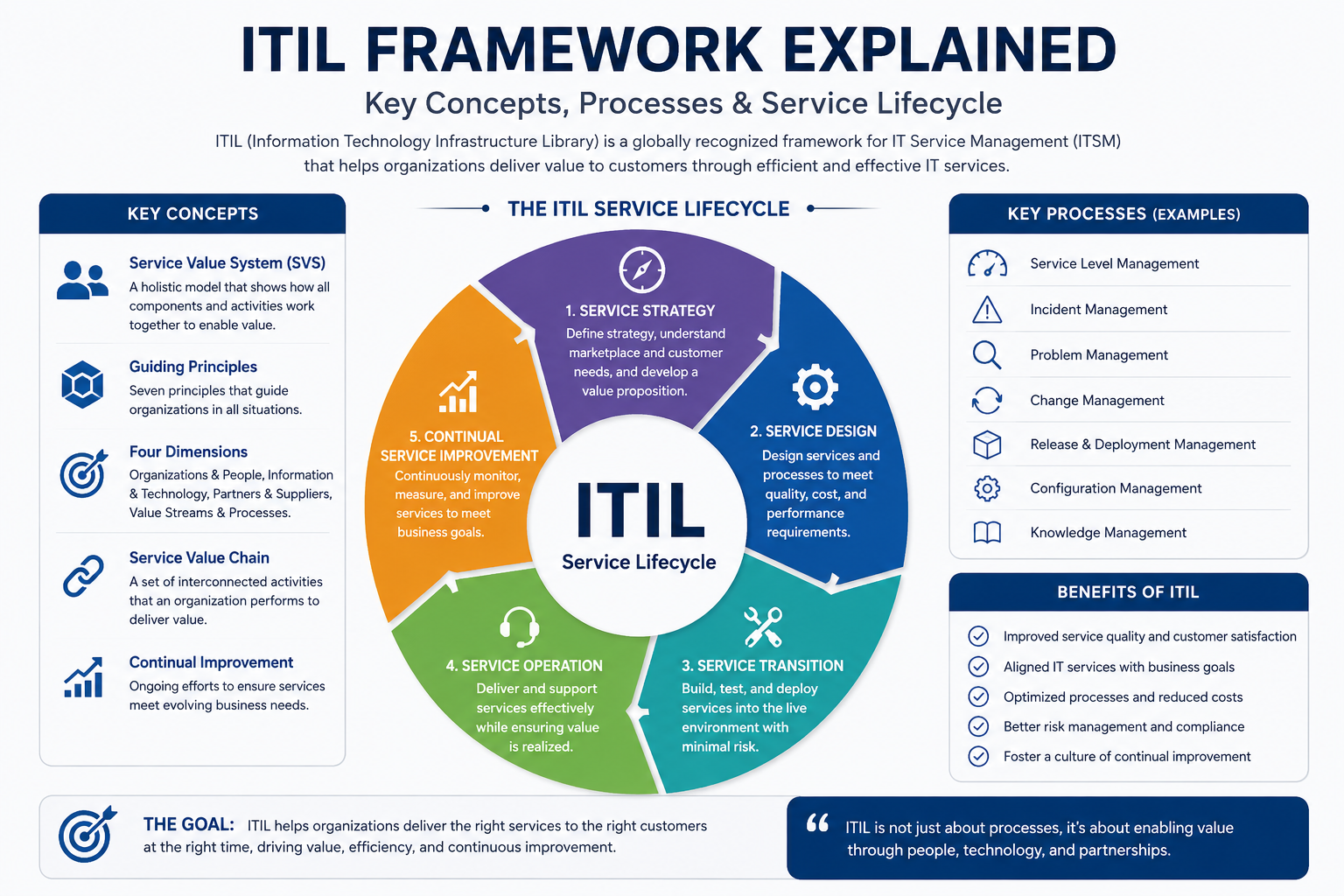
The Service Value System is a fundamental component of the ITIL framework. It ensures that all components and activities of an organization work together to facilitate value creation through IT-enabled services. The SVS includes various elements such as the ITIL service value chain, practices, governance, and continual improvement.
3. The Four Dimensions Model
ITIL also emphasizes a holistic approach through the Four Dimensions Model. This model ensures a balanced focus on the following four dimensions:
ITIL Processes
Understanding the various ITIL processes is key to implementing the framework effectively. Here are some of the critical processes defined in ITIL:
1. Incident Management
Incident Management focuses on restoring normal service operation as quickly as possible to minimize impact on the business. It involves identifying, logging, and resolving incidents in a systematic manner.
2. Problem Management
Problem Management aims to identify and manage the root causes of incidents. It involves proactive measures to prevent incidents from occurring in the first place, as well as reactive measures to eliminate the root causes of incidents that have already occurred.
3. Change Management
Change Management is about controlling the lifecycle of all changes to IT services. It ensures that changes are made with minimal disruption to services while maintaining a balance between risk and benefit.
4. Service Request Management
This process handles requests from users for information, advice, or access to IT services. Service Request Management ensures that user requests are fulfilled efficiently and effectively.
5. Service Level Management
Service Level Management is critical for ensuring that all current and planned IT services are delivered according to agreed-upon service level agreements (SLAs). It focuses on maintaining the quality of service delivery.
The ITIL Service Lifecycle
The ITIL service lifecycle is a key aspect of the ITIL framework. It consists of five stages that guide organizations through the planning, delivery, and ongoing management of IT services.
1. Service Strategy
The Service Strategy stage involves defining the objectives and goals for IT services, ensuring they align with business needs. This stage answers the question of how to serve customers best and create value.
2. Service Design
In the Service Design phase, organizations create and design new services or modify existing ones. This phase focuses on ensuring that services are designed to meet business requirements and can be delivered effectively.
3. Service Transition
The Service Transition phase focuses on the planning and management of service changes and deployments. It ensures that new or modified services are successfully transitioned into the live environment with minimal disruption.
4. Service Operation
Service Operation is concerned with the day-to-day delivery of IT services. This phase focuses on maintaining service quality and ensuring that services are delivered as intended.
5. Continual Service Improvement (CSI)
The Continual Service Improvement phase is about ongoing enhancement of services and processes. It uses metrics and feedback to identify opportunities for improvement and ensures that services evolve to meet changing business needs.
Importance of ITIL Framework in India
In India, the ITIL framework holds significant importance as businesses increasingly rely on technology to drive growth and efficiency. Here are some reasons why adopting the ITIL framework is crucial for Indian organizations:
FAQs
What is the primary goal of the ITIL framework?
The primary goal of the ITIL framework is to align IT services with the needs of the business, ensuring efficient service delivery and enhanced customer satisfaction.
How can organizations in India benefit from implementing the ITIL framework?
Organizations in India can benefit from improved efficiency, enhanced customer satisfaction, better risk management, and standardized processes by implementing the ITIL framework.
Is ITIL certification worth pursuing for IT professionals in India?
Yes, ITIL certification is valuable for IT professionals in India as it enhances their knowledge of IT service management and improves career prospects in a competitive job market.
Conclusion
The ITIL framework is a powerful tool for organizations looking to improve their IT service management practices. By understanding its key concepts, processes, and service lifecycle, Indian businesses can effectively manage their IT services, deliver value to customers, and drive growth.
If you're considering implementing the ITIL framework in your organization, or if you want to learn more about IT service management, feel free to reach out for expert guidance. Embrace the ITIL framework and enhance your service management capabilities today!
Call to Action: Ready to take the next step in your IT service management journey? Contact us for a consultation on how to implement the ITIL framework effectively in your organization!