Latest Post

Quality Management Courses



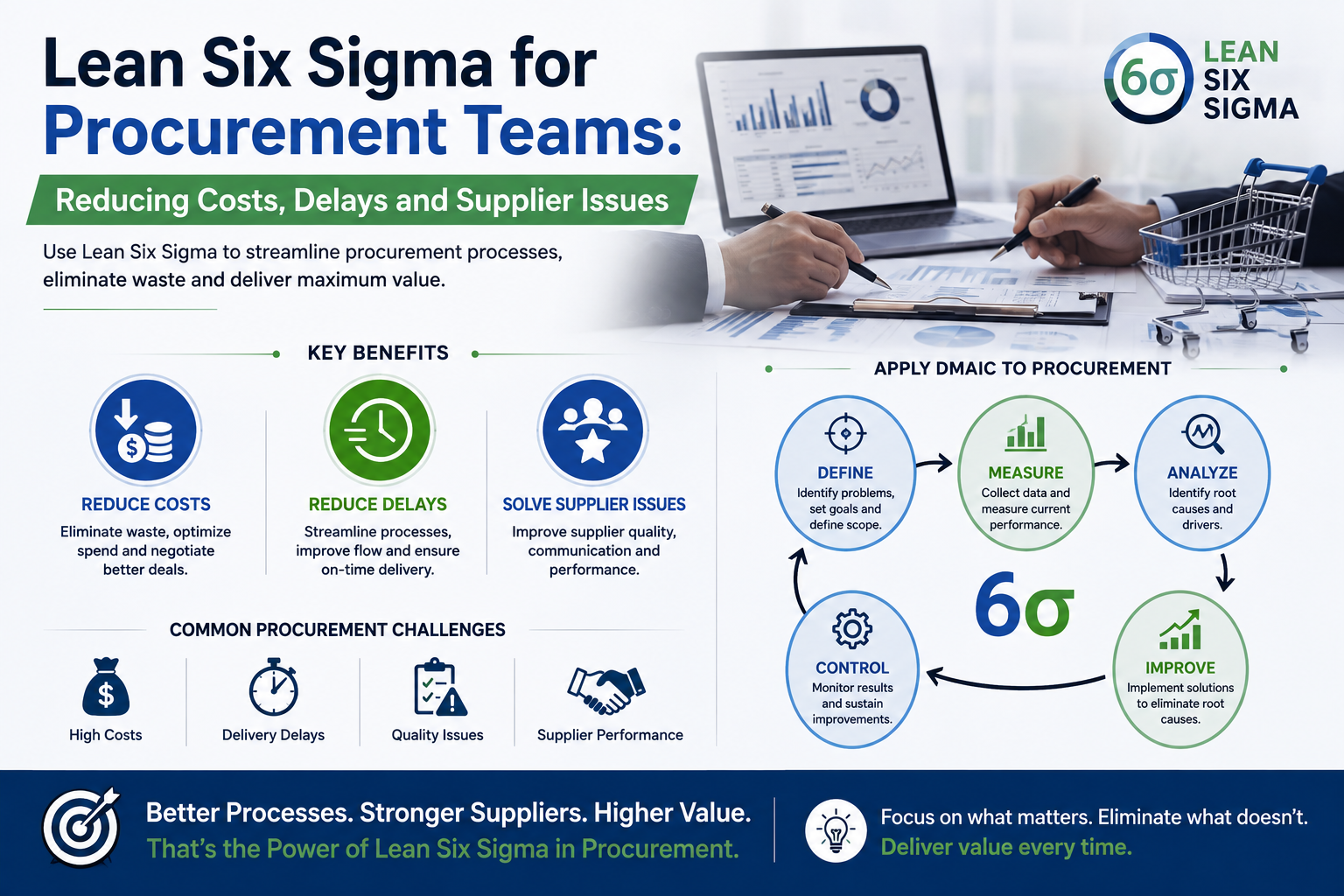

In today's competitive market, businesses in India are continually looking for ways to optimize their processes and reduce costs. One method that has gained traction is the application of Lean Six Sigma in procurement. This approach not only enhances efficiency but also addresses challenges such as delays, supplier issues, and overall procurement cost reduction. In this blog, we will explore how Lean Six Sigma can transform your procurement process and provide actionable insights for procurement teams.
Understanding Lean Six Sigma
Before diving into its applications in procurement, it’s essential to understand what Lean Six Sigma entails. Lean methodology focuses on eliminating waste and improving flow, while Six Sigma emphasizes reducing variation and improving quality. Together, they create a powerful framework for process improvement.
The Importance of Lean Six Sigma in Procurement
Procurement is a critical function in any organization, especially in India’s rapidly growing economy. With increasing competition and rising costs, procurement teams must leverage methodologies like Lean Six Sigma to enhance their operations. Here are some key benefits:
1. Cost Reduction
One of the primary goals of procurement cost reduction is to minimize expenses without compromising quality. Lean Six Sigma employs tools such as value stream mapping to identify non-value-adding activities and eliminate them, leading to significant cost savings.
2. Reducing Delays
Delays in procurement can lead to missed opportunities and increased costs. By applying Lean Six Sigma principles, teams can streamline their processes, reduce cycle times, and ensure timely delivery of goods and services.
3. Supplier Management
Effective supplier management is crucial for maintaining quality and reliability. Lean Six Sigma encourages collaboration with suppliers to identify areas for improvement, fostering stronger relationships and better performance.
4. Procurement Process Improvement
Continuous improvement is at the heart of Lean Six Sigma. By regularly assessing procurement processes, teams can identify inefficiencies and implement changes that lead to enhanced performance and productivity.
Implementing Lean Six Sigma in Procurement
To successfully implement Lean Six Sigma in your procurement team, consider the following steps:
1. Define the Problem
Start by clearly defining the issues your procurement team faces. This could include high costs, long lead times, or supplier quality problems. A well-defined problem statement sets the foundation for the rest of the process.
2. Measure Current Performance
Gather data to understand your current procurement performance. Key metrics might include cycle time, cost per purchase order, and supplier performance ratings. This data will serve as a baseline for future improvements.
3. Analyze the Data
Using tools like Pareto analysis or cause-and-effect diagrams, identify the root causes of the problems you've defined. Understanding these causes is vital for implementing effective solutions.
4. Improve Processes
Develop and implement solutions based on your analysis. This may involve process redesign, supplier training, or the adoption of new technologies. Engage your team and suppliers in this phase to ensure buy-in and collaboration.
5. Control and Sustain Improvements
Once improvements are made, establish control mechanisms to sustain them. This could include regular performance reviews, updated training for staff, and continuous feedback loops with suppliers.
Case Study: Lean Six Sigma Success in Procurement
Let’s take a look at a hypothetical case study of an Indian manufacturing company that adopted Lean Six Sigma in its procurement process.
The company faced challenges such as high procurement costs and frequent delays in deliveries. By implementing Lean Six Sigma:
As a result, the company not only reduced costs but also strengthened its relationships with suppliers, ultimately leading to better service and product quality.
Key Tools and Techniques in Lean Six Sigma for Procurement
Several tools and techniques can aid procurement teams in their Lean Six Sigma journey:
1. Value Stream Mapping
This visual tool helps teams identify waste and streamline processes by mapping out the flow of materials and information.
2. 5S Methodology
This organizational tool promotes a clean and efficient workspace, which can be applied to procurement offices to enhance productivity.
3. Root Cause Analysis
Techniques such as the Fishbone diagram can help procurement teams identify and address the root causes of issues effectively.
4. DMAIC Approach
The Define, Measure, Analyze, Improve, and Control (DMAIC) framework provides a structured approach for process improvement that can be applied to procurement.
Challenges in Implementing Lean Six Sigma in Procurement
While the benefits of Lean Six Sigma are clear, organizations may face several challenges in implementation:
1. Resistance to Change
Employees may resist changes to established processes. It's essential to communicate the benefits of Lean Six Sigma clearly and involve team members in the improvement process.
2. Data Collection and Analysis
Accurate data is critical for effective analysis. Organizations must invest in data collection tools and training to ensure accurate and timely information.
3. Sustaining Improvements
Without ongoing commitment, improvements may fade over time. Regular training, performance reviews, and feedback loops are necessary to sustain progress.
FAQs
What is Lean Six Sigma in procurement?
Lean Six Sigma in procurement refers to the application of Lean principles and Six Sigma methodologies to optimize procurement processes, reduce costs, and improve supplier management.
How can Lean Six Sigma help in procurement cost reduction?
By identifying and eliminating waste in the procurement process, Lean Six Sigma helps organizations lower costs associated with procurement, such as excess inventory and inefficient supplier relationships.
What are some common tools used in Lean Six Sigma for procurement?
Common tools include value stream mapping, the 5S methodology, root cause analysis techniques, and the DMAIC framework.
Can Lean Six Sigma improve supplier management?
Yes, Lean Six Sigma encourages collaboration with suppliers to identify improvement areas, leading to better quality, reliability, and performance.
Conclusion
Implementing Lean Six Sigma in procurement can be a game-changer for Indian businesses looking to enhance efficiency, reduce costs, and improve supplier relationships. By embracing this methodology, procurement teams can drive significant improvements in their processes, ultimately contributing to the overall success of the organization.
If you're ready to transform your procurement processes, consider adopting Lean Six Sigma principles today. For more insights and expert guidance on procurement optimization, contact us!