
Latest Post



Quality Management Courses




Lean Six Sigma for Supply Chain Management: Reducing Delays and Costs
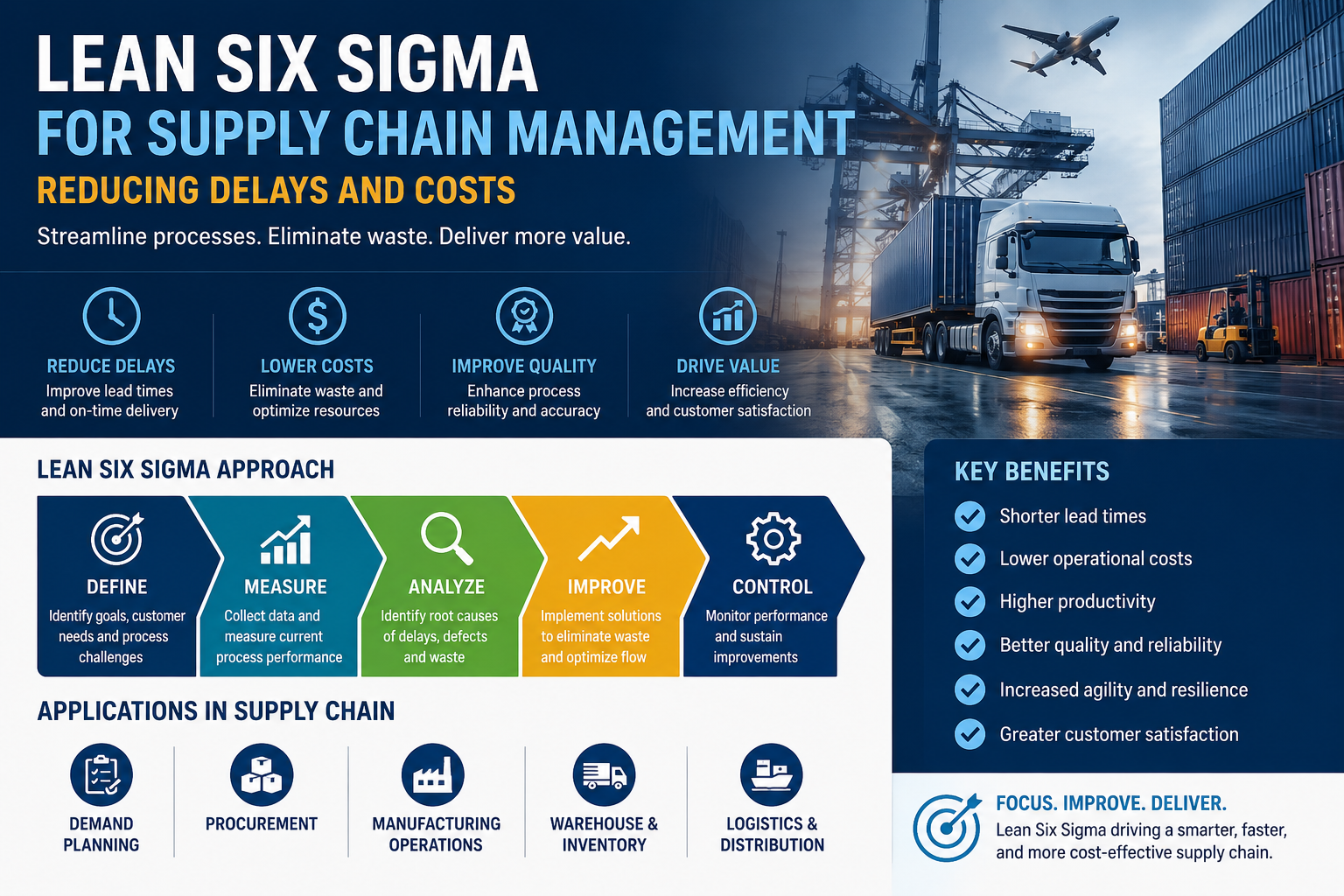
In the rapidly evolving world of supply chain management, efficiency and cost-effectiveness are paramount. The integration of Lean Six Sigma principles can dramatically enhance your supply chain process improvement strategies. This blog explores how Lean Six Sigma can help businesses in India optimize their logistics and reduce delays and costs.
Understanding Lean Six Sigma
Lean Six Sigma is a methodology that combines Lean manufacturing principles and Six Sigma techniques to improve performance by systematically removing waste and reducing variation. By eliminating inefficiencies, organizations can streamline their operations and enhance quality, which is crucial in today’s competitive market.
The Importance of Lean Six Sigma in Supply Chain Management
For Indian businesses, adopting Lean Six Sigma in supply chain management offers several advantages:
Implementing Lean Six Sigma in Your Supply Chain
To effectively implement Lean Six Sigma in your supply chain, consider the following steps:
1. Define Your Goals
Identify specific goals related to your supply chain process improvement. Whether it’s reducing lead times, improving order accuracy, or minimizing inventory costs, having clear objectives will guide your efforts.
2. Measure Current Performance
Collect data on your current supply chain processes. This could include metrics such as delivery times, defect rates, and inventory turnover. Understanding where you stand is crucial for identifying areas for improvement.
3. Analyze the Data
Utilize statistical tools to analyze the collected data. Look for patterns and root causes of inefficiencies. This analysis will provide insights into where Lean Six Sigma can be most effectively applied.
4. Improve Processes
Implement improvements based on your analysis. This could involve redesigning workflows, adopting new technologies, or training staff on Lean Six Sigma principles. The goal is to create more efficient and effective processes.
5. Control and Sustain Improvements
Establish control measures to ensure that the improvements are sustained over time. Regularly review performance metrics to identify any deviations from the desired outcomes and make necessary adjustments.
Logistics Optimization Through Lean Six Sigma
Logistics is a critical component of the supply chain, and Lean Six Sigma can bring about significant improvements in this area:
Streamlined Transportation
By analyzing transportation routes and methods, businesses can identify inefficiencies and reduce transportation costs. Lean Six Sigma encourages the use of data to optimize delivery routes and improve transportation efficiency.
Inventory Management
Lean Six Sigma helps in optimizing inventory levels. By reducing excess inventory and implementing just-in-time practices, businesses can lower holding costs and minimize waste.
Supplier Collaboration
Working closely with suppliers can lead to enhanced quality and reduced lead times. Lean Six Sigma promotes a culture of collaboration, which is essential for effective supply chain management.
Real-World Examples of Lean Six Sigma in Action
Many Indian companies have successfully implemented Lean Six Sigma in their supply chains, resulting in remarkable improvements:
Case Study: Tata Steel
Tata Steel adopted Lean Six Sigma to streamline its supply chain processes. By focusing on waste reduction and process optimization, the company was able to significantly decrease lead times and enhance product quality.
Case Study: Hindustan Unilever
Hindustan Unilever implemented Lean Six Sigma in its logistics operations. The result was a marked improvement in delivery efficiency, allowing the company to meet customer demands more effectively while reducing costs.
Challenges in Implementing Lean Six Sigma
While the benefits of Lean Six Sigma are clear, there are challenges in implementation:
Conclusion
In the quest for efficiency and cost reduction, Lean Six Sigma emerges as a powerful tool for supply chain management. By focusing on process improvement and logistics optimization, Indian businesses can not only enhance their operational effectiveness but also deliver greater value to their customers. Embracing Lean Six Sigma is not just a trend; it is a strategic move towards sustainable growth and success in the competitive landscape of supply chain management.
FAQs
What is Lean Six Sigma?
Lean Six Sigma is a methodology that combines Lean principles, which focus on eliminating waste, and Six Sigma techniques, which aim at reducing variability and improving quality.
How can Lean Six Sigma improve my supply chain?
By identifying inefficiencies and implementing process improvements, Lean Six Sigma can help reduce costs, enhance quality, and optimize delivery times in your supply chain.
Is Lean Six Sigma applicable to all industries?
Yes, Lean Six Sigma principles can be applied across various industries, including manufacturing, logistics, healthcare, and service sectors.
What are some common tools used in Lean Six Sigma?
Common tools include DMAIC (Define, Measure, Analyze, Improve, Control), value stream mapping, root cause analysis, and statistical process control.
How long does it take to see results from Lean Six Sigma implementation?
Results can vary depending on the complexity of the processes being improved. However, many organizations start seeing improvements within a few months of implementation.
Call to Action
Are you ready to transform your supply chain with Lean Six Sigma? Contact us today to learn how we can help you implement effective supply chain process improvement strategies tailored to your business needs. Let’s work together to optimize your logistics and drive down costs!