
Latest Post



Quality Management Courses



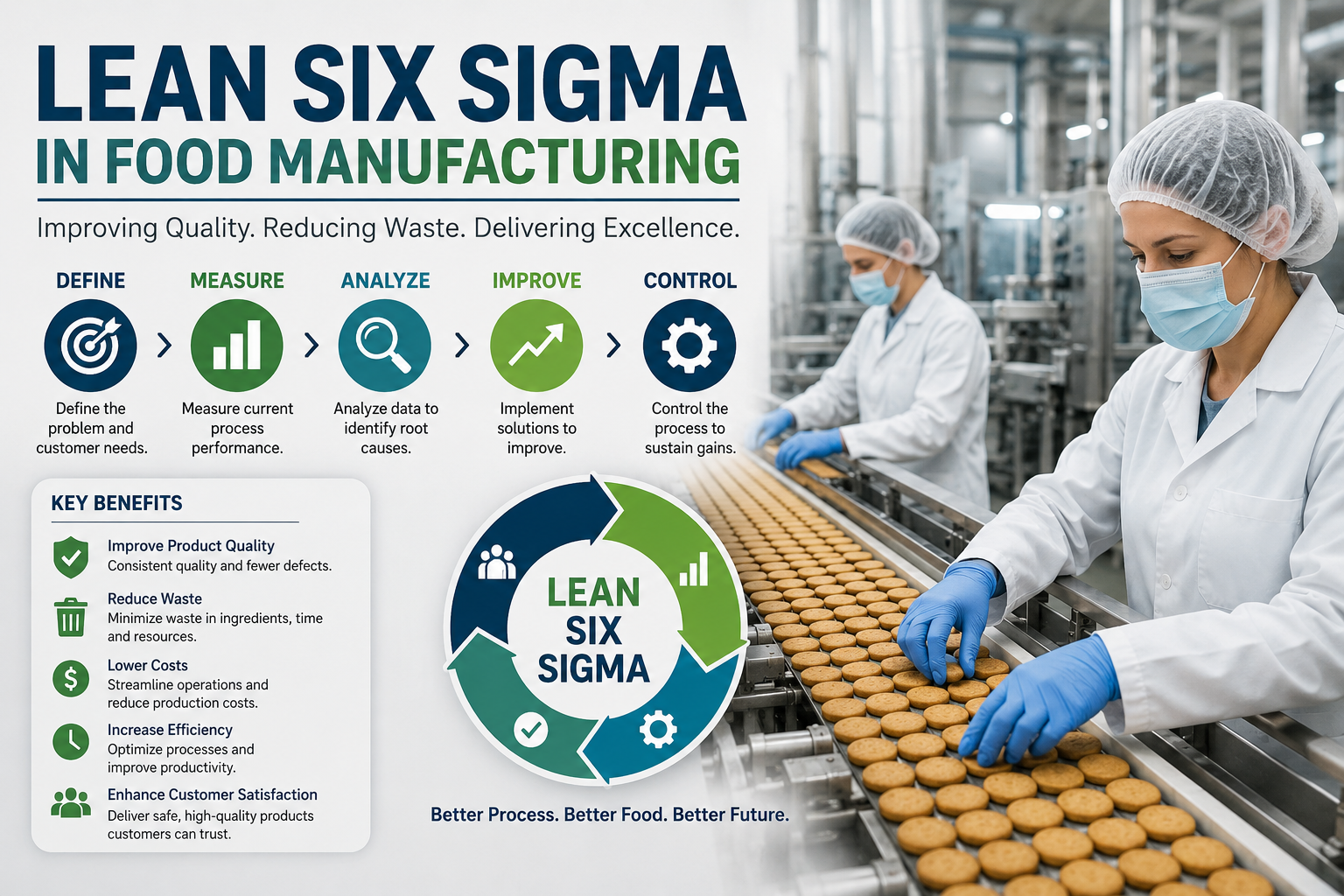

The food manufacturing industry in India is witnessing a significant transformation, driven by the need for improved quality and efficiency. As competition intensifies, manufacturers are increasingly adopting methodologies like Lean Six Sigma to streamline operations, ensure food safety, and enhance overall productivity. In this blog, we will explore how Lean Six Sigma can revolutionize the food industry and help businesses achieve excellence in food manufacturing quality.
Understanding Lean Six Sigma
Before diving into the benefits of Lean Six Sigma in the food industry, it’s essential to understand what these methodologies entail. Lean focuses on eliminating waste and maximizing value by optimizing processes. On the other hand, Six Sigma aims to reduce variability and defects, ensuring consistent quality. Together, they form a powerful approach that can lead to remarkable improvements in food process improvement and efficiency.
The Importance of Quality in Food Manufacturing
In the food manufacturing sector, quality is paramount. Consumers are becoming more health-conscious and are demanding products that are safe and of high quality. This trend places immense pressure on manufacturers to adhere to stringent quality standards while maintaining cost-effectiveness. Implementing Lean Six Sigma can significantly enhance food manufacturing quality by identifying and eliminating inefficiencies in production processes.
Key Benefits of Lean Six Sigma in Food Manufacturing
1. Enhanced Food Safety
One of the primary concerns in the food industry is safety. Lean Six Sigma methodologies help identify potential hazards in the production process and implement controls to mitigate risks. By using Six Sigma tools, manufacturers can analyze data to ensure compliance with food safety regulations, thus enhancing consumer trust and reducing the likelihood of foodborne illnesses.
2. Improved Operational Efficiency
Lean principles focus on streamlining processes by eliminating waste. In food manufacturing, this can mean reducing excess inventory, minimizing processing time, and optimizing resource utilization. By adopting lean food production techniques, manufacturers can enhance operational efficiency and reduce costs while maintaining high-quality standards.
3. Consistent Product Quality
With the implementation of Six Sigma, food manufacturers can maintain consistent quality through rigorous quality control processes. By reducing variability, manufacturers can ensure that each batch of products meets the same high standards, leading to increased customer satisfaction and loyalty.
4. Cost Reduction
Reducing waste and inefficiencies directly translates to cost savings. Lean Six Sigma encourages a culture of continuous improvement, where employees are engaged in identifying areas for cost reduction without compromising quality. This proactive approach can lead to significant financial benefits for food manufacturers.
Implementing Lean Six Sigma in Food Manufacturing
To successfully implement Lean Six Sigma in the food industry, companies need to follow a structured approach. Here are some key steps to consider:
1. Define the Problem
Identify specific areas within the production process that require improvement. This could involve analyzing customer feedback, quality control reports, or production metrics.
2. Measure Current Performance
Gather data on current processes to establish a baseline. This will help in understanding the extent of the problem and the potential impact of improvements.
3. Analyze the Data
Use statistical tools to identify root causes of inefficiencies. This analysis will guide the development of targeted improvement strategies.
4. Improve the Process
Implement changes based on the analysis. This may involve redesigning workflows, retraining staff, or introducing new technologies.
5. Control the New Process
Establish monitoring systems to ensure that improvements are sustained over time. Regular audits and reviews will help in maintaining quality and efficiency.
Case Studies: Success Stories in Lean Six Sigma Implementation
Several Indian food manufacturers have successfully implemented Lean Six Sigma methodologies, resulting in remarkable improvements. For example, a leading dairy company reduced processing time by 30% through waste elimination techniques. Another case involved a snack manufacturer that enhanced product consistency and reduced defects by employing Six Sigma tools to analyze production data.
Challenges in Implementing Lean Six Sigma
While the benefits of Lean Six Sigma are evident, companies may face challenges in its implementation. Resistance to change is a common hurdle, as employees may be accustomed to existing processes. Additionally, inadequate training and lack of management support can hinder the successful adoption of Lean Six Sigma practices.
Conclusion
Lean Six Sigma is not just a management philosophy; it is a transformative approach that can significantly enhance food manufacturing quality in India. By focusing on process improvement and operational efficiency, food manufacturers can meet the growing demands of consumers while ensuring safety and consistency. As the industry continues to evolve, adopting Lean Six Sigma will be crucial for companies looking to thrive in a competitive market.
FAQs
What is Lean Six Sigma?
Lean Six Sigma is a combination of two methodologies: Lean, which focuses on eliminating waste, and Six Sigma, which aims to reduce variability and defects in processes. Together, they help organizations improve quality and efficiency.
How can Lean Six Sigma improve food safety?
By identifying potential hazards and implementing controls, Lean Six Sigma helps ensure compliance with food safety standards, thus reducing the risk of foodborne illnesses.
What are some tools used in Lean Six Sigma?
Common tools include DMAIC (Define, Measure, Analyze, Improve, Control), process mapping, root cause analysis, and statistical process control.
Can small food manufacturers benefit from Lean Six Sigma?
Absolutely! Lean Six Sigma can be scaled to fit organizations of any size. Small manufacturers can achieve significant improvements in quality and efficiency, enhancing their competitiveness.
Call to Action
If you’re looking to enhance your food manufacturing processes and ensure the highest quality standards, consider implementing Lean Six Sigma in your operations. Contact us today to learn how our expert consultants can guide you through the journey of process improvement and operational excellence!