
Latest Post




Quality Management Courses



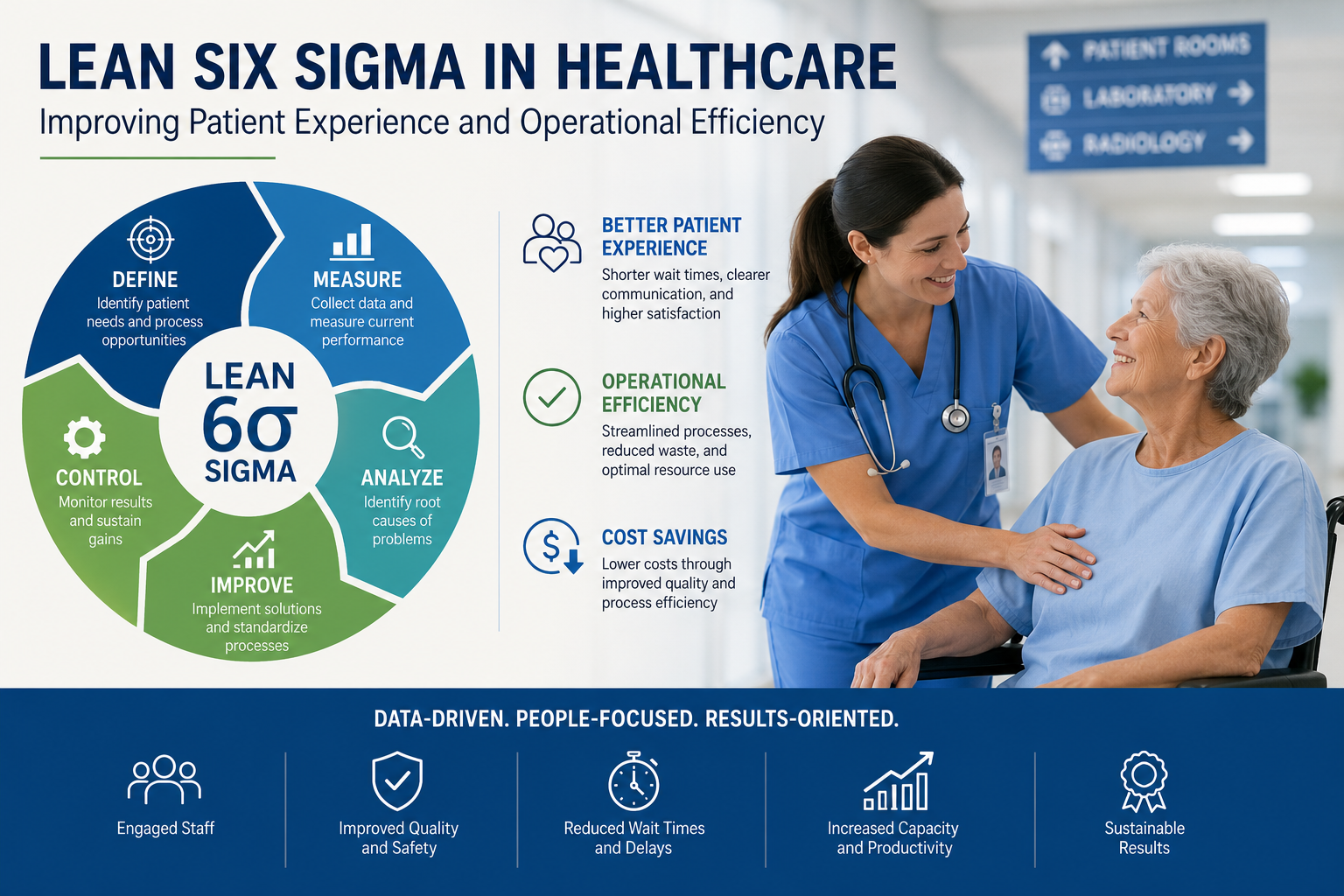

Lean Six Sigma in Healthcare: Improving Patient Experience and Operational Efficiency
In the ever-evolving landscape of healthcare, hospitals and medical institutions in India are continually seeking innovative strategies to enhance patient care while managing costs effectively. One such strategy that has gained significant traction is the implementation of Lean Six Sigma in healthcare. This powerful methodology not only improves operational efficiency but also contributes to a superior patient experience. In this blog, we will explore how Lean Six Sigma can be effectively applied in hospitals for process improvement, ultimately leading to better health outcomes and patient satisfaction.
What is Lean Six Sigma?
Lean Six Sigma is a methodology that combines the principles of Lean manufacturing and Six Sigma to eliminate waste and reduce variation in processes. While Lean focuses on streamlining processes by removing non-value-added activities, Six Sigma emphasizes reducing defects and improving quality. Together, they create a robust framework for operational excellence, making them highly applicable in the healthcare sector.
Importance of Lean Six Sigma in Healthcare
The healthcare industry is burdened with complexities, including regulatory compliance, rising costs, and an ever-increasing demand for quality care. Implementing Lean Six Sigma can significantly impact hospitals by:
How Lean Six Sigma Can Transform Hospital Processes
1. Identifying and Analyzing Problems
The first step in implementing Lean Six Sigma is to identify areas that require improvement. This could include long patient wait times, high readmission rates, or inefficient billing processes. By using data-driven analysis, healthcare providers can pinpoint specific issues affecting patient care.
2. Designing Solutions
Once problems are identified, the next step is designing targeted solutions. This involves brainstorming potential changes and improvements, such as redesigning patient flow, implementing new technologies, or refining staff training programs. The goal is to create a streamlined process that minimizes waste and maximizes quality.
3. Implementing Changes
Implementation requires careful planning and communication. It’s essential to involve all stakeholders, including healthcare professionals and administrative staff, to ensure a smooth transition. Training sessions and workshops can be organized to familiarize staff with the new processes and methodologies.
4. Monitoring and Sustaining Improvements
After implementing changes, continuous monitoring is crucial. This ensures that improvements are sustained over time and allows for adjustments as necessary. Data collection and analysis play a significant role in this phase, providing insights into the effectiveness of the implemented solutions.
Case Studies: Successful Implementation of Lean Six Sigma in Indian Hospitals
Several hospitals in India have successfully adopted Lean Six Sigma to achieve remarkable results. Here are a couple of real-world examples:
Case Study 1: Apollo Hospitals
Apollo Hospitals implemented Lean Six Sigma to enhance its patient admission process. By analyzing the entire process, they identified bottlenecks and unnecessary steps that contributed to longer wait times. After redesigning the admission workflow, Apollo Hospitals experienced a 30% reduction in patient wait times, leading to improved patient satisfaction scores.
Case Study 2: Fortis Healthcare
Fortis Healthcare focused on reducing medication errors through Lean Six Sigma. By standardizing processes and implementing a robust checking system, they significantly decreased medication errors, resulting in safer patient outcomes and increased trust among patients and their families.
Challenges in Implementing Lean Six Sigma in Healthcare
While the benefits of Lean Six Sigma are substantial, several challenges may arise during implementation:
Frequently Asked Questions (FAQs)
1. What is the primary goal of Lean Six Sigma in healthcare?
The primary goal of Lean Six Sigma in healthcare is to improve patient care by enhancing operational efficiency, reducing waste, and minimizing errors in processes.
2. How long does it take to implement Lean Six Sigma in a hospital?
The timeline for implementing Lean Six Sigma varies based on the size and complexity of the hospital, but initial changes can often be observed within a few months. Full implementation may take a year or more.
3. Is Lean Six Sigma only applicable to large hospitals?
No, Lean Six Sigma can be implemented in healthcare facilities of all sizes, including small clinics and community hospitals. The principles can be adapted to fit the specific needs and capacities of any institution.
4. What training is required for staff to implement Lean Six Sigma?
Staff training can range from basic awareness programs to comprehensive training sessions on Lean Six Sigma principles and tools. Many hospitals engage external consultants for specialized training.
Conclusion
Lean Six Sigma presents a transformative opportunity for healthcare providers in India to improve patient experiences and operational efficiency. By embracing this methodology, hospitals can streamline processes, reduce waste, and deliver higher-quality care to patients. As the healthcare landscape continues to evolve, adopting Lean Six Sigma will be crucial for hospitals aiming to stay competitive and meet the needs of their patients effectively.
Call to Action
If you are a healthcare provider looking to enhance your hospital's processes and improve patient satisfaction, consider implementing Lean Six Sigma today. For more information and expert guidance, contact us to learn how we can help you achieve operational excellence in your hospital.