Latest Post

Quality Management Courses




In the ever-evolving landscape of business, effective Human Resource Management (HRM) is crucial for achieving organizational goals. One innovative approach that has gained traction is the integration of Lean Six Sigma in HR. This methodology not only enhances HR processes but also significantly improves the overall employee experience. In this article, we will delve deep into the principles of Lean Six Sigma and explore how it can transform human resource management in India.
Understanding Lean Six Sigma
Before we explore its application in HR, it’s essential to understand what Lean Six Sigma entails. Lean principles focus on eliminating waste and improving efficiency, while Six Sigma aims at reducing variation and enhancing quality. Together, they create a powerful toolkit for process improvement.
The Importance of Lean Six Sigma in HR
Implementing Lean Six Sigma HR can lead to streamlined processes, better resource allocation, and a more engaged workforce. By using these methodologies, HR departments can identify inefficiencies in their processes, leading to significant improvements in service delivery.
Benefits of Using Lean Six Sigma in Human Resource Management
Integrating Lean Six Sigma into HR practices comes with numerous benefits:
Applying Lean Six Sigma in HR Processes
To harness the power of six sigma human resource management, HR leaders can follow a structured approach:
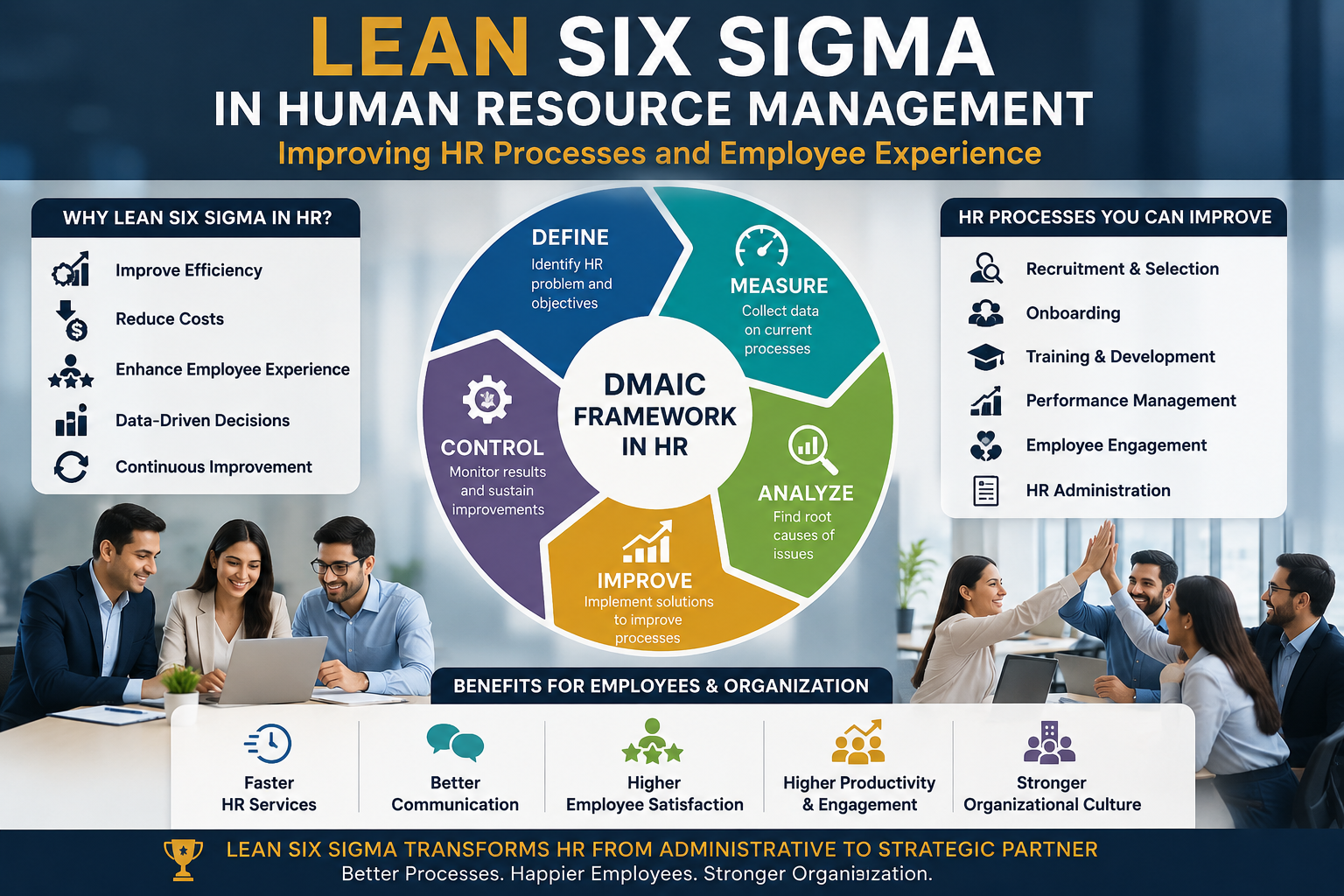
1. Define the Problem
The first step is to clearly define the problem areas within HR processes. This could range from high employee turnover to slow recruitment processes. Engaging employees in this phase can provide valuable insights into existing issues.
2. Measure Current Processes
Utilize data analytics to measure the current performance of HR processes. Identify key performance indicators (KPIs) related to HR functions such as recruitment, onboarding, and employee engagement.
3. Analyze the Data
Once you have the data, analyze it to identify root causes of inefficiencies. Techniques such as cause-and-effect diagrams and Pareto analysis can be beneficial at this stage.
4. Improve Processes
Implement solutions based on the analysis. This could involve redesigning the recruitment process, improving onboarding programs, or enhancing performance management systems. The goal is to create a more streamlined and effective HR process.
5. Control and Monitor
After implementing improvements, it's crucial to establish control mechanisms. Continuous monitoring ensures that the improvements are sustained over time and that any new issues are promptly addressed.
Examples of Lean Six Sigma in HR
Several organizations in India have successfully implemented Lean Six Sigma in their HR processes:
Case Study: A Leading IT Company
A prominent IT firm in India faced challenges with their recruitment process, leading to prolonged vacancies and lost productivity. By applying Lean Six Sigma, they identified bottlenecks in their applicant tracking system. After streamlining the process, they reduced the time-to-hire by 40%, leading to increased productivity and a better candidate experience.
Case Study: A Manufacturing Firm
A manufacturing company struggled with high employee turnover. By using Lean Six Sigma methodologies, they conducted surveys to uncover the reasons behind employee dissatisfaction. Based on the findings, they revamped their employee engagement initiatives, resulting in a 30% decrease in turnover rates.
Challenges in Implementing Lean Six Sigma in HR
While the benefits are substantial, integrating Lean Six Sigma into HR processes is not without challenges:
FAQs about Lean Six Sigma in HR
What is Lean Six Sigma in HR?
Lean Six Sigma in HR is the application of Lean and Six Sigma principles to improve HR processes, reduce waste, and enhance employee experience.
How can Lean Six Sigma improve HR processes?
By identifying inefficiencies, measuring performance, and implementing data-driven improvements, Lean Six Sigma can streamline HR functions such as recruitment, onboarding, and performance management.
Is Lean Six Sigma applicable to all HR areas?
Yes, Lean Six Sigma can be applied to various HR areas, including talent acquisition, employee onboarding, performance evaluation, and employee engagement initiatives.
What are the main challenges in implementing Lean Six Sigma in HR?
Challenges include resistance to change, lack of training, and the need for a long-term commitment to sustain process improvements.
Conclusion
Integrating Lean Six Sigma HR methodologies into human resource management can lead to significant improvements in efficiency, employee satisfaction, and overall organizational performance. As companies in India continue to navigate the complexities of the modern workplace, adopting such innovative approaches will be crucial for maintaining a competitive edge.
If you're looking to enhance your HR processes and improve the employee experience, consider implementing Lean Six Sigma strategies today. Start your journey towards HR process optimization and reap the benefits of a more efficient and engaged workforce!
Call to Action
Are you ready to transform your HR processes with Lean Six Sigma? Contact us today to learn how we can help you implement these methodologies and improve your organization's human resource management!