
Latest Post

Quality Management Courses


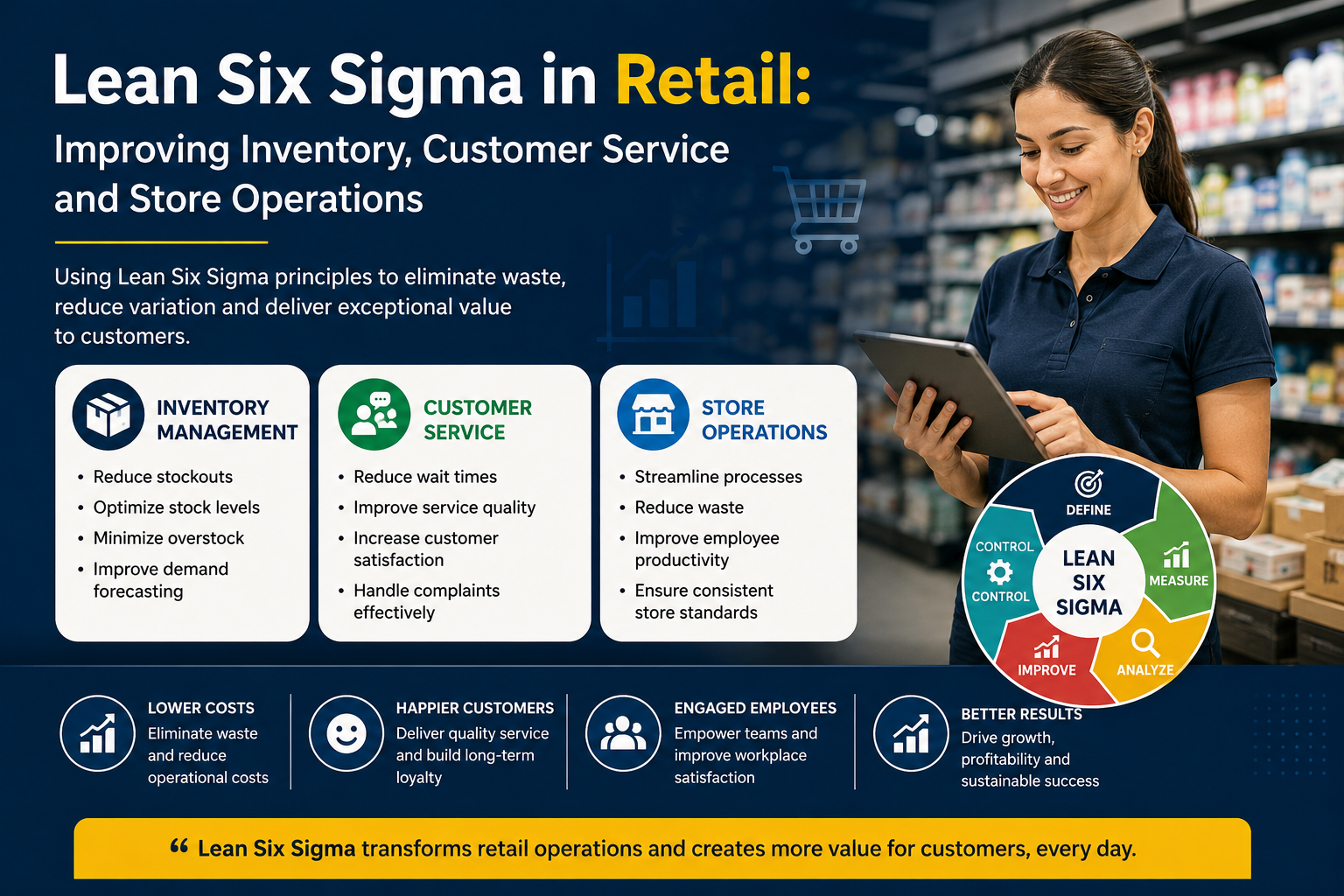

In the rapidly evolving landscape of the Indian retail sector, maintaining a competitive edge requires businesses to adopt innovative strategies. One such methodology that has gained considerable traction is Lean Six Sigma in retail. This powerful combination focuses on enhancing operational efficiency and customer satisfaction, ultimately driving profitability. In this blog, we will explore how Lean Six Sigma can be applied to improve inventory management, customer service, and store operations, helping retailers achieve retail process improvement.
Understanding Lean Six Sigma
Before delving into its applications in retail, it's essential to understand what Lean Six Sigma entails. Lean principles aim to eliminate waste and enhance efficiency, while Six Sigma focuses on reducing variation and improving quality. When combined, they create a robust framework that can significantly impact how retailers operate.
The Importance of Lean Six Sigma in Retail
In the context of retail, Lean Six Sigma can lead to streamlined processes, reduced costs, and improved customer experiences. As retailers in India face challenges like fluctuating consumer demand, supply chain disruptions, and increasing competition, embracing this methodology can pave the way for sustainable growth.
Improving Inventory Management
Effective inventory management is a cornerstone of retail success. Excess inventory can lead to increased holding costs, while stockouts can result in lost sales and dissatisfied customers. Here’s how Lean Six Sigma in retail can enhance inventory processes:
1. Identify and Eliminate Waste
Utilizing Lean principles, retailers can identify non-value-adding activities in their inventory management processes. Activities such as overstocking, excessive handling, and inefficient replenishment can be analyzed and minimized. By streamlining these processes, retailers can reduce costs and improve overall efficiency.
2. Implement Data-Driven Decision Making
Data is crucial in inventory process improvement. By leveraging data analytics, retailers can forecast demand more accurately, ensuring that stock levels align with consumer needs. This reduces excess inventory and minimizes stockouts, leading to improved customer satisfaction.
3. Continuous Improvement Culture
Lean Six Sigma fosters a culture of continuous improvement. Retailers can implement regular training sessions for staff, encouraging them to identify inefficiencies and suggest improvements. This empowers employees and leads to ongoing enhancements in inventory management.
Enhancing Customer Service
Customer service is a key differentiator in the retail industry. By integrating Lean Six Sigma methodologies, retailers can enhance their service quality and foster customer loyalty.
1. Streamline Customer Interactions
Mapping customer interactions can reveal bottlenecks in service delivery. By applying Lean principles, retailers can redesign these processes to eliminate delays and enhance the overall customer experience. For instance, reducing the time taken for checkout can significantly improve customer satisfaction.
2. Utilize Customer Feedback for Improvement
Gathering and analyzing customer feedback is vital for retail efficiency. Through Six Sigma techniques, retailers can identify common pain points and develop targeted strategies to address them. This not only improves customer service but also fosters a sense of community and loyalty among shoppers.
3. Training and Empowering Staff
Empowering employees with the right tools and training is essential for delivering exceptional customer service. Retailers can implement regular training programs that emphasize the principles of Lean Six Sigma, equipping staff to handle customer inquiries more effectively and efficiently.
Optimizing Store Operations
The operational aspect of retail is where Lean Six Sigma truly shines. From layout optimization to workforce management, this methodology can lead to significant improvements in store operations.
1. Store Layout Optimization
A well-organized store layout can enhance the shopping experience. By applying Lean principles, retailers can analyze foot traffic patterns and rearrange product placements to facilitate smoother navigation. This not only improves customer satisfaction but also boosts sales.
2. Efficient Workforce Management
Optimizing workforce scheduling is another critical area for retail operations optimization. By analyzing peak shopping times and customer flow, retailers can ensure that adequate staff is available during busy periods, thereby reducing wait times and improving service quality.
3. Implementing Technology Solutions
Incorporating technology into store operations can yield significant benefits. Retailers can use automated inventory tracking systems and customer relationship management (CRM) tools to streamline processes and gather valuable insights. This aligns with the principles of Lean Six Sigma by reducing errors and enhancing decision-making.
Case Study: Successful Implementation of Lean Six Sigma in Retail
To illustrate the effectiveness of Lean Six Sigma, let’s consider a hypothetical Indian retail chain that specializes in clothing. Facing challenges like high inventory costs and customer complaints regarding long wait times, the management decided to implement Lean Six Sigma principles.
By conducting a thorough analysis of their inventory management, they identified overstocking as a significant issue. The team implemented a data-driven approach to forecast demand more accurately, resulting in a 30% reduction in holding costs.
In terms of customer service, the chain restructured their checkout process, reducing average wait times from 10 minutes to just 3 minutes. This improvement led to a noticeable increase in customer satisfaction scores.
Overall, the adoption of Lean Six Sigma resulted in a remarkable boost in both operational efficiency and customer loyalty, exemplifying the potential of this methodology in the retail sector.
FAQs about Lean Six Sigma in Retail
1. What is Lean Six Sigma?
Lean Six Sigma is a methodology that combines Lean principles, which focus on waste reduction, with Six Sigma techniques aimed at reducing variation and improving quality. Together, they enhance operational efficiency and customer satisfaction.
2. How can Lean Six Sigma improve inventory management in retail?
By identifying and eliminating waste, utilizing data-driven decision-making, and fostering a culture of continuous improvement, Lean Six Sigma can enhance inventory management significantly.
3. What role does customer feedback play in Lean Six Sigma?
Customer feedback is essential for identifying areas for improvement. Analyzing this feedback helps retailers develop targeted strategies that enhance customer service and satisfaction.
4. Can Lean Six Sigma be applied to small retail businesses?
Absolutely! Lean Six Sigma principles can be scaled to fit businesses of any size, providing valuable insights and improvements for small retailers as well.
5. How long does it take to see results from Lean Six Sigma implementation?
The timeline for seeing results can vary based on the complexity of the processes being improved. However, many retailers report noticeable improvements within a few months of implementation.
Conclusion
In the competitive world of retail, adopting methodologies like Lean Six Sigma can be a game-changer. By focusing on inventory management, enhancing customer service, and optimizing store operations, retailers can achieve significant improvements in efficiency and customer satisfaction. As the Indian retail landscape continues to evolve, embracing these principles will be key to sustaining growth and success.
Are you ready to transform your retail operations? Start your journey towards retail process improvement with Lean Six Sigma today! Contact us for expert guidance and support in implementing these powerful strategies in your business.