
Latest Post





Quality Management Courses



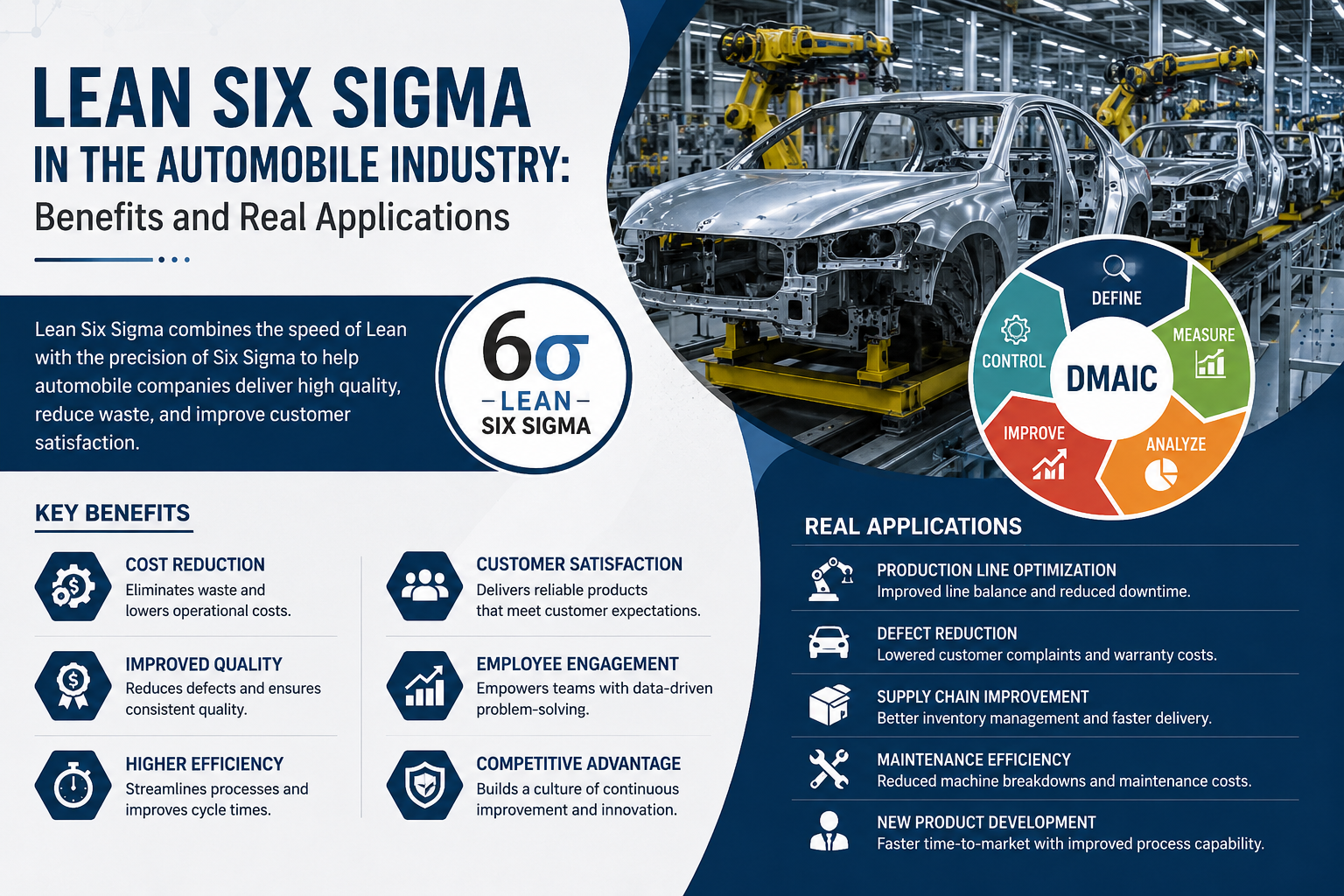

The automobile industry is one of the most competitive sectors in India, where manufacturers are constantly seeking ways to enhance productivity, reduce costs, and improve quality. One of the most effective methodologies that have emerged to address these challenges is Lean Six Sigma. By combining the principles of Lean manufacturing and Six Sigma, this approach offers a robust framework for automotive process improvement. In this blog, we will explore the benefits and real applications of Lean Six Sigma in the automobile industry.
Understanding Lean Six Sigma
Lean Six Sigma is a data-driven, customer-focused methodology that aims to eliminate waste and reduce variability in processes. In the context of the automobile industry, this means streamlining operations to improve quality and efficiency. While Lean focuses on maximizing value by minimizing waste, Six Sigma emphasizes reducing defects and improving quality. Together, they provide a comprehensive strategy for quality improvement in the automobile industry.
Benefits of Lean Six Sigma in the Automobile Industry
1. Enhanced Quality Control
One of the most significant benefits of implementing Lean Six Sigma in the automobile industry is the enhancement of quality control. By adopting Six Sigma principles, manufacturers can identify defects and process variations, leading to a significant reduction in errors. This results in fewer recalls and higher customer satisfaction.
2. Cost Reduction
Lean Six Sigma helps automotive companies identify and eliminate wasteful processes, which can lead to substantial cost savings. By streamlining operations, companies can reduce production costs and improve overall profitability. In a sector where margins are often tight, this efficiency can make a significant difference.
3. Faster Production Cycles
With Lean practices, manufacturers can optimize their workflows, leading to faster production cycles. This is particularly important in the automobile industry, where market demands can shift rapidly. By reducing lead times, companies can respond more effectively to customer needs and gain a competitive edge.
4. Improved Employee Engagement
Lean Six Sigma encourages a culture of continuous improvement, where employees are empowered to identify problems and propose solutions. This not only fosters a sense of ownership among workers but also leads to increased job satisfaction and productivity. When employees are engaged, the overall performance of the organization improves.
5. Better Supplier Relationships
Implementing Lean Six Sigma principles can also enhance relationships with suppliers. By focusing on quality and efficiency, manufacturers can work closely with suppliers to align processes, ensuring that the materials and components received meet stringent quality standards. This collaboration can lead to improved supply chain performance.
Real Applications of Lean Six Sigma in the Automobile Industry
1. Streamlining Assembly Lines
Many automobile manufacturers have successfully used Lean Six Sigma to streamline their assembly lines. By analyzing workflows and eliminating non-value-added activities, companies can significantly reduce production time. For example, Toyota, a pioneer in Lean manufacturing, has utilized these principles to enhance the efficiency of its assembly lines.
2. Reducing Defects in Manufacturing
Six Sigma tools, such as DMAIC (Define, Measure, Analyze, Improve, Control), have been applied to reduce defects in automobile manufacturing processes. By systematically analyzing each stage of production, manufacturers can identify root causes of defects and implement corrective actions. This has led to notable improvements in the quality of finished vehicles.
3. Inventory Management
Effective inventory management is crucial in the automobile industry. Lean Six Sigma methodologies can help optimize inventory levels, reducing holding costs while ensuring that production lines are adequately supplied. Companies like Ford have successfully implemented these principles to manage their inventory more effectively, resulting in lower costs and increased efficiency.
4. Enhancing Customer Satisfaction
By focusing on quality improvement and reducing defects, Lean Six Sigma directly contributes to enhanced customer satisfaction. When manufacturers deliver reliable and high-quality vehicles, they build trust and loyalty among customers. This is particularly important in the Indian automobile market, where consumer expectations are continually evolving.
Challenges in Implementing Lean Six Sigma
While the benefits of Lean Six Sigma are clear, implementation can come with its challenges. Some of the common obstacles faced by automobile manufacturers in India include:
1. Resistance to Change
Employees may resist changes to established processes, especially if they are accustomed to traditional ways of working. Overcoming this resistance requires effective change management strategies and strong leadership.
2. Initial Costs
Implementing Lean Six Sigma can involve initial costs for training and process re-engineering. However, these costs are often outweighed by the long-term benefits and savings achieved through improved efficiency.
3. Need for Continuous Commitment
Lean Six Sigma is not a one-time initiative; it requires continuous commitment from all levels of the organization. Ongoing training and support are essential to sustain improvements and foster a culture of continuous improvement.
Conclusion
Lean Six Sigma presents a powerful approach for automotive manufacturers in India looking to enhance efficiency, reduce costs, and improve quality. By embracing this methodology, companies can not only streamline their operations but also build a stronger reputation for quality and reliability in a competitive market. The journey toward Lean Six Sigma implementation may present challenges, but the benefits far outweigh the obstacles. If you're in the automobile industry and looking to drive significant improvements, now is the time to consider integrating Lean Six Sigma into your operations.
FAQs
Q1: What is the main goal of Lean Six Sigma in the automobile industry?
The main goal of Lean Six Sigma in the automobile industry is to enhance operational efficiency by eliminating waste and reducing defects, ultimately leading to improved quality and customer satisfaction.
Q2: How does Lean manufacturing differ from Six Sigma?
Lean manufacturing focuses on minimizing waste and maximizing value, while Six Sigma is primarily concerned with reducing variability and defects in processes. Together, they create a comprehensive approach to process improvement.
Q3: Can Lean Six Sigma be applied to small automotive companies?
Yes, Lean Six Sigma principles can be adapted for small automotive companies. Even small-scale implementations can lead to significant improvements in efficiency and quality.
Q4: What are some tools used in Lean Six Sigma?
Some common tools used in Lean Six Sigma include Value Stream Mapping, 5S, DMAIC methodology, and root cause analysis. These tools help identify areas for improvement and streamline processes.
Call to Action
If you're ready to take your automotive business to the next level, consider implementing Lean Six Sigma principles today. Contact us for expert guidance on how to integrate these methodologies into your operations for enhanced performance and quality improvement. Let's drive success together in the Indian automobile industry!