
Latest Post


Quality Management Courses



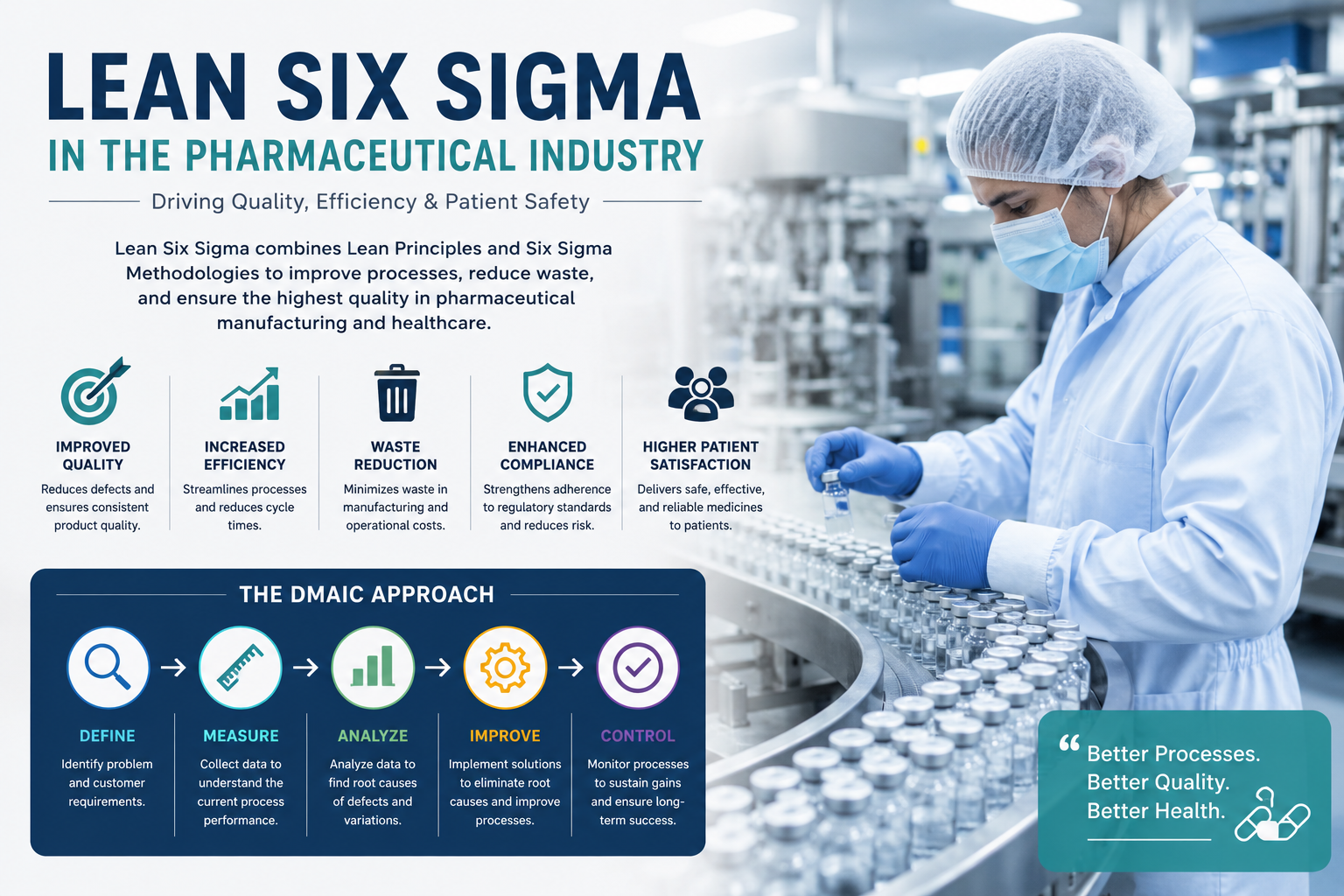

The pharmaceutical industry is a cornerstone of healthcare, driving innovation and improving patients' lives. However, it also faces numerous challenges, including regulatory compliance, quality assurance, and operational efficiency. To address these challenges, many pharmaceutical companies in India are turning to Lean Six Sigma methodologies. This blog will explore how Lean Six Sigma can enhance pharma process improvement, streamline manufacturing, and ensure quality management in the pharmaceutical sector.
Understanding Lean Six Sigma
Lean Six Sigma is a powerful methodology that combines two approaches: Lean, which focuses on eliminating waste, and Six Sigma, which emphasizes reducing process variation. Together, they provide a framework that helps organizations improve their processes, increase efficiency, and enhance product quality. In the context of the pharmaceutical industry, Lean Six Sigma can lead to significant improvements in operations and outcomes.
The Importance of Lean Six Sigma in the Pharmaceutical Sector
The pharmaceutical industry operates in a highly regulated environment, where compliance with Good Manufacturing Practices (GMP) is essential. The integration of Lean Six Sigma in this context can lead to:
Implementing Lean Six Sigma in Pharmaceutical Manufacturing
Implementing Lean Six Sigma in the pharmaceutical manufacturing process requires a structured approach. Here’s a step-by-step guide to help organizations in India navigate this transformation:
1. Identify Key Processes
The first step in implementing Lean Six Sigma is to identify the key processes that impact product quality and operational efficiency. This may include drug formulation, packaging, and distribution. Prioritizing these processes will help focus improvement efforts where they matter most.
2. Define Goals and Objectives
Once key processes are identified, companies should define clear goals and objectives for their Lean Six Sigma initiatives. These goals should align with overall business objectives and address specific challenges, such as reducing cycle time or minimizing defects.
3. Measure Current Performance
Before making any changes, it’s essential to measure the current performance of the identified processes. This can involve collecting data on cycle times, defect rates, and compliance metrics. This baseline data will serve as a reference point for future improvements.
4. Analyze Data and Identify Root Causes
Using statistical analysis tools, teams can identify root causes of inefficiencies and defects in the processes. This analysis will help in pinpointing specific areas for improvement, whether they are related to equipment, personnel, or workflows.
5. Implement Improvements
After identifying root causes, the next step is to implement targeted improvements. This could involve process redesign, employee training, or the introduction of new technologies. The goal is to streamline operations and enhance product quality.
6. Monitor and Control
Post-implementation, it’s crucial to monitor the performance of the modified processes to ensure that improvements are sustained. Control plans should be established to maintain quality standards and prevent regression.
Case Studies: Lean Six Sigma in Action
Several pharmaceutical companies in India have successfully implemented Lean Six Sigma methodologies, resulting in substantial improvements:
Case Study 1: A Leading Indian Pharma Company
This company faced challenges in its packaging process, leading to increased costs and delayed deliveries. By applying Lean Six Sigma principles, they identified bottlenecks and redesigned workflows. As a result, they achieved a 30% reduction in packaging time and a significant decrease in defects, leading to improved customer satisfaction.
Case Study 2: A Global Pharmaceutical Giant
Another well-known pharmaceutical manufacturer implemented Lean Six Sigma to enhance its quality management practices. They focused on reducing variation in their formulation process, which had been leading to inconsistent product quality. Through rigorous data analysis and process improvements, they achieved a 50% reduction in defect rates, ensuring compliance with GMP standards.
Challenges in Implementing Lean Six Sigma in Pharma
While the benefits of Lean Six Sigma are clear, the implementation process is not without challenges. Some common hurdles faced by pharmaceutical companies in India include:
Frequently Asked Questions (FAQs)
What is Lean Six Sigma?
Lean Six Sigma is a methodology that combines Lean principles, which focus on waste reduction, with Six Sigma, which emphasizes process variation reduction. Together, they aim to improve processes and enhance product quality.
How can Lean Six Sigma benefit the pharmaceutical industry?
Lean Six Sigma can benefit the pharmaceutical industry by enhancing quality management, increasing efficiency, reducing costs, and ensuring regulatory compliance.
What are the key steps in implementing Lean Six Sigma?
The key steps include identifying key processes, defining goals, measuring current performance, analyzing data, implementing improvements, and monitoring the results.
What challenges might companies face when implementing Lean Six Sigma?
Common challenges include resistance to change, difficulties in data collection, and resource limitations.
Conclusion
Lean Six Sigma presents an invaluable opportunity for pharmaceutical companies in India to enhance their operations and product quality. By adopting these methodologies, organizations can navigate the complexities of the industry, ensuring compliance with GMP standards while driving process improvements. The journey may be challenging, but the rewards—greater efficiency, reduced costs, and enhanced patient safety—are well worth the effort.
If you're ready to embark on your Lean Six Sigma journey in the pharmaceutical industry, contact us today to learn more about our training programs and consultation services. Together, we can transform your processes and drive excellence in your organization!
Call to Action: Ready to implement Lean Six Sigma in your pharmaceutical processes? Contact us today for expert guidance and support!