





In today's competitive job market, understanding the differences between passive candidates and active candidates is crucial for any recruitment strategy. Whether you are a hiring manager, a recruiter, or part of an HR team, knowing how to effectively source talent can make a significant difference in finding the right fit for your organization. In this blog, we will delve into the characteristics of each candidate type, their respective advantages, and how to tailor your talent sourcing strategies accordingly.
What Are Active Candidates?
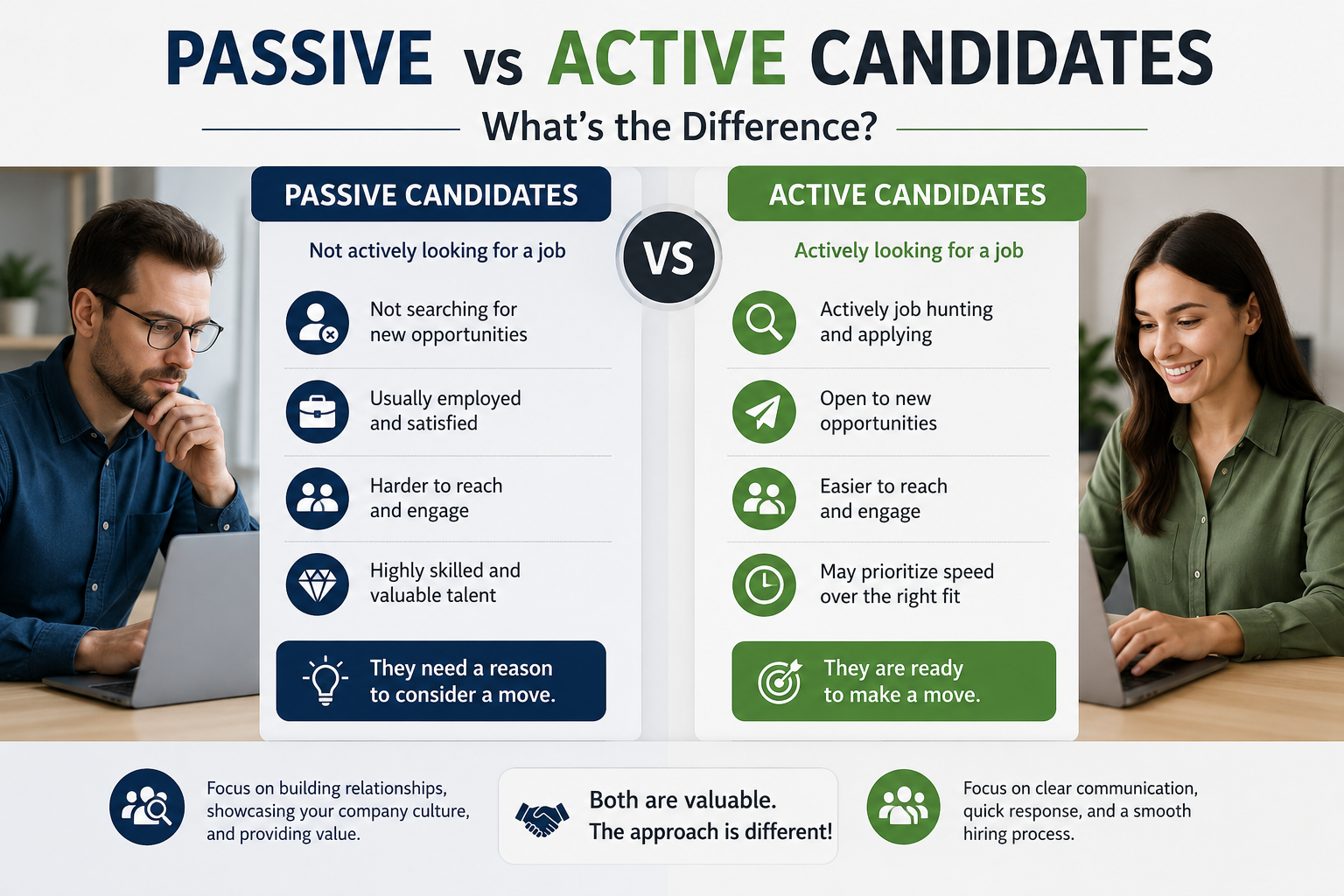
Active candidates are individuals who are currently seeking job opportunities. These candidates are often on job boards, updating their resumes, and actively applying for positions that align with their career goals. They are engaged in the job search process, making them more accessible to recruiters and hiring managers.
Characteristics of Active Candidates
What Are Passive Candidates?
Passive candidates, on the other hand, are not actively looking for a job, but they may be open to new opportunities if approached correctly. These candidates often have stable employment and may not be dissatisfied with their current roles. They can be a goldmine for recruiters, as they possess valuable skills and experience that can benefit your organization.
Characteristics of Passive Candidates
Key Differences Between Passive and Active Candidates
Understanding the differences between these two types of candidates can help you refine your recruitment strategy and improve your candidate sourcing efforts. Here are some of the critical distinctions:
1. Motivation
Active candidates are motivated by the desire for change, whether it be for better opportunities, salary, or work-life balance. In contrast, passive candidates may not be unhappy but are open to discussions about roles that offer growth or unique benefits.
2. Engagement Level
Active candidates are generally more engaged in the hiring process. They actively apply and respond to recruiters. Passive candidates, however, require a more tailored approach to engage them effectively since they are not actively looking for new opportunities.
3. Sourcing Techniques
To attract active candidates, traditional job postings on job boards or social media platforms can be effective. For passive candidates, a more strategic approach, such as networking, personalized outreach, or leveraging LinkedIn, may yield better results.
Why Focus on Passive Candidates?
While active candidates are essential to any recruitment strategy, focusing on passive candidates can provide your organization with a competitive edge. Here are a few reasons why:
Strategies for Sourcing Passive Candidates
To effectively reach and engage passive candidates, consider the following strategies:
1. Build a Strong Employer Brand
A positive employer brand can attract passive candidates. Showcase your company culture, values, and employee testimonials on your website and social media platforms.
2. Utilize Social Media
Platforms like LinkedIn are excellent for connecting with passive candidates. Engage with industry-specific groups, share valuable content, and participate in discussions to establish yourself as a trusted authority.
3. Personalized Outreach
When reaching out to passive candidates, personalize your messages. Highlight specific aspects of their experience that align with your organization's needs and explain why you believe they would be a good fit.
4. Networking and Referrals
Leverage your existing employees' networks to find passive candidates. Employee referrals often yield high-quality candidates who are a good fit for your company culture.
Challenges in Engaging Passive Candidates
While there are advantages to targeting passive candidates, there are also challenges that recruiters should be aware of:
1. Longer Hiring Process
Engaging passive candidates often requires a longer recruitment process as they may need more time to consider new opportunities.
2. Resistance to Change
Passive candidates may be content in their current roles, which can make them resistant to change. Understanding their motivations and addressing any concerns is crucial.
3. Competition
While there may be less competition for passive candidates overall, the best talent is often sought after by multiple organizations, making it essential to present a compelling offer.
Frequently Asked Questions (FAQs)
1. How do I identify passive candidates?
You can identify passive candidates through networking, social media engagement, and industry events. Look for individuals who are not actively applying for jobs but possess the skills and experience you need.
2. What is the best way to approach passive candidates?
Personalized outreach is key. Highlight their skills, explain why you believe they would be a good fit for your organization, and offer insights into your company culture.
3. Are passive candidates more likely to stay longer in a new role?
Yes, passive candidates tend to be more selective about job changes, which often results in longer tenure in their new roles compared to active candidates.
4. How can I improve my employer brand to attract passive candidates?
Showcase your company culture through employee testimonials, social media posts, and a strong online presence. Engage in community activities and industry events to enhance your brand visibility.
Conclusion
Understanding the differences between passive candidates and active candidates is vital for effective talent sourcing. By tailoring your recruitment strategy to attract both types of candidates, you can build a stronger talent pipeline and find the right fit for your organization. Remember, while active candidates are eager and engaged, passive candidates offer unique advantages that can elevate your team's performance.
If you're looking to enhance your recruitment strategy and tap into both active and passive candidates, contact us today for expert guidance and support!