Latest Post




Quality Management Courses




In the ever-evolving landscape of business, ensuring the highest standard of products and services is essential. This is where the concepts of quality assurance (QA) and quality control (QC) come into play. While often used interchangeably, understanding the difference between QA and QC is crucial for effective quality management. In this blog, we will explore the key differences, roles, and examples of quality assurance and quality control, specifically tailored for the Indian audience.
Understanding Quality Assurance and Quality Control
Before diving into the nuances of QA vs QC, let's define what each term encompasses.
What is Quality Assurance?
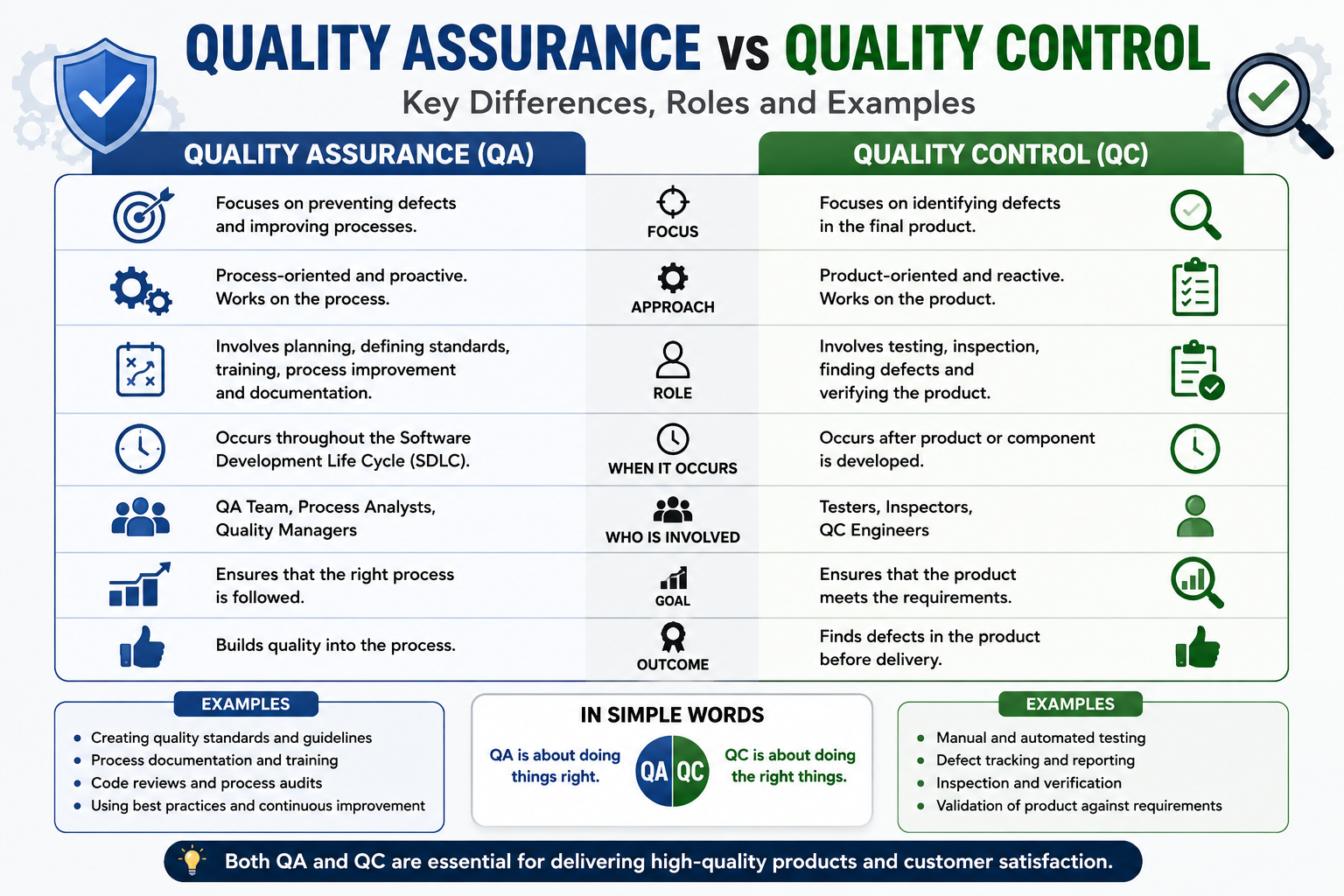
Quality assurance refers to the systematic process of ensuring that quality standards are met during the development of a product or service. It is a proactive approach that focuses on preventing defects by establishing processes and procedures. QA encompasses various activities, including process design, training, and audits, to ensure that the end product meets the required standards.
What is Quality Control?
Quality control, on the other hand, is a reactive process that involves the inspection and testing of products to identify defects after they have been produced. QC aims to identify any issues before the product reaches the customer. This includes activities such as testing, measurement, and inspection to ensure that the final product is of acceptable quality.
Key Differences between Quality Assurance and Quality Control
Now that we have a clear understanding of what QA and QC entail, let's explore the QA QC difference in detail.
1. Focus and Approach
The primary difference between quality assurance and quality control lies in their focus and approach. QA is process-oriented, aiming to improve and develop processes to ensure quality. It involves defining standards, procedures, and guidelines that help prevent defects. In contrast, QC is product-oriented, focusing on identifying defects in the final product through inspection and testing.
2. Activities Involved
Quality assurance activities include:
Quality control activities typically involve:
3. Goal Orientation
The goals behind QA and QC also differ significantly. QA is focused on preventing defects and ensuring a quality process, whereas QC aims to identify and correct defects in the finished product. This means that while QA seeks to enhance overall process quality, QC is concerned with the quality of the end product.
4. Timing of Activities
Quality assurance activities are implemented during the early stages of the development process, often before the product is even created. This allows teams to set standards and create a framework that supports quality. Conversely, quality control activities occur after the product has been produced, allowing teams to assess the quality of what has been made.
5. Metrics and Measurements
In quality assurance, metrics are often related to process performance, such as defect rates, process efficiency, and adherence to standards. In quality control, metrics focus on product characteristics, such as pass/fail rates, measurement deviations, and customer complaints.
The Roles of Quality Assurance and Quality Control
Understanding the distinct roles of QA and QC within an organization is vital for implementing effective quality management strategies.
Roles of Quality Assurance
Roles of Quality Control
Examples of Quality Assurance and Quality Control
To better illustrate the concepts of QA and QC, let's look at some practical examples in the context of Indian industries.
Example of Quality Assurance
In a software development company, quality assurance might involve:
Example of Quality Control
In a manufacturing plant, quality control might include:
Conclusion
In conclusion, while quality assurance and quality control are both essential components of a comprehensive quality management strategy, they serve different purposes. Understanding the quality assurance vs quality control dynamic can help organizations in India effectively implement processes that enhance product quality and customer satisfaction. With a clear distinction between QA and QC, businesses can ensure that they not only meet industry standards but also exceed customer expectations.
FAQs
1. What is the main difference between quality assurance and quality control?
The main difference is that quality assurance focuses on preventing defects through process management, while quality control involves identifying defects in the final product through inspection and testing.
2. Can an organization have quality assurance without quality control?
While it is possible to implement quality assurance without quality control, it is not recommended. Both processes are essential for ensuring overall quality and customer satisfaction.
3. How can I implement quality management in my organization?
Start by defining clear quality standards, train your team on processes and best practices, conduct regular audits, and implement feedback mechanisms to continuously improve quality.
4. Why is quality management important for businesses in India?
Quality management helps businesses in India enhance their reputation, reduce costs associated with defects, and improve customer satisfaction, ultimately leading to increased profitability.
Call to Action
If you're looking to improve your organization's quality management processes, consider reaching out to a quality management consultant. By investing in quality assurance and quality control, you can enhance your product's reliability and build a loyal customer base. Embrace the journey towards excellence today!