



In the fast-paced world of business, recruitment challenges can often hinder growth and innovation. For small and medium-sized enterprises (SMEs), finding the right talent is crucial for scaling operations and maintaining a competitive edge. In this blog, we will explore the various hiring challenges faced by growing businesses in India, the common recruitment problems encountered, and effective strategies to overcome these talent acquisition challenges.
Understanding Recruitment Challenges
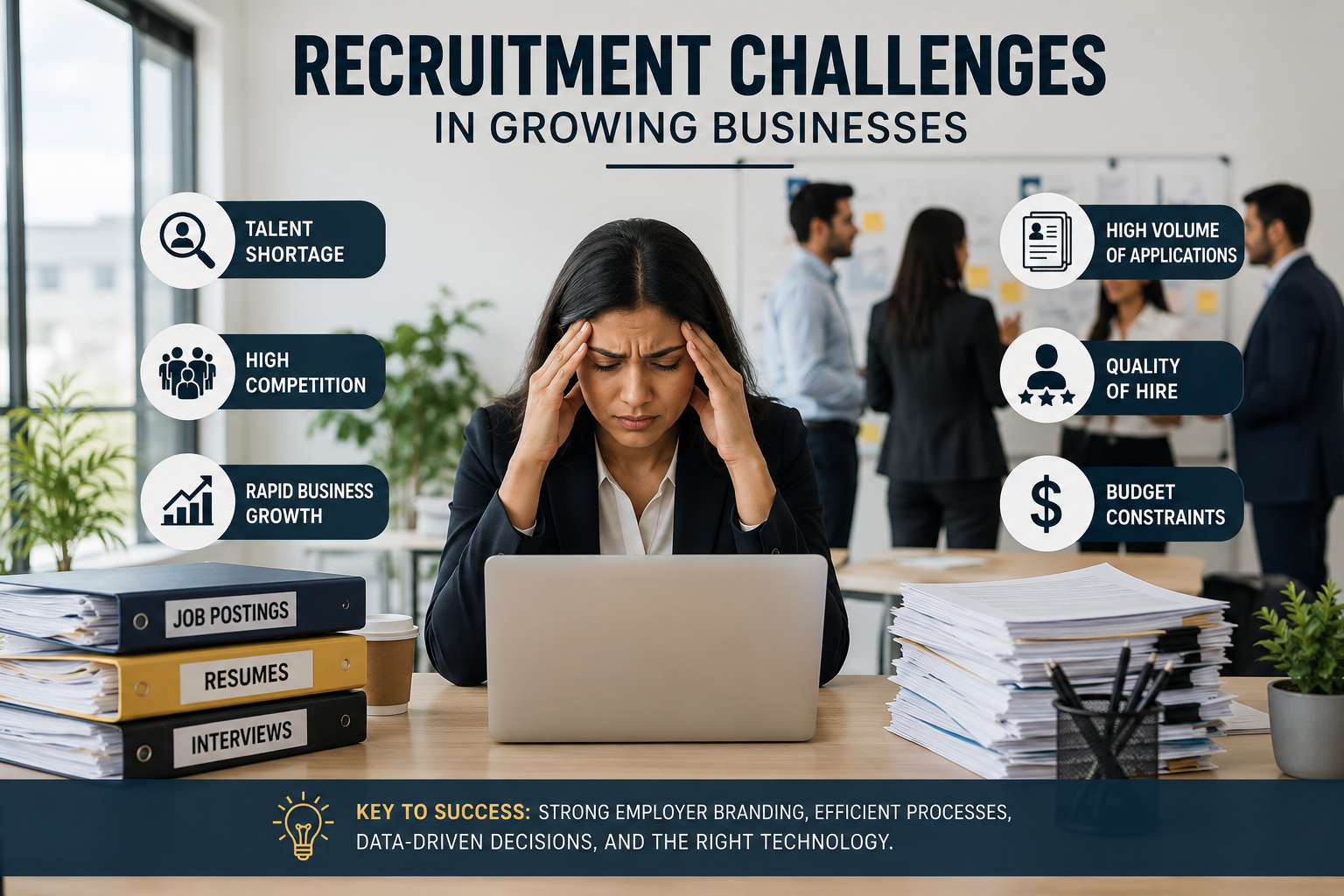
Recruitment is a vital aspect of any business strategy, yet it is often fraught with difficulties. For SMEs, the stakes are even higher, as each new hire can significantly impact the company culture and overall performance. Here are some of the primary hiring challenges faced by growing businesses:
1. Limited Resources
One of the most significant recruitment problems for SMEs is the lack of resources. Unlike larger corporations, SMEs often operate with tight budgets and limited human resources. This can lead to a less comprehensive recruitment process, resulting in poor hiring decisions. Without the ability to invest heavily in recruitment tools or dedicated HR personnel, SMEs may struggle to attract and retain top talent.
2. Intense Competition for Talent
The job market in India is increasingly competitive, especially in industries like technology, finance, and healthcare. Growing businesses often find themselves competing against larger firms that can offer better salaries, benefits, and career advancement opportunities. This intense competition makes it challenging for SMEs to stand out and attract high-quality candidates, leading to significant talent acquisition challenges.
3. Undefined Employer Brand
Many SMEs lack a well-defined employer brand, which can be a major drawback in attracting candidates. Unlike established corporations with a strong reputation, smaller businesses often need help communicating their unique value proposition to potential hires. This makes it essential for SMEs to work on their employer branding to appeal to top talent effectively.
4. Skills Gap
The skills gap is another pressing issue in the Indian job market. Many job seekers may possess degrees and qualifications but lack the practical skills required for specific roles. This gap can lead to difficulties in finding candidates who not only fit the job description but also align with the company’s culture and values. Addressing this issue requires a strategic approach to recruitment and training.
5. High Turnover Rates
High turnover rates can be detrimental to any business, but they pose particular challenges for growing SMEs. When employees leave frequently, it creates a cycle of constant recruitment and training, which can drain resources and affect team morale. Understanding the reasons behind high turnover is crucial for SMEs to develop strategies that enhance employee satisfaction and retention.
Effective Strategies to Overcome Recruitment Challenges
While recruitment challenges can seem daunting, there are several effective strategies that SMEs can implement to improve their hiring processes:
1. Enhance Employer Branding
Building a strong employer brand is essential for attracting top talent. SMEs should focus on highlighting their unique work culture, values, and opportunities for growth. This can be achieved through social media, employee testimonials, and an informative careers page on the company website. A transparent and engaging employer brand can significantly enhance the appeal of an SME in a competitive job market.
2. Leverage Technology
Technology can streamline the recruitment process and make it more efficient. SMEs should consider using applicant tracking systems (ATS), recruitment software, and social media platforms to reach a wider audience and manage applications more effectively. Utilizing these tools can help businesses save time and resources while improving the overall quality of hires.
3. Focus on Employee Referral Programs
Employee referrals can be a powerful tool for SMEs to find suitable candidates. Encouraging current employees to refer candidates can lead to higher-quality hires who are likely to fit the company culture. Offering incentives for successful referrals can motivate employees to participate actively in the recruitment process.
4. Invest in Training and Development
Addressing the skills gap requires a proactive approach. SMEs should consider investing in training and development programs to upskill their workforce. This not only helps in bridging the skills gap but also demonstrates to potential hires that the organization is committed to their professional growth.
5. Improve the Interview Process
The interview process is a critical phase in recruitment. SMEs should strive to make it more structured and candidate-friendly. This includes preparing relevant questions, providing timely feedback, and ensuring a positive candidate experience. A well-conducted interview can leave a lasting impression on candidates, even if they are not ultimately hired.
FAQs about Recruitment Challenges
What are the most common hiring challenges faced by SMEs?
Common hiring challenges include limited resources, intense competition for talent, an undefined employer brand, skills gaps among candidates, and high turnover rates.
How can SMEs enhance their employer branding?
SMEs can enhance their employer branding by showcasing their unique culture, values, and growth opportunities through social media, employee testimonials, and an informative careers page.
Why is the skills gap a challenge in recruitment?
The skills gap exists when candidates possess formal qualifications but lack the practical skills required for specific roles, making it difficult for employers to find suitable hires.
What role does technology play in recruitment?
Technology can streamline the recruitment process, making it more efficient. Tools like applicant tracking systems and recruitment software can help SMEs manage applications and reach a wider audience.
How can SMEs reduce employee turnover?
To reduce employee turnover, SMEs should focus on improving job satisfaction through competitive compensation, career development opportunities, and creating a positive work environment.
Conclusion
Recruitment challenges are a common hurdle for growing businesses in India, particularly for SMEs. However, by understanding these challenges and implementing effective strategies, businesses can enhance their talent acquisition efforts and build a strong workforce. From improving employer branding to leveraging technology, there are various ways for SMEs to overcome recruitment problems and thrive in a competitive landscape.
If you are an SME facing recruitment challenges, now is the time to take action. Start by assessing your current hiring processes and identifying areas for improvement. With the right strategies, you can attract and retain the talent needed to drive your business forward.
Call to Action
Are you ready to tackle your recruitment challenges head-on? Contact us today for expert guidance on optimizing your hiring processes and overcoming talent acquisition challenges. Let’s work together to build a strong team for your growing business!