
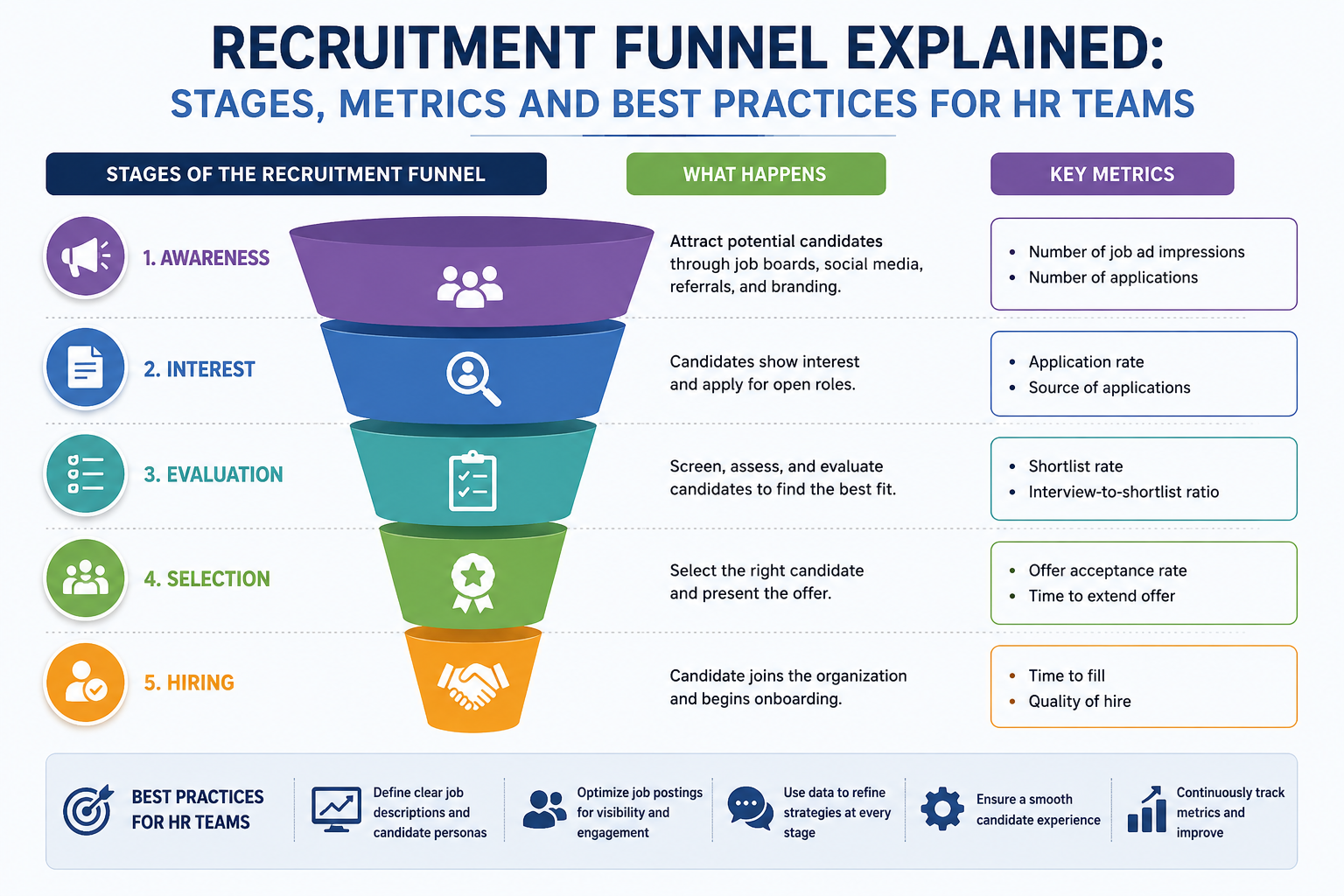

In the competitive landscape of talent acquisition, understanding the recruitment funnel is crucial for HR teams looking to attract and hire the best candidates. The recruitment funnel, also known as the hiring funnel, illustrates the journey potential employees take from the moment they become aware of a job opening to the point they are hired. This blog will delve into the various recruitment funnel stages, essential metrics to track, and best practices to optimize your recruitment process funnel. Let's explore how a well-structured candidate recruitment funnel can enhance your hiring strategy.
What is a Recruitment Funnel?
The recruitment funnel is a visual representation of the stages candidates go through in the hiring process. It is designed to help HR teams streamline their recruitment efforts, ensuring that they attract, engage, and convert potential candidates effectively. By understanding the recruitment funnel stages, organizations can identify bottlenecks in their hiring process and implement strategies to improve efficiency and candidate experience.
Stages of the Recruitment Funnel
1. Awareness
The first stage of the recruitment funnel is awareness. This is where potential candidates first learn about job openings within your organization. Awareness can be generated through various channels, including:
To maximize awareness, companies should focus on employer branding and creating engaging job descriptions that resonate with their target audience.
2. Interest
Once candidates are aware of an open position, the next step is to generate interest. This involves providing detailed information about the job role, company culture, and benefits. Use compelling content to engage potential candidates, such as:
The goal is to encourage candidates to envision themselves in the role and start considering your organization as a viable workplace.
3. Application
In the application stage, interested candidates submit their applications, resumes, and cover letters. It is essential to have a user-friendly application process that minimizes friction. Consider implementing the following:
Streamlining this process not only enhances the candidate experience but also increases the number of applications you receive.
4. Screening
The screening stage involves reviewing applications and narrowing down the candidate pool. This process can include:
Utilizing Applicant Tracking Systems (ATS) can help HR teams efficiently screen candidates based on predefined criteria, ensuring that only the most suitable candidates move forward in the recruitment funnel.
5. Interview
During the interview stage, selected candidates are invited for in-person or virtual interviews. This stage is crucial for assessing candidates' skills, cultural fit, and overall suitability for the role. Best practices include:
Gathering feedback from all interviewers can help make informed hiring decisions.
6. Offer
Once the interviews are complete, the next step is to extend an offer to the selected candidate. This stage should be handled with care, ensuring that the offer is competitive and appealing. Consider including:
A well-structured offer can significantly influence a candidate's decision to join your organization.
7. Onboarding
The final stage of the recruitment funnel is onboarding. This is where new hires are integrated into the company. Effective onboarding processes include:
A robust onboarding process can enhance employee retention and satisfaction, thereby closing the loop on your recruitment funnel.
Recruitment Funnel Metrics to Track
To optimize your recruitment process funnel, it is essential to track relevant metrics that provide insights into your hiring effectiveness. Here are some crucial recruitment funnel metrics:
1. Time to Fill
This metric measures the time it takes to fill a position from the moment it is opened until an offer is accepted. A shorter time to fill indicates an efficient recruitment process.
2. Cost per Hire
Cost per hire calculates the total expenses involved in hiring a new employee, including advertising, recruitment agency fees, and on-boarding costs. Monitoring this metric helps HR teams manage their hiring budget effectively.
3. Candidate Source Ratio
This metric analyzes which recruitment channels yield the most candidates and hires. Understanding where your best candidates come from enables you to allocate resources effectively.
4. Offer Acceptance Rate
This measures the percentage of job offers accepted by candidates. A low acceptance rate may indicate issues with the offer package or the interview process.
5. Quality of Hire
Quality of hire assesses the performance and retention of new employees. Tracking this metric can help you refine your recruitment strategies to attract high-performing talent.
Best Practices for Optimizing Your Recruitment Funnel
1. Utilize Technology
Investing in recruitment technology, such as Applicant Tracking Systems (ATS) and AI-driven tools, can help streamline your recruitment funnel and improve candidate experience.
2. Enhance Employer Branding
A strong employer brand attracts top talent. Showcase your company culture and values on your website and social media platforms to create a compelling narrative around your organization.
3. Focus on Candidate Experience
Prioritize a positive candidate experience throughout the recruitment process. Provide timely feedback, maintain open communication, and ensure a smooth application process.
4. Leverage Data Analytics
Utilize data analytics to gain insights into your recruitment funnel metrics. Regularly review and analyze data to identify trends and areas for improvement.
5. Continuous Improvement
Regularly evaluate and refine your recruitment strategies to adapt to changing market dynamics and candidate expectations. Stay updated with industry trends to remain competitive.
FAQs
What is the recruitment funnel?
The recruitment funnel is a framework that outlines the stages candidates go through in the hiring process, from awareness to onboarding.
Why is it important to understand recruitment funnel stages?
Understanding recruitment funnel stages helps HR teams identify bottlenecks, streamline processes, and enhance the overall candidate experience.
What metrics should I track in the recruitment funnel?
Key metrics to track include time to fill, cost per hire, candidate source ratio, offer acceptance rate, and quality of hire.
How can I optimize my recruitment funnel?
Optimize your recruitment funnel by leveraging technology, enhancing employer branding, focusing on candidate experience, utilizing data analytics, and implementing continuous improvement strategies.
Conclusion
In conclusion, the recruitment funnel is a vital component of any organization's talent acquisition strategy. By understanding the stages, tracking essential metrics, and implementing best practices, HR teams can enhance their recruitment processes and attract the best talent. Remember, a well-structured recruitment funnel not only streamlines your hiring process but also creates a positive experience for candidates, ultimately leading to improved retention and job satisfaction.
If you're ready to optimize your recruitment funnel and enhance your hiring strategy, contact us today! Our experts are here to help you attract and retain top talent efficiently.