



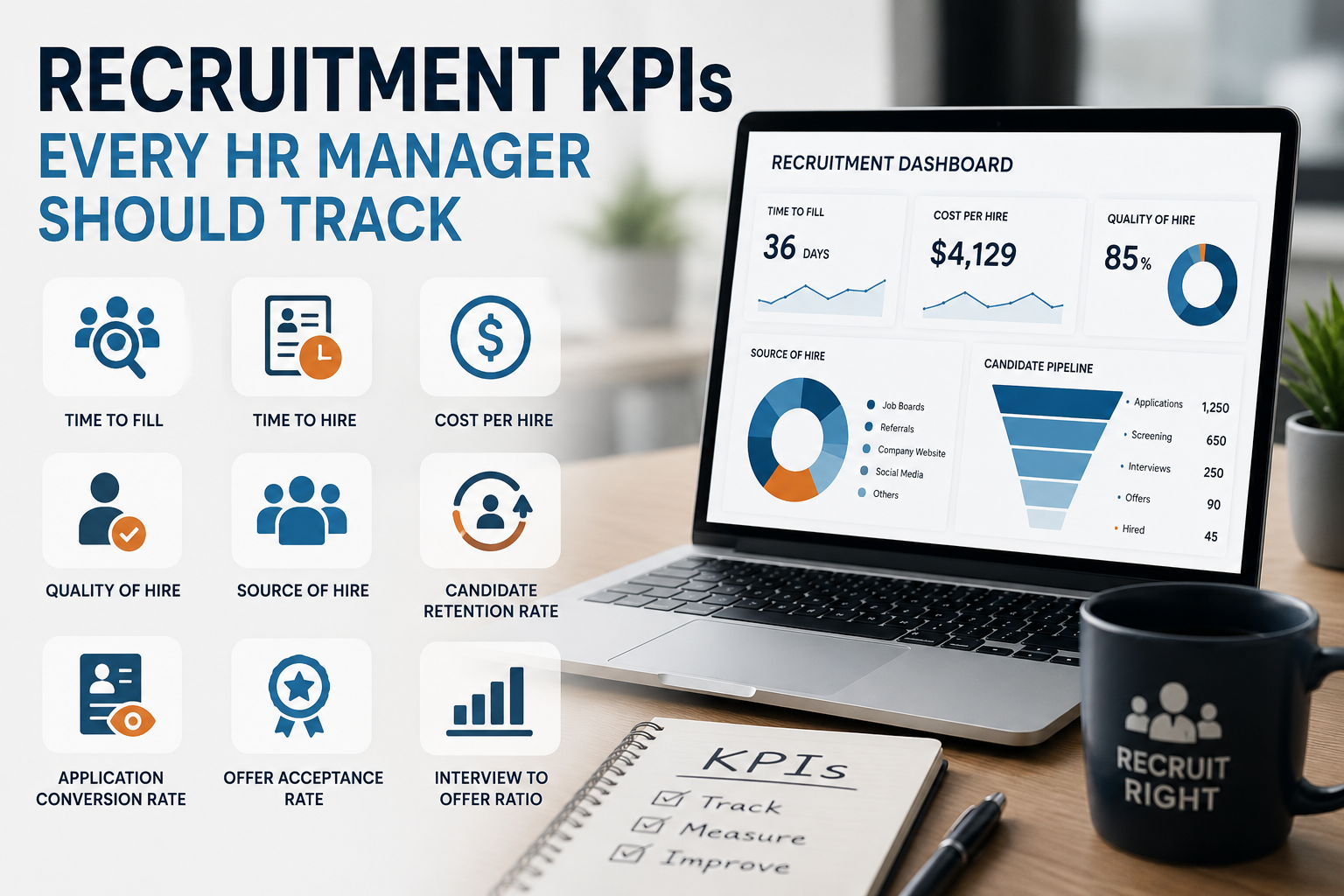

In today's competitive job market, effective recruitment is crucial for organizations striving to attract and retain top talent. As an HR manager, understanding and tracking recruitment KPIs is essential for optimizing your hiring process. This blog delves into the key HR recruitment metrics that can help you evaluate the effectiveness of your talent acquisition strategies and improve your recruitment dashboard.
What are Recruitment KPIs?
Recruitment KPIs (Key Performance Indicators) are measurable values that demonstrate how effectively a company is achieving its recruitment goals. These metrics provide insights into the efficiency and effectiveness of your hiring processes, allowing HR managers to make data-driven decisions. By monitoring these KPIs, organizations can streamline their recruitment efforts, reduce hiring time, and enhance candidate experience.
Why Track Recruitment KPIs?
Tracking hiring metrics is essential for several reasons:
Essential Recruitment KPIs to Track
1. Time to Hire
Time to hire measures the number of days it takes from when a job requisition is opened until a candidate accepts the offer. It’s a critical talent acquisition KPI that reflects the efficiency of your recruitment process. A shorter time to hire often indicates a streamlined hiring process, while longer durations may signal inefficiencies that need addressing.
2. Cost per Hire
Cost per hire evaluates the total cost involved in hiring a new employee. This includes advertising expenses, agency fees, and internal HR costs. Monitoring this hiring metric helps HR managers budget effectively and find ways to reduce hiring costs without compromising on quality.
3. Quality of Hire
Quality of hire assesses the performance and retention rates of new employees. This KPI is vital for understanding whether your recruitment strategies are attracting the right talent. It can be measured through performance evaluations, employee retention rates, and feedback from hiring managers.
4. Candidate Source Effectiveness
Understanding where your best candidates are coming from is crucial. Candidate source effectiveness measures the performance of different recruitment channels, such as job boards, social media, and referrals. This data allows HR managers to focus their efforts and resources on the most productive sourcing methods.
5. Offer Acceptance Rate
The offer acceptance rate quantifies the percentage of job offers accepted versus the total number of offers extended. A low acceptance rate can indicate issues with your compensation packages, company culture, or candidate experience. It’s an important HR recruitment metric that can help you refine your recruitment strategies.
6. Applicant Satisfaction Rate
Measuring applicant satisfaction provides insights into the candidate experience throughout the recruitment process. Surveys can be conducted post-interview to gather feedback. A high satisfaction rate can contribute to a positive employer brand and attract more top talent.
7. Recruitment Funnel Metrics
Analyzing the recruitment funnel can reveal how candidates progress through each stage of the hiring process. Metrics such as the number of applicants at each stage, interview-to-offer ratio, and offer-to-hire ratio are crucial for understanding where candidates drop off and how to improve the overall process.
8. Diversity Hiring Metrics
Diversity hiring metrics track the demographic representation of candidates throughout the recruitment process. Monitoring these metrics helps organizations promote equality and inclusivity within their workforce, which can lead to better performance and innovation.
Building a Recruitment Dashboard
A well-designed recruitment dashboard can serve as a powerful tool for HR managers, providing a visual representation of all key recruitment KPIs. By consolidating your data into an easy-to-read format, you can quickly identify trends, track progress, and make informed decisions. Here are some tips for creating an effective recruitment dashboard:
Conclusion
Tracking recruitment KPIs is essential for any HR manager looking to enhance their hiring process and improve overall organizational performance. By focusing on key hiring metrics and utilizing a well-structured recruitment dashboard, HR professionals can make informed decisions that lead to more effective talent acquisition strategies. Remember, the goal isn't just to fill positions but to attract and retain the right talent for your organization.
FAQs
What are the most important recruitment KPIs?
The most important recruitment KPIs include time to hire, cost per hire, quality of hire, candidate source effectiveness, and offer acceptance rate. These metrics provide insights into the effectiveness of your hiring process.
How can I improve my hiring metrics?
To improve your hiring metrics, analyze your current recruitment process, identify bottlenecks, and implement strategies to attract quality candidates. Regularly review your KPIs to track progress and make adjustments as needed.
What tools can I use to track recruitment KPIs?
There are various tools available for tracking recruitment KPIs, including Applicant Tracking Systems (ATS), recruitment software, and customized dashboards. Choose one that fits your organization's needs and budget.
Why is a recruitment dashboard important?
A recruitment dashboard is important because it provides a visual representation of your recruitment KPIs, making it easier to track performance, identify trends, and make data-driven decisions.
Call to Action
If you’re ready to optimize your recruitment process and track your HR recruitment metrics, start implementing these KPIs today! For more insights and expert advice on recruitment strategies, subscribe to our newsletter or contact us for personalized support.