




In the ever-evolving landscape of human resources, understanding the nuances between recruitment metrics and HR metrics is essential for organizations looking to optimize their talent acquisition strategies. In India, where the job market is highly competitive, leveraging the right metrics can make a significant difference in hiring success. This blog will explore the key differences between these metrics, the importance of tracking recruitment KPIs, and essential metrics every recruiter should monitor.
Understanding Recruitment Metrics
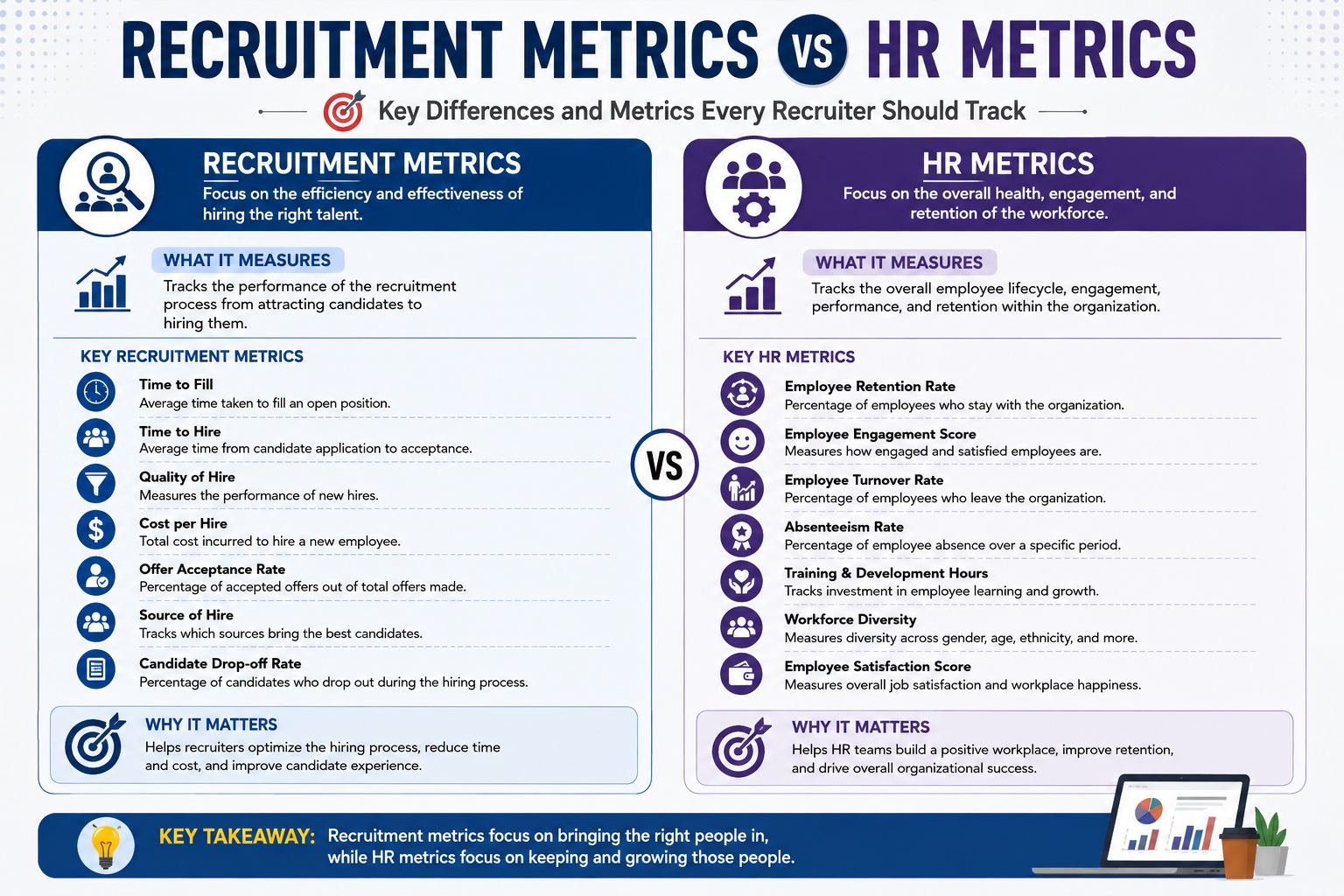
Recruitment metrics, often referred to as hiring metrics, focus specifically on the efficiency and effectiveness of the recruitment process. These metrics provide insights into how well your recruitment strategies are performing, helping you identify areas for improvement.
Key Recruitment Metrics to Track
Understanding HR Metrics
HR metrics encompass a broader range of data that evaluates the overall effectiveness of human resource management practices. While recruitment metrics focus specifically on the hiring process, HR metrics look at the entire employee lifecycle—from recruitment to retention and beyond.
Key HR Metrics to Track
Key Differences Between Recruitment Metrics and HR Metrics
While both recruitment metrics and HR metrics are essential for effective workforce management, understanding their differences can help organizations focus on specific areas for improvement.
Focus Area
Recruitment metrics center around the hiring process, while HR metrics provide insights into overall employee management and satisfaction.
Timeframe
Recruitment metrics are typically tracked in real-time during the hiring process, whereas HR metrics are used to evaluate long-term trends and outcomes.
Stakeholders
Recruitment metrics are primarily used by recruiters and hiring managers, while HR metrics are relevant to a broader audience, including executives and department heads.
Why Tracking Recruitment Metrics is Crucial
For recruiters, tracking recruitment KPIs is essential for several reasons:
Essential Recruitment Performance Metrics for Indian Recruiters
In India, where the job market is dynamic and diverse, recruiters need to focus on specific metrics that resonate within the local context. Here are some essential recruitment performance metrics for Indian recruiters:
Frequently Asked Questions (FAQs)
What are recruitment metrics?
Recruitment metrics are data points that help assess the efficiency and effectiveness of the recruitment process, focusing on areas such as time to hire, cost per hire, and quality of hire.
How do recruitment metrics differ from HR metrics?
Recruitment metrics focus specifically on the hiring process, while HR metrics encompass a broader range of employee management practices and outcomes throughout the employee lifecycle.
Why are recruitment KPIs important?
Recruitment KPIs are important because they provide insights that help organizations make data-driven decisions, improve hiring processes, and enhance overall candidate experience.
What are some common HR KPIs?
Common HR KPIs include employee turnover rate, employee engagement scores, training ROI, diversity metrics, and absenteeism rates.
Conclusion
In the competitive Indian job market, understanding the differences between recruitment metrics and HR metrics is vital for organizations aiming to enhance their talent acquisition strategies. By tracking crucial recruitment KPIs and performance metrics, recruiters can streamline their processes, improve candidate experiences, and ultimately drive better hiring outcomes. Remember, effective recruitment is not just about filling positions; it's about finding the right talent that aligns with your organizational goals.
If you're looking to optimize your recruitment strategies and enhance your HR practices, start tracking the right metrics today. For more insights on effective hiring practices and HR management, subscribe to our newsletter or contact us for expert guidance!