Latest Post


Quality Management Courses



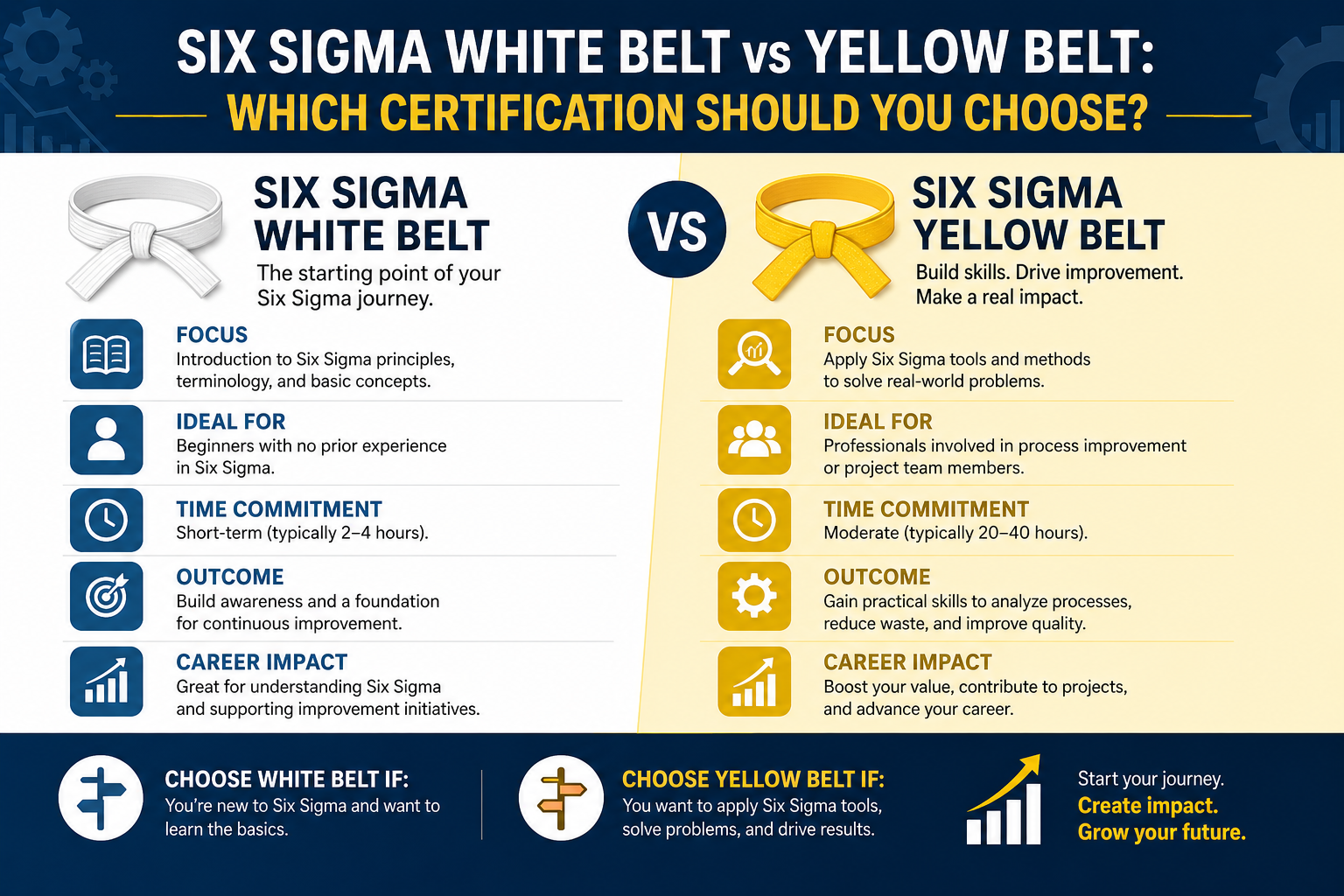

In the world of process improvement and quality management, Six Sigma has established itself as a powerful methodology. With a range of certifications available, it can be challenging to determine which path to take. Among the most fundamental certifications are the Six Sigma White Belt and the Yellow Belt. In this article, we will explore the differences between these two certifications, helping you decide which one aligns with your career goals and aspirations.
Understanding Six Sigma Certifications
Before diving into the specifics of the White Belt and Yellow Belt, it's essential to understand what Six Sigma is and why these certifications matter. Six Sigma is a disciplined, data-driven approach that aims to eliminate defects in any process, whether in manufacturing, services, or other sectors. The different certification levels signify varying degrees of knowledge and involvement in Six Sigma projects.
Six Sigma Certification Levels
The hierarchy of Six Sigma certifications includes:
Six Sigma White Belt: An Overview
The Six Sigma White Belt certification is the starting point for anyone interested in understanding the basics of Six Sigma. This certification is designed for individuals who want a foundational knowledge of the Six Sigma methodology without delving into complex statistical tools.
Key Features of the White Belt Certification
Six Sigma Yellow Belt: An Overview
The Yellow Belt certification builds on the foundational knowledge gained from the White Belt. It is aimed at individuals who are more involved in Six Sigma projects and wish to understand the methodologies and tools used in process improvement.
Key Features of the Yellow Belt Certification
Six Sigma White Belt vs Yellow Belt: A Comparison
Now that we have a clear understanding of both White Belt and Yellow Belt certifications, let’s dive into the Six Sigma White Belt vs Yellow Belt comparison to help you make an informed decision.
1. Knowledge and Skills
The White Belt certification offers basic knowledge of Six Sigma concepts, while the Yellow Belt dives deeper into the methodologies and tools used in practical scenarios. If you are looking to simply understand the basic principles, White Belt is sufficient. However, if you want to contribute actively to Six Sigma projects, the Yellow Belt is the better option.
2. Project Involvement
White Belts typically have a supportive role and may assist in projects, while Yellow Belts are more involved and can lead smaller projects or work as team members in larger initiatives. If you envision yourself taking an active role in process improvement, consider pursuing the Yellow Belt certification.
3. Career Advancement
Both certifications can enhance your resume, but the Yellow Belt carries more weight in terms of career advancement opportunities. Organizations often prefer candidates with a deeper understanding of Six Sigma methodologies, making Yellow Belt holders more attractive for roles in quality management and process improvement.
4. Duration and Cost
White Belt training is typically shorter and less expensive, often completed in a day or two. Yellow Belt training requires more time and investment, usually spanning a few days and costing more due to the depth of content covered. Consider your budget and how much time you can dedicate to training when deciding between the two.
Which Certification Should You Choose?
Your choice between Six Sigma White Belt and Yellow Belt depends on your career goals, current position, and interest in Six Sigma methodologies. If you are new to the field or want a basic understanding, the White Belt certification is an excellent starting point. However, if you aim to be actively involved in process improvement initiatives and wish to enhance your skill set, pursuing the Yellow Belt certification will be more beneficial.
FAQs
1. Can I skip the White Belt certification and go directly for the Yellow Belt?
Yes, you can directly pursue the Yellow Belt certification. However, having a basic understanding from the White Belt can be helpful.
2. How long is the validity of Six Sigma certifications?
Six Sigma certifications do not expire; however, it is advisable to stay updated with the latest methodologies and practices in the field.
3. Which industries value Six Sigma certifications the most?
Six Sigma certifications are highly regarded in industries such as manufacturing, healthcare, finance, and IT. Organizations in these sectors often seek professionals with these certifications to enhance their process improvement efforts.
4. Can I pursue further certifications after the Yellow Belt?
Absolutely! After obtaining your Yellow Belt, you can progress to the Green Belt certification and beyond, depending on your career aspirations.
Conclusion
Choosing between Six Sigma White Belt and Yellow Belt certifications is an important decision that can impact your professional journey. Both certifications offer valuable knowledge and skills, but they cater to different levels of involvement in Six Sigma projects. Assess your career objectives and interests carefully to make the best choice. Whether you start with a White Belt or jump to a Yellow Belt, you are taking a significant step toward enhancing your skills in process improvement.
Call to Action
If you're ready to embark on your Six Sigma journey, explore our comprehensive training programs for both White Belt and Yellow Belt certifications. Equip yourself with the necessary skills to excel in the world of process improvement. Enroll today!