

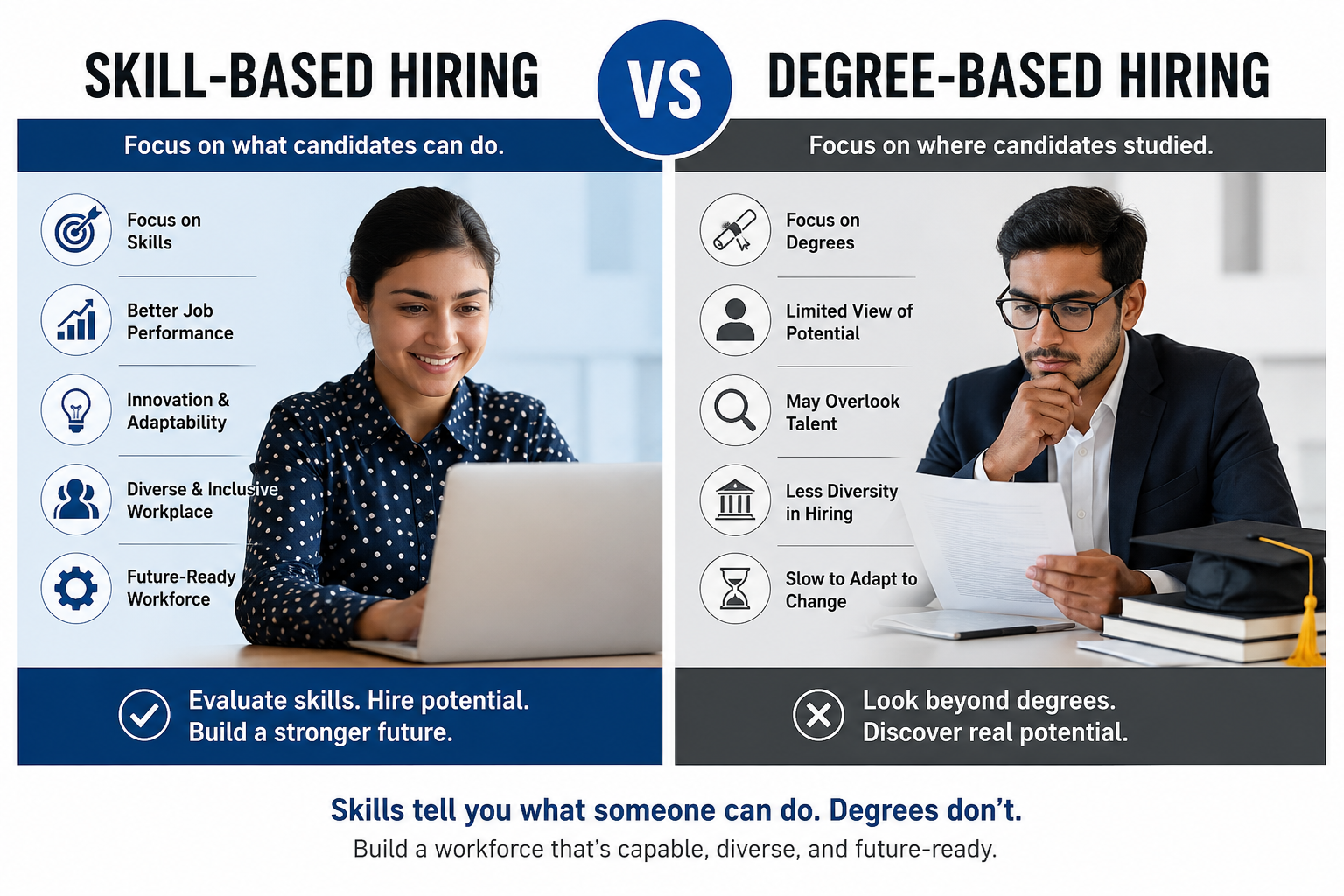

In the evolving job market of India, the debate between skill-based recruitment and degree-based hiring is gaining traction. As employers strive to find the right talent, it becomes crucial to understand the nuances of both approaches. This article delves into the pros and cons of each hiring method, helping Indian employers make informed decisions that align with their organizational goals.
Understanding Skill-Based Recruitment
Skill-based recruitment focuses on the abilities and competencies of candidates rather than their formal educational qualifications. This approach emphasizes practical knowledge and hands-on experience, which can be particularly beneficial in industries undergoing rapid technological changes.
Benefits of Skill-Based Recruitment
Challenges of Skill-Based Recruitment
The Case for Degree-Based Hiring
On the other hand, degree-based hiring is the traditional method where educational qualifications play a significant role in the recruitment process. Many employers still prefer candidates with formal degrees, believing that they signify a certain level of knowledge and commitment.
Benefits of Degree-Based Hiring
Challenges of Degree-Based Hiring
Which Approach is Right for Your Organization?
Choosing between skill-based recruitment and degree-based hiring is not a one-size-fits-all decision. Here are some factors to consider:
1. Industry Requirements
In fields such as technology, design, and sales, practical skills often outweigh formal education. Conversely, sectors like healthcare and academia may prioritize degrees due to the necessity of specialized knowledge.
2. Company Culture
Organizations with a culture of innovation and flexibility may benefit from skill-based hiring, whereas those valuing tradition and structure might lean towards degree-based recruitment.
3. Long-Term Goals
Consider your company’s growth trajectory. If adaptability and quick skill acquisition are essential, investing in skill-based hiring might yield better results in the long term.
Best Practices for Implementing Skill-Based Recruitment
If you decide to shift towards competency hiring, consider these best practices:
1. Define Skills Clearly
Outline the specific skills necessary for each role. This clarity helps in both crafting job descriptions and evaluating candidates accurately.
2. Use Assessments
Implement skill assessments, practical tests, or real-life scenarios during the interview process to gauge candidates' competencies effectively.
3. Provide Training
For candidates who show potential but lack certain skills, consider offering training programs. This investment not only enhances employee capabilities but also fosters loyalty.
FAQs
Q1: Is skill-based recruitment more effective than degree-based hiring?
A1: It depends on the industry and specific roles. Skill-based recruitment can be more effective in fast-paced fields, while degree-based hiring may be essential in specialized professions.
Q2: Can I combine both hiring methods?
A2: Absolutely! Many organizations find success by combining both methods, evaluating candidates on their skills while also considering their educational backgrounds.
Q3: How can I ensure a fair skill assessment process?
A3: Utilize structured assessment tools, involve multiple reviewers, and ensure that evaluations are based on objective criteria to minimize bias.
Conclusion
The choice between skill-based recruitment and degree-based hiring is not merely a matter of preference; it is a strategic decision that can shape the future of your organization. With the right approach, Indian employers can build competent teams that drive innovation and success.
Are you ready to transform your hiring process? Embrace a skill-based approach and unlock the potential of diverse talent. Contact us today for expert guidance on implementing effective recruitment strategies!