Latest Post


Quality Management Courses



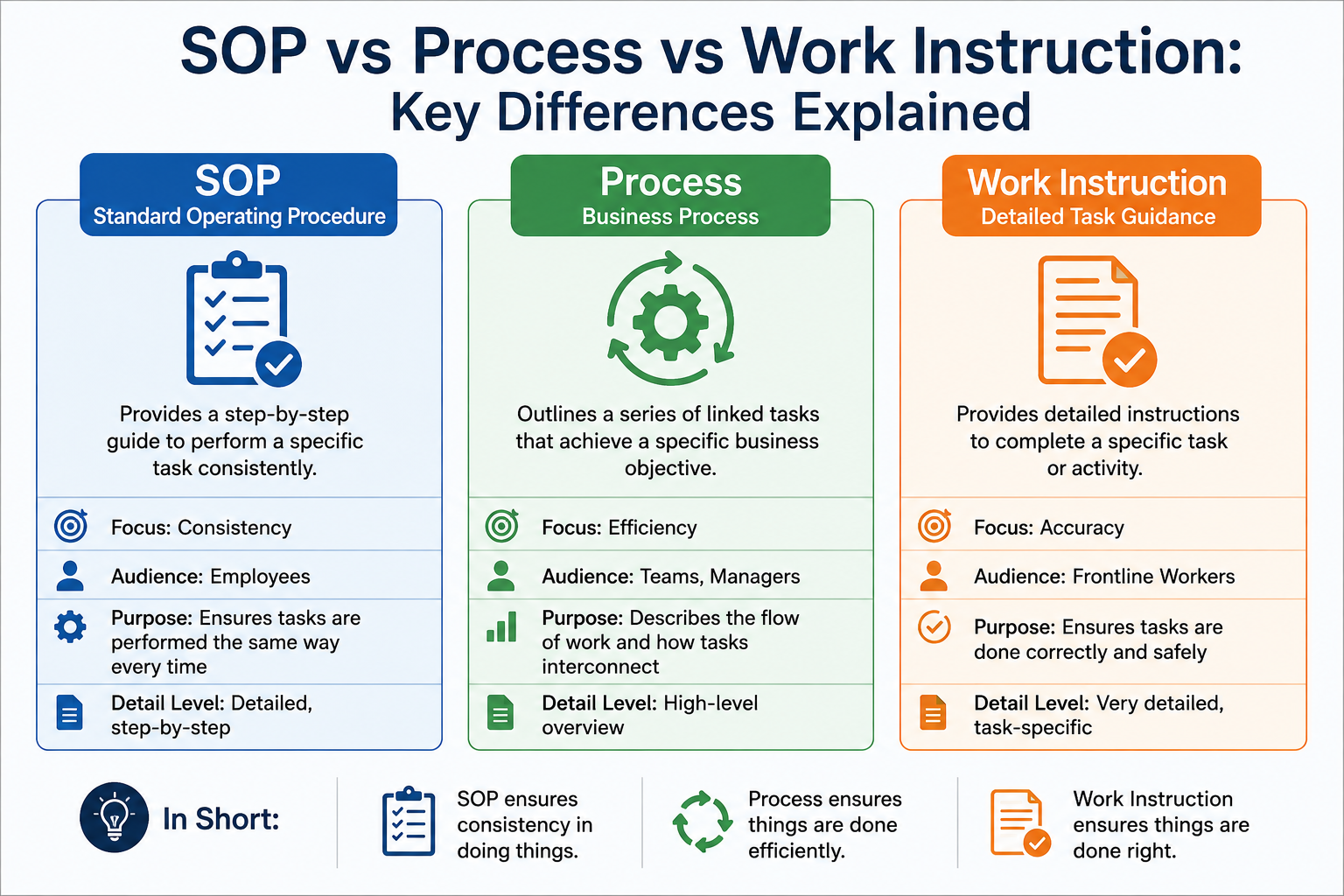

In the landscape of organizational management, clarity and precision are paramount. For businesses in India, understanding the nuances of SOP vs process, SOP vs work instruction, and the broader categories of process vs procedure vs work instruction is essential. This blog aims to demystify these terms, enabling you to enhance your process documentation and SOP documentation to drive efficiency and compliance within your organization.
What is a Standard Operating Procedure (SOP)?
A Standard Operating Procedure (SOP) is a set of written instructions that outlines how to perform a specific task or process. SOPs are crucial in ensuring consistency and compliance within an organization. They provide a roadmap for employees, guiding them through the necessary steps to achieve a desired outcome.
In the Indian context, organizations across various sectors such as manufacturing, healthcare, and IT extensively use SOPs to standardize operations, minimize errors, and enhance productivity. For instance, in a pharmaceutical company, an SOP might detail the exact steps for equipment cleaning to ensure compliance with health regulations.
Understanding Processes
A process is a broader term that refers to a series of actions or steps taken to achieve a particular end. It encompasses various tasks and activities, often involving multiple stakeholders. Processes can be simple or complex, depending on the organization and the outcomes desired.
In the Indian business ecosystem, understanding processes is vital for streamlining operations. For example, the hiring process in a company typically involves several stages, including job posting, screening, interviews, and onboarding. Each of these stages is a part of the overall hiring process.
What Are Work Instructions?
Work instructions are detailed, step-by-step guides that provide specific directions on how to carry out a particular task within a process. They are typically more granular than SOPs and are designed for individuals who need to perform the work directly. Work instructions ensure that every team member knows exactly what is required to complete their tasks correctly.
For example, in a manufacturing plant, a work instruction might provide detailed steps for operating a particular machine, including safety precautions and troubleshooting tips. This level of detail is essential for ensuring safety and efficiency on the shop floor.
Key Differences: SOP vs Process vs Work Instruction
1. Level of Detail
The primary difference between SOPs, processes, and work instructions lies in their level of detail. SOPs provide a high-level overview of procedures, processes offer a broader sequence of actions, and work instructions delve into the specifics of how to execute individual tasks.
2. Purpose and Audience
SOPs are designed for compliance and consistency, primarily targeting managers and team leaders. Processes are aimed at understanding the flow of activities and may involve multiple departments. On the other hand, work instructions are intended for individuals performing specific tasks and require a clear understanding of the job at hand.
3. Flexibility
SOPs are generally more rigid as they are meant to standardize operations. Processes can vary and adapt based on organizational needs, while work instructions can be updated frequently to reflect changes in tasks or technologies.
4. Documentation Structure
SOP documentation typically includes the purpose, scope, definitions, and steps involved in a procedure, while work instructions may include diagrams, screenshots, and detailed step-by-step directives. Process documentation, in contrast, outlines the various stages of a process without diving into the minutiae of individual tasks.
When to Use Each Document Type
Understanding when to use SOPs, processes, and work instructions is crucial for effective documentation. Here’s a quick guide:
The Importance of Effective Documentation
In India, effective process documentation and SOP documentation are critical for organizations aiming to enhance operational efficiency and ensure compliance with industry regulations. Well-documented procedures help minimize errors, reduce training time for new employees, and provide a reference point for evaluating performance.
Moreover, in highly regulated sectors like pharmaceuticals and food safety, maintaining accurate SOPs and work instructions is not just beneficial but often mandatory. Organizations can face severe penalties for non-compliance, making it essential to invest time and resources into developing and maintaining these documents.
Best Practices for Creating SOPs, Processes, and Work Instructions
Here are some best practices to consider when developing SOPs, processes, and work instructions:
FAQs
What is the main difference between an SOP and a work instruction?
The main difference is the level of detail. An SOP provides a high-level overview of a process, while a work instruction offers specific steps for carrying out a task within that process.
Can a work instruction be part of an SOP?
Yes, work instructions can be included as an appendix or a referenced document within an SOP to provide additional detail on specific tasks.
How frequently should SOPs and work instructions be updated?
It is advisable to review SOPs and work instructions at least annually or whenever there are significant changes in processes, regulations, or technology.
Are SOPs mandatory in India?
In many regulated industries, such as pharmaceuticals and food processing, SOPs are mandatory to ensure compliance with local regulations and standards.
Conclusion
Understanding the distinctions between SOP vs process, SOP vs work instruction, and the broader context of process vs procedure vs work instruction is vital for any organization looking to improve efficiency and compliance. By clearly defining and documenting these elements, businesses can enhance their operational effectiveness and ensure that their teams are well-equipped to perform their tasks accurately.
If you’re looking to enhance your SOP documentation or need assistance in developing comprehensive process documentation, don’t hesitate to reach out! Our experts are here to help you streamline your operations and optimize your workflows.
Contact us today for a consultation!