

In today’s rapidly evolving business landscape, organizations are increasingly recognizing the importance of strategic workforce planning. One of the most effective approaches to achieve this is through talent mapping. This blog will explore what talent mapping is, how it works, and why businesses need to incorporate it into their talent management strategy.
What is Talent Mapping?
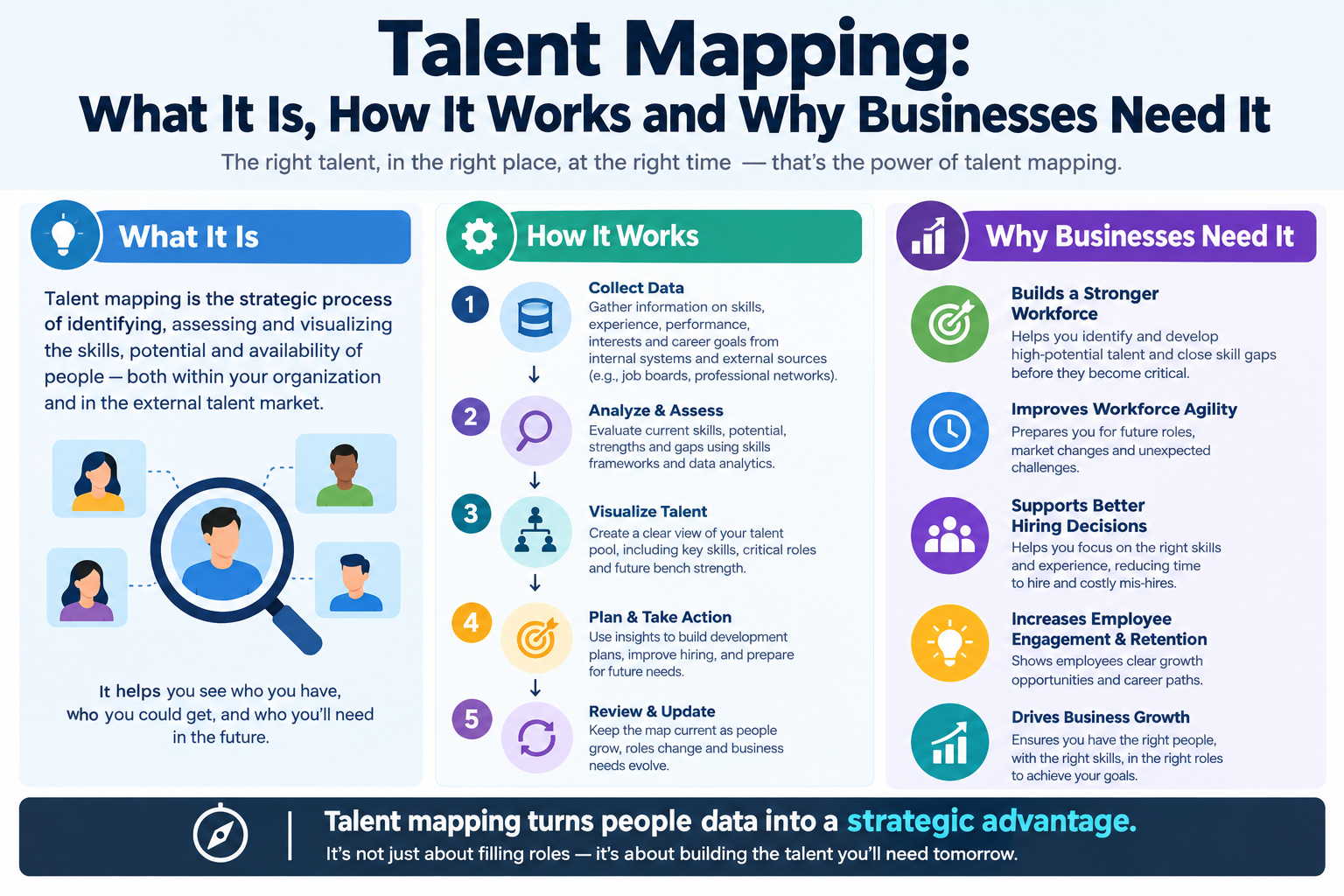
Talent mapping is a systematic process that involves identifying, assessing, and analyzing the skills and capabilities of current and potential employees within an organization. It provides insights into the talent landscape, enabling companies to make informed decisions about hiring, development, and succession planning. Essentially, talent mapping acts as a strategic blueprint for aligning workforce capabilities with business objectives.
The Importance of Talent Mapping in Recruitment
In the competitive Indian job market, effective talent mapping in recruitment can be a game-changer for businesses. By understanding the skills available within the organization and the external talent pool, companies can:
How Does the Talent Mapping Process Work?
The talent mapping process can be broken down into several key steps:
1. Define Business Objectives
Before initiating the talent mapping process, it’s essential to align your mapping efforts with your organization’s strategic goals. Understanding the future direction of your business helps in identifying the type of talent needed.
2. Analyze Current Workforce
Conduct a comprehensive analysis of your existing workforce. This includes evaluating current employees’ skills, competencies, and career aspirations. Use performance reviews, employee feedback, and skills assessments to gather this information.
3. Identify Future Needs
Project your future talent needs based on business growth, technological advancements, and industry trends. This will help you anticipate the skills and expertise required down the line.
4. Map External Talent Landscape
Research the external talent market to identify potential candidates who possess the skills you need. Consider factors like market trends, competitor analysis, and demographic changes that might affect the availability of talent.
5. Create a Talent Pipeline
Develop a talent pipeline that includes potential candidates from both internal and external sources. This pipeline should be dynamic, continually updated based on changes in the business environment and talent availability.
6. Implement Development Plans
Design and implement training and development programs to upskill your current workforce. Investing in employee development not only fills skill gaps but also enhances employee engagement and retention.
7. Monitor and Adjust
The talent mapping strategy should be an ongoing process. Regularly review and adjust your talent mapping efforts based on changing business needs and market conditions.
Why Do Businesses Need Talent Mapping?
Incorporating talent mapping into your workforce planning offers numerous benefits:
1. Strategic Hiring
Talent mapping allows businesses to hire strategically rather than reactively. By understanding what skills are available and what is needed, organizations can make informed hiring decisions that align with long-term goals.
2. Improved Employee Retention
By identifying career progression opportunities within the organization, employees are more likely to feel valued and engaged, leading to higher retention rates. A solid talent mapping strategy also helps in recognizing high-potential employees for future leadership roles.
3. Enhanced Succession Planning
Talent mapping plays a crucial role in succession planning. By identifying key roles and the skills required for these positions, organizations can prepare for future leadership transitions more effectively.
4. Cost-Effectiveness
Strategic talent mapping can significantly reduce recruitment costs. By proactively identifying and developing internal talent, organizations can minimize the need for external hires, which often come with higher expenses.
5. Better Organizational Agility
In a fast-paced business environment, agility is critical. Talent mapping provides organizations with the flexibility to adapt quickly to changing market conditions, ensuring they have the right talent in place when needed.
FAQs about Talent Mapping
Q1: How often should talent mapping be conducted?
A1: Talent mapping should be an ongoing process, with regular reviews to ensure alignment with business goals and market trends.
Q2: What tools can be used for talent mapping?
A2: Various tools and software are available for talent mapping, including Applicant Tracking Systems (ATS), Human Resource Information Systems (HRIS), and specialized talent management solutions.
Q3: How does talent mapping differ from traditional recruitment methods?
A3: Unlike traditional recruitment that focuses on filling immediate vacancies, talent mapping takes a strategic approach to understand the long-term talent needs of an organization.
Q4: Can small businesses benefit from talent mapping?
A4: Absolutely! Small businesses can leverage talent mapping to optimize their limited resources and ensure they have the right talent to support their growth.
Q5: What is the role of technology in talent mapping?
A5: Technology plays a vital role in talent mapping by providing data analytics, automating processes, and enhancing communication between HR and employees.
Conclusion
In a world where talent is one of the most critical assets for a business, talent mapping stands out as a strategic tool that can drive success. By understanding the skills and capabilities of your workforce and anticipating future needs, you can create a robust talent management strategy that positions your organization for growth. Embrace the talent mapping process to not only enhance your recruitment efforts but also foster a culture of development and engagement within your company.
If you’re ready to take your talent management strategy to the next level, start integrating talent mapping into your workforce planning today! For more insights and assistance, feel free to reach out to us!