
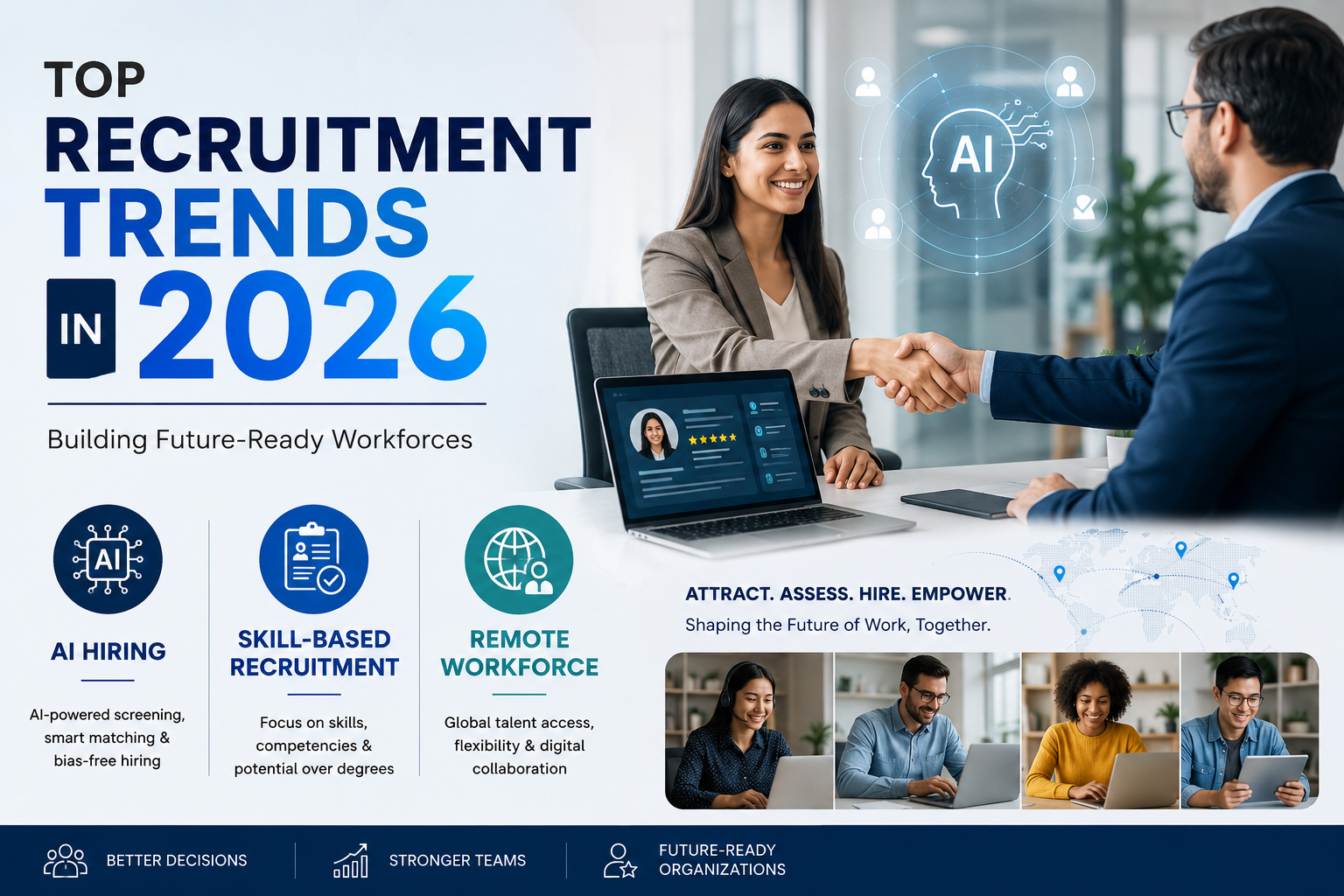

Top Recruitment Trends in 2026: AI Hiring, Skill-Based Recruitment & Remote Workforce
As we move deeper into 2026, the recruitment landscape in India is undergoing a significant transformation. With advancements in technology and shifting workforce dynamics, organizations are embracing new strategies to attract and retain talent. This blog will explore the top recruitment trends that are shaping the future, focusing on AI hiring, skill-based recruitment, and the remote workforce.
1. AI Hiring: Revolutionizing the Recruitment Process
Artificial Intelligence (AI) is no longer a futuristic concept; it has become a fundamental part of the recruitment process. By leveraging AI-powered tools, companies can streamline their hiring processes, reduce biases, and improve candidate experiences. Here are some ways AI is transforming recruitment:
1.1 Automated Resume Screening
One of the most labor-intensive tasks in recruitment is reviewing resumes. AI algorithms can quickly analyze resumes and identify candidates that match job descriptions, saving recruiters countless hours. This not only speeds up the hiring process but also ensures that qualified candidates are not overlooked.
1.2 Enhanced Candidate Matching
AI tools use machine learning to match candidates based on skills, experience, and cultural fit. This data-driven approach helps companies find the right candidates more efficiently, improving the overall quality of hires.
1.3 Predictive Analytics for Talent Retention
AI can also predict candidate success and turnover rates by analyzing historical data. This insight allows recruiters to make informed decisions about which candidates are likely to stay and thrive within the organization.
2. Skill-Based Recruitment: A Shift Towards Competency
As the job market evolves, employers are shifting their focus from traditional qualifications to skills and competencies. This trend is particularly relevant in India, where a diverse talent pool often lacks formal educational qualifications but possesses the necessary skills. Here’s how skill-based recruitment is changing the game:
2.1 Emphasis on Practical Skills
Employers are increasingly valuing practical skills over degrees. This trend has led to the rise of skill assessments and practical tests during the hiring process, allowing candidates to showcase their abilities in real-world scenarios.
2.2 Removing Educational Barriers
By focusing on skills rather than educational qualifications, companies can tap into a larger talent pool, including those from non-traditional backgrounds. This inclusivity can lead to more diverse and innovative teams.
2.3 Continuous Learning and Development
With the rapid pace of technological advancements, the demand for upskilling and reskilling is higher than ever. Companies are now investing in training programs to help employees develop the skills needed for future roles, ensuring that their workforce remains competitive.
3. Remote Workforce: The New Normal
The COVID-19 pandemic has accelerated the adoption of remote work, and it appears to be here to stay. As organizations embrace remote hiring, several trends are emerging:
3.1 Global Talent Pool
Remote work allows companies to access talent from anywhere in the world. Indian organizations can now hire skilled professionals from different countries, enhancing diversity and bringing in fresh perspectives.
3.2 Flexible Work Arrangements
As employees prioritize work-life balance, flexible work arrangements have become essential. Employers are now offering hybrid models that combine remote and in-office work, catering to the needs of their workforce.
3.3 Enhanced Collaboration Tools
To facilitate remote work, companies are investing in collaboration tools that enhance communication and productivity. Platforms like Slack, Zoom, and Microsoft Teams have become staples in the modern workplace, enabling seamless teamwork.
4. The Role of AI in the Recruitment Process
AI in recruitment is not just about automation; it also plays a crucial role in enhancing decision-making. Here are some key aspects of AI's role in the recruitment process:
4.1 Data-Driven Insights
AI tools provide valuable insights into candidate behavior, preferences, and potential fit. This data can help recruiters make informed decisions, ultimately leading to better hiring outcomes.
4.2 Reducing Bias in Hiring
AI can help mitigate unconscious biases in recruitment by focusing solely on candidate qualifications rather than demographic factors. This leads to a more equitable hiring process and a diverse workforce.
4.3 Improving Candidate Experience
AI-powered chatbots and virtual assistants can enhance the candidate experience by providing real-time support and feedback. This engagement not only keeps candidates informed but also reflects positively on the employer brand.
5. Latest Recruitment Trends to Watch
As the recruitment landscape continues to evolve, staying updated on the latest trends is crucial for HR professionals and organizations. Here are some noteworthy trends to keep an eye on:
5.1 Gig Economy and Freelance Hiring
The gig economy is booming, and organizations are increasingly hiring freelancers for short-term projects. This trend allows companies to remain agile while accessing specialized skills without the commitment of full-time employment.
5.2 Employer Branding and Candidate Experience
In a competitive job market, a strong employer brand is vital. Companies are focusing on enhancing the candidate experience by showcasing their culture, values, and benefits, attracting top talent in the process.
5.3 Diversity, Equity, and Inclusion (DEI)
Organizations are prioritizing diversity and inclusion in their hiring processes. By promoting DEI initiatives, companies can create a more inclusive workplace that fosters innovation and creativity.
FAQs
What is AI recruitment?
AI recruitment refers to the use of artificial intelligence technologies to streamline and enhance the hiring process. It includes automated resume screening, candidate matching, and predictive analytics for talent retention.
How does skill-based hiring work?
Skill-based hiring focuses on assessing candidates based on their practical skills and competencies rather than traditional qualifications. It often involves skill assessments and tests to evaluate candidates' abilities.
What are the benefits of remote workforce hiring?
Remote workforce hiring allows companies to access a global talent pool, offers flexible work arrangements, and enhances employee satisfaction. It also reduces overhead costs associated with maintaining physical office spaces.
Conclusion
As we navigate through 2026, it’s clear that recruitment trends are evolving rapidly. Embracing AI hiring, skill-based recruitment, and the remote workforce is essential for organizations looking to thrive in a competitive job market. By staying informed of these trends and adapting their strategies, companies can attract and retain top talent, ensuring their long-term success.
If you’re looking to enhance your recruitment process and stay ahead of the competition, consider implementing these trends in your hiring strategy. For more insights and assistance on navigating the latest recruitment trends, contact us today!