




In the ever-evolving landscape of healthcare, ensuring patient safety and maintaining high standards of care has never been more critical. One effective tool that has gained traction in this sector is Failure Mode and Effects Analysis (FMEA). This structured approach to risk management allows healthcare organizations to identify potential failures in their processes and implement strategies to mitigate them. In this blog, we will delve deep into how FMEA can be applied in healthcare risk management, its advantages, and how it can significantly enhance patient care in India.
What is FMEA?
FMEA, or Failure Mode and Effects Analysis, is a systematic, proactive method for evaluating processes to identify where and how they might fail and assessing the relative impact of different failures. This tool helps organizations prioritize risks based on their potential consequences and likelihood, allowing them to focus their efforts on the most critical areas. In healthcare, FMEA is particularly useful in analyzing clinical processes, administrative functions, and support services to improve overall patient safety.
Why is Risk Management Important in Healthcare?
Risk management in healthcare is essential for several reasons:
How FMEA Works in Healthcare Risk Management
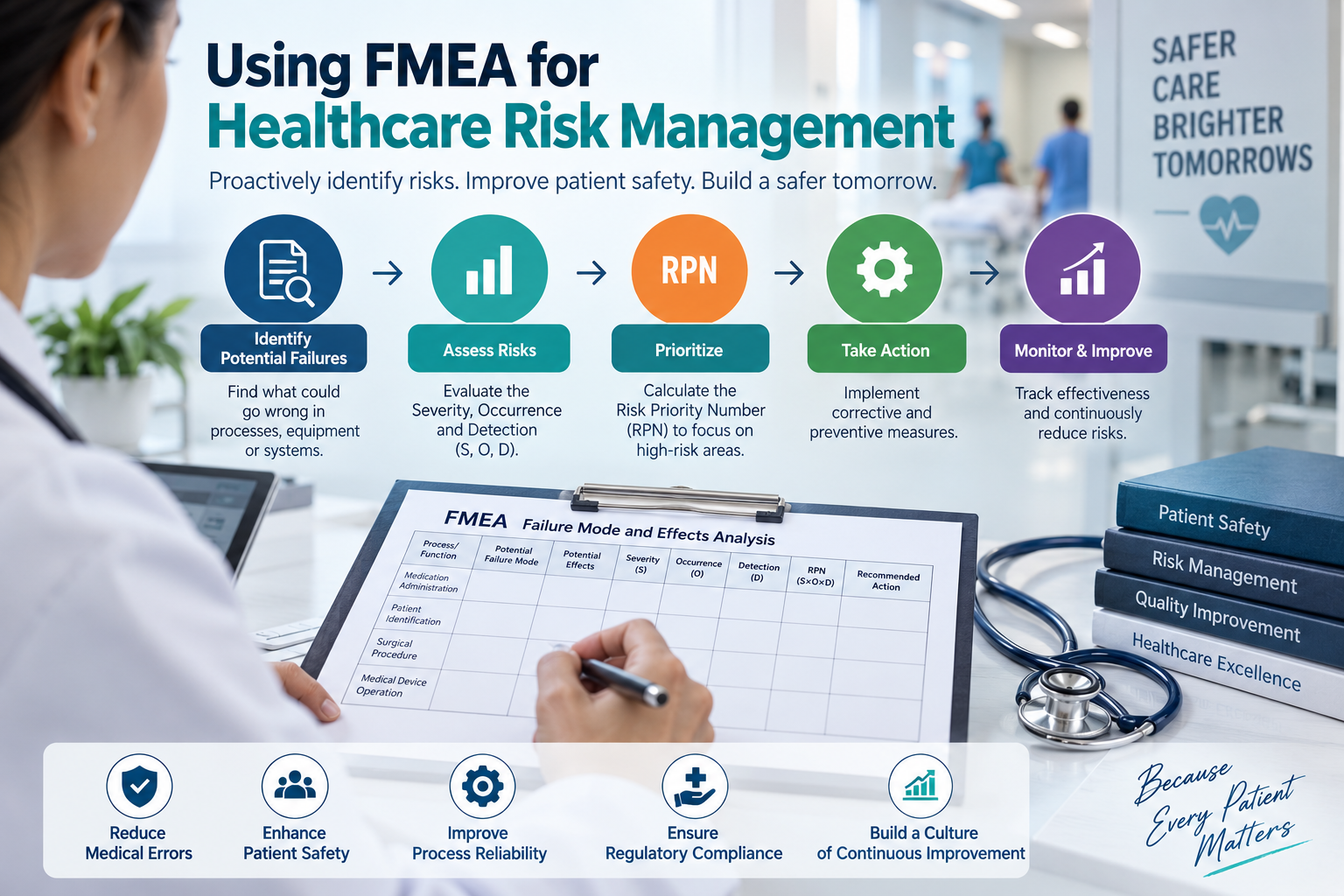
Implementing FMEA in healthcare involves several systematic steps:
1. Define the Scope
The first step is to define the process or system to be analyzed. This could be anything from medication administration to surgical procedures or patient intake processes. Clearly outlining the scope helps to focus the FMEA on specific areas where risks are more likely to occur.
2. Assemble the Team
A multidisciplinary team involving healthcare professionals from various departments is crucial. This team might include doctors, nurses, pharmacists, and administrative staff, ensuring a comprehensive understanding of the processes involved.
3. Identify Failure Modes
During this phase, the team identifies all possible failure modes that could occur within the defined scope. For example, in a medication administration process, failure modes might include administering the wrong dosage, using expired medication, or mislabeling medication.
4. Determine Causes and Effects
Once failure modes are identified, the next step is to ascertain their potential causes and effects. This involves asking questions such as, “What could cause this failure?” and “What would happen if it occurred?” Understanding the implications helps prioritize which risks need immediate attention.
5. Assess Risk
Each identified risk is assessed based on its likelihood of occurrence and the severity of its consequences. This is often quantified using a Risk Priority Number (RPN), which helps in ranking the risks to focus on the most critical ones first.
6. Develop Action Plans
For the highest-priority risks, the team develops action plans to mitigate or eliminate these risks. This could involve redesigning processes, implementing new training programs, or introducing new technologies.
7. Implement and Monitor
After action plans are developed, they must be implemented effectively. Continuous monitoring and reviewing of the outcomes are necessary to ensure that the changes have had the desired effect and that no new risks have emerged.
Benefits of Using FMEA in Healthcare Risk Management
Utilizing FMEA in healthcare risk management offers numerous benefits:
Challenges in Implementing FMEA in Healthcare
While FMEA offers significant advantages, there are challenges associated with its implementation in healthcare settings:
Case Studies: FMEA in Action
Several healthcare facilities in India have successfully implemented FMEA to enhance their risk management processes:
Case Study 1: Hospital A
Hospital A utilized FMEA to improve its medication administration process. By identifying failure modes such as incorrect dosages and mislabeling, the hospital was able to implement new protocols that reduced medication errors by 40% within six months.
Case Study 2: Clinic B
Clinic B faced challenges in its patient intake process, leading to delays and patient dissatisfaction. Through FMEA, the clinic identified bottlenecks and developed a streamlined process that improved patient flow and significantly enhanced patient satisfaction ratings.
FAQs about FMEA in Healthcare Risk Management
What does FMEA stand for?
FMEA stands for Failure Mode and Effects Analysis, a proactive risk management tool used to identify potential failures in processes and assess their impact.
How does FMEA improve patient safety?
FMEA improves patient safety by identifying potential risks before they occur, allowing healthcare organizations to implement strategies to mitigate those risks, ultimately reducing the likelihood of adverse events.
Is FMEA a one-time process?
No, FMEA is not a one-time process. It requires ongoing evaluation and continuous improvement to adapt to changes in healthcare practices and to address new risks as they emerge.
Can FMEA be applied in small healthcare facilities?
Yes, FMEA can be applied in healthcare facilities of all sizes. Even small clinics can benefit from using FMEA to identify and mitigate risks in their processes.
Conclusion
Implementing FMEA in healthcare risk management is an effective way to enhance patient safety, improve care quality, and ensure compliance with regulations. By adopting a proactive approach to identifying and mitigating risks, healthcare organizations in India can not only protect their patients but also optimize their operations. The journey towards enhanced patient safety begins with understanding and applying FMEA effectively.
If you are interested in learning more about FMEA or need assistance in implementing it within your healthcare organization, contact us today for expert guidance and support!