
Latest Post




Quality Management Courses




In the competitive landscape of manufacturing, the quest for efficiency and quality is ever-present. One key metric that plays a crucial role in assessing a manufacturing process's effectiveness is First Pass Yield (FPY). Understanding FPY can help organizations identify areas for improvement, reduce waste, and ultimately enhance profitability. In this blog, we will delve into what first pass yield means, how to calculate it, and why it is a vital manufacturing KPI metric.
Understanding First Pass Yield (FPY)
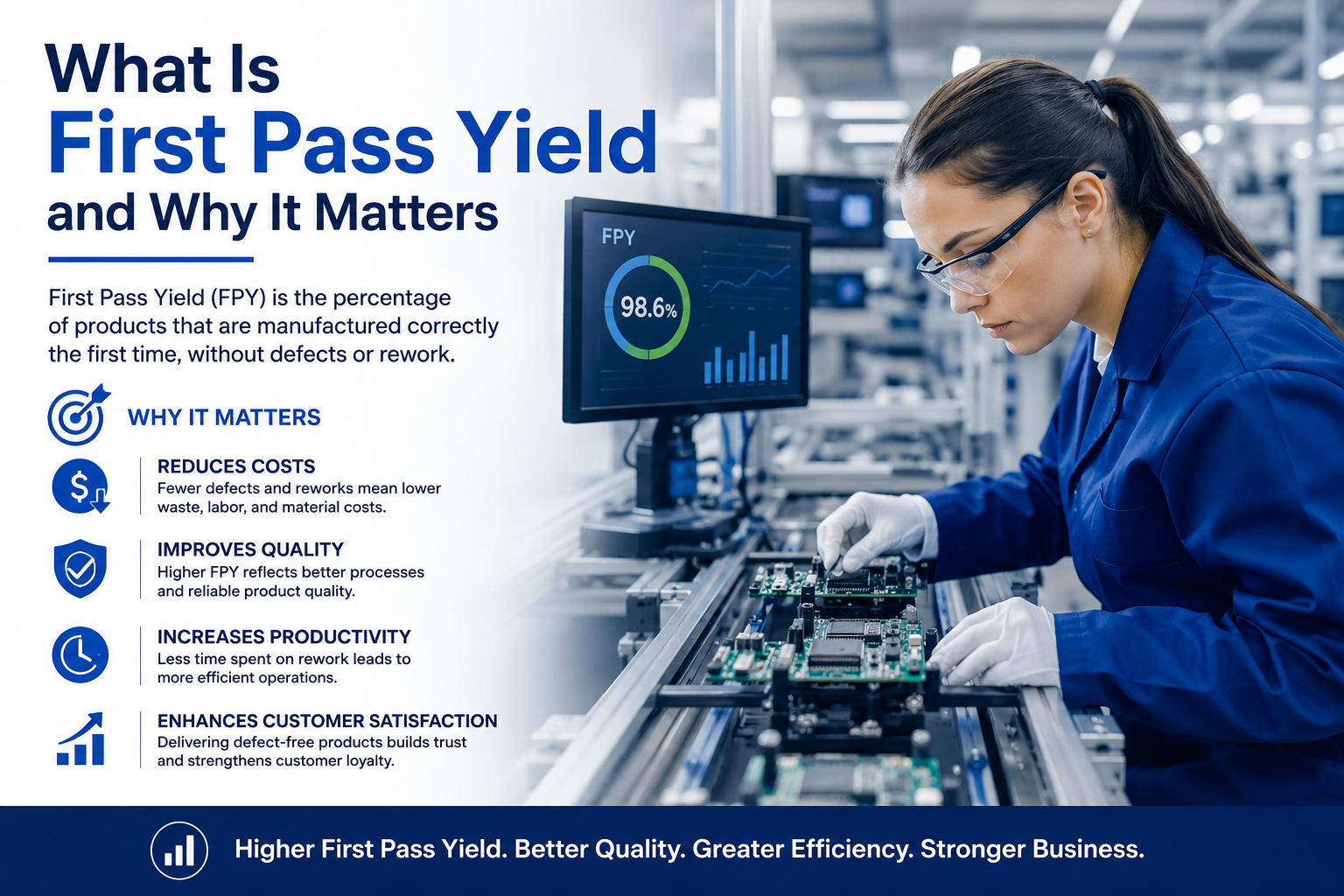
First Pass Yield refers to the percentage of products that are manufactured correctly without any rework or defects on the first attempt. This metric is critical in determining the efficiency of manufacturing processes and is used extensively in quality performance metrics. A high FPY indicates that a manufacturing process is operating effectively, whereas a low FPY may signal the need for process improvements.
The Importance of FPY in Manufacturing
Why does FPY matter? Here are several reasons:
1. Cost Efficiency
High first pass yield means fewer defective products, which translates to lower costs associated with rework, scrap, and warranty claims. For manufacturers in India, where margins can often be tight, maintaining a high FPY is critical for sustaining profitability.
2. Customer Satisfaction
Delivering high-quality products consistently enhances customer satisfaction and trust. A high FPY ensures that customers receive products that meet their expectations, resulting in repeat business and positive referrals.
3. Continuous Improvement
First pass yield serves as a benchmark for identifying areas in the production process that may require enhancement. By monitoring FPY, manufacturers can implement strategies for continuous improvement, thereby reducing waste and increasing efficiency.
Calculating First Pass Yield
To effectively utilize FPY as a manufacturing KPI metric, it’s essential to understand how to calculate it. The first pass yield formula is straightforward:
FPY = (Number of Good Units Produced) / (Total Units Produced) x 100
For example, if a manufacturing line produces 1,000 units in a day and 950 of those units are deemed acceptable on the first pass, the FPY would be:
FPY = (950 / 1000) x 100 = 95%
This means that 95% of the units produced were of acceptable quality without any need for rework, showcasing an efficient manufacturing process.
Factors Affecting First Pass Yield
Several factors can influence FPY in manufacturing:
1. Process Design
A well-designed process minimizes variability and defects, contributing to a higher FPY. Manufacturers should regularly assess and optimize their production processes to ensure they are as efficient as possible.
2. Employee Training
Skilled and well-trained employees are vital for maintaining high quality in production. Regular training programs can significantly enhance the capability of the workforce, leading to improved FPY.
3. Equipment Maintenance
Regular maintenance of machinery and equipment is essential to prevent breakdowns that can lead to defects. A proactive maintenance schedule can help sustain high FPY levels.
Strategies to Improve First Pass Yield
Improving FPY is an ongoing effort. Here are some strategies that manufacturers can adopt:
1. Root Cause Analysis
When FPY is lower than desired, conducting a root cause analysis is essential. Identifying the underlying reasons for defects can help manufacturers implement targeted solutions.
2. Implementing Lean Manufacturing Principles
Adopting lean manufacturing techniques can help streamline processes, reduce waste, and improve FPY. Techniques such as Six Sigma can also be beneficial in enhancing quality.
3. Regular Performance Monitoring
Establishing a robust system for monitoring manufacturing KPI metrics, including FPY, is crucial. Regularly tracking these metrics can provide insights into performance trends and highlight areas for improvement.
FAQs About First Pass Yield
Q1: What is a good FPY percentage in manufacturing?
A good FPY percentage typically ranges between 90% to 95%. However, this can vary by industry and specific processes. Striving for continuous improvement is essential.
Q2: How does FPY differ from overall yield?
FPY focuses solely on the first attempt at producing a quality product, while overall yield considers all products produced over a period, including those that require rework.
Q3: Can FPY be used for services as well as manufacturing?
While FPY is primarily associated with manufacturing, the concept can be adapted to service industries by measuring the percentage of services delivered correctly on the first attempt.
Conclusion
First pass yield is a crucial metric in the manufacturing industry that can significantly impact overall efficiency, costs, and customer satisfaction. By understanding and optimizing FPY through various strategies, manufacturers can improve their processes and ensure high-quality outputs. If you're looking to enhance your manufacturing performance, it’s time to focus on your first pass yield.
Are you ready to take your manufacturing process to the next level? Start monitoring your FPY today and see the difference it can make in your operations.
Contact us today for expert advice on improving your manufacturing processes and achieving higher first pass yields!