
Latest Post




Quality Management Courses



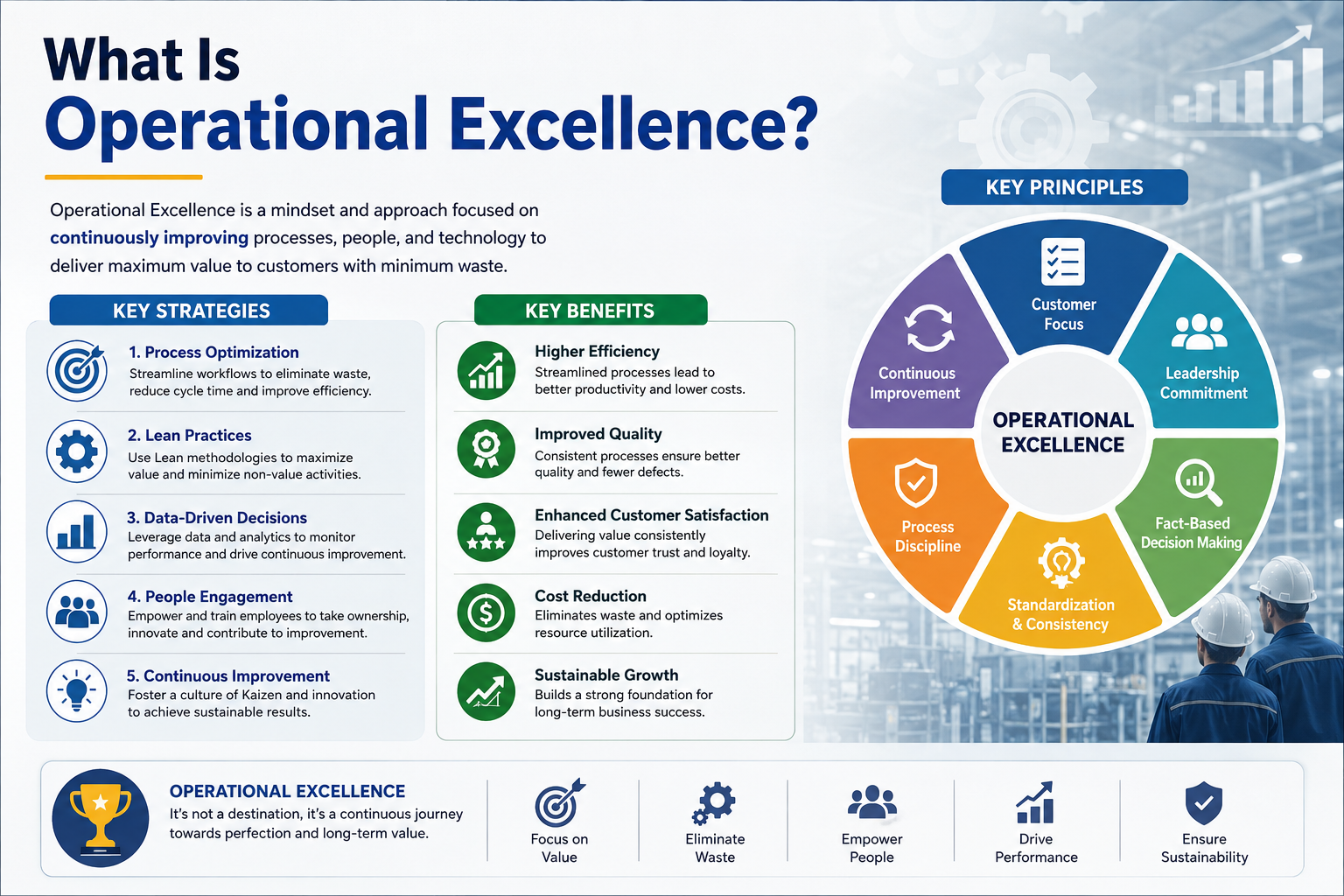

In today's fast-paced business environment, organizations strive for excellence in their operations to stay competitive. The concept of operational excellence has emerged as a vital approach for businesses aiming to enhance their efficiency and effectiveness. In this comprehensive guide, we will explore what operational excellence is, its key principles, strategies for implementation, benefits, and real-world examples that illustrate its impact on businesses, particularly in the Indian context.
Understanding Operational Excellence
Operational excellence refers to the systematic management of an organization’s processes to achieve superior performance. It encompasses a culture of continuous improvement, where businesses seek to enhance their operations by minimizing waste, improving quality, and maximizing value for customers. The primary goal is not just to do things right but to do the right things consistently.
The Importance of Operational Excellence
For Indian businesses, adopting an operational excellence strategy is crucial due to the competitive market landscape. As globalization increases and consumer expectations evolve, organizations must strive for operational efficiency to meet these demands.
Key Principles of Operational Excellence
To successfully implement operational excellence, businesses must adhere to several core principles:
1. Customer Focus
Understanding and meeting customer needs is paramount. This involves gathering feedback, analyzing market trends, and ensuring that every operational process aligns with delivering value to the customer.
2. Continuous Improvement
Organizations should foster a culture of ongoing improvement. This can be achieved through methodologies such as Lean, Six Sigma, or Kaizen, which emphasize incremental changes that lead to significant results over time.
3. Employee Engagement
Employees are at the core of operational excellence. Engaging them in decision-making processes and encouraging them to contribute ideas for improvement can lead to a more motivated workforce and better outcomes.
4. Data-Driven Decision Making
Operational excellence relies heavily on data analytics. By utilizing data to drive decisions, organizations can identify inefficiencies, measure performance, and validate improvement initiatives.
Strategies for Implementing Operational Excellence
Implementing an operational excellence framework requires strategic planning and execution. Here are some effective strategies:
1. Process Mapping
Start by mapping out existing processes to identify inefficiencies and bottlenecks. A clear visualization of workflows can help pinpoint areas needing improvement.
2. Training and Development
Invest in training programs for employees to develop their skills and understanding of operational excellence principles. This not only enhances their capabilities but also instills a culture of excellence.
3. Lean Methodologies
Adopting Lean principles helps eliminate waste and streamline processes. Implementing practices such as Just-In-Time (JIT) and Value Stream Mapping can significantly improve operational efficiency.
4. Performance Metrics
Establish key performance indicators (KPIs) to measure progress. Regularly monitoring these metrics allows organizations to assess the effectiveness of their operational excellence initiatives and make necessary adjustments.
Benefits of Operational Excellence
Implementing an operational excellence strategy brings numerous benefits to organizations:
1. Improved Efficiency
By streamlining processes and eliminating waste, businesses can achieve greater operational efficiency, leading to cost savings and increased productivity.
2. Enhanced Quality
With a focus on continuous improvement and customer feedback, organizations can enhance the quality of their products and services, resulting in higher customer satisfaction.
3. Increased Profitability
Operational excellence leads to reduced costs and enhanced revenue through improved customer loyalty, ultimately increasing profitability.
4. Competitive Advantage
Companies that embrace operational excellence are better positioned to respond to market changes and customer demands, giving them a significant edge over competitors.
Operational Excellence Examples in India
Several Indian companies have successfully implemented operational excellence strategies, showcasing the potential impact:
1. Tata Consultancy Services (TCS)
TCS has adopted a robust operational excellence framework that emphasizes continuous improvement and customer-centric processes. Their commitment to quality and efficiency has made them a leader in the IT services sector.
2. Mahindra & Mahindra
Mahindra has embraced Lean manufacturing principles, allowing them to optimize production processes and enhance overall operational efficiency, significantly reducing costs while maintaining quality.
3. Infosys
Infosys employs a data-driven approach to operational excellence, utilizing advanced analytics to improve project delivery and customer satisfaction, thus reinforcing their market position.
Operational Excellence Management
Managing operational excellence is an ongoing process that requires commitment from all levels of the organization. Here are some best practices:
1. Leadership Commitment
Top management must demonstrate a commitment to operational excellence by allocating resources and actively participating in improvement initiatives.
2. Cross-Functional Collaboration
Encourage collaboration among different departments to share knowledge and best practices. This can lead to innovative solutions and a more cohesive approach to operational excellence.
3. Regular Reviews
Conduct regular reviews of operational processes and performance metrics to ensure alignment with organizational goals and to identify areas for further improvement.
FAQs About Operational Excellence
What is the main goal of operational excellence?
The primary goal of operational excellence is to improve efficiency, enhance quality, and maximize value for customers while minimizing waste and costs.
How can small businesses benefit from operational excellence?
Small businesses can achieve greater efficiency, reduce operating costs, and improve customer satisfaction by implementing operational excellence principles.
Is operational excellence only relevant for manufacturing companies?
No, operational excellence is applicable across various industries, including service sectors, healthcare, and retail, as it focuses on improving processes and customer experiences.
What tools and methodologies are commonly used in operational excellence?
Common tools include Lean, Six Sigma, Kaizen, and Total Quality Management (TQM), which help organizations identify and eliminate inefficiencies.
Conclusion
In conclusion, operational excellence is a vital component for organizations aiming to thrive in today's competitive market. By understanding its principles, implementing effective strategies, and focusing on continuous improvement, businesses can reap significant benefits. As Indian companies increasingly recognize the importance of operational efficiency, adopting an operational excellence strategy will undoubtedly be key to their long-term success.
If you are ready to embark on your journey toward operational excellence, start by assessing your current processes and identifying areas for improvement. Remember, the path to excellence is a continuous one—commit to making small, incremental changes that lead to significant results over time.
Call to Action: If you found this information helpful and want to learn more about operational excellence, subscribe to our newsletter for the latest insights and strategies tailored for the Indian business landscape!