Latest Post


Quality Management Courses



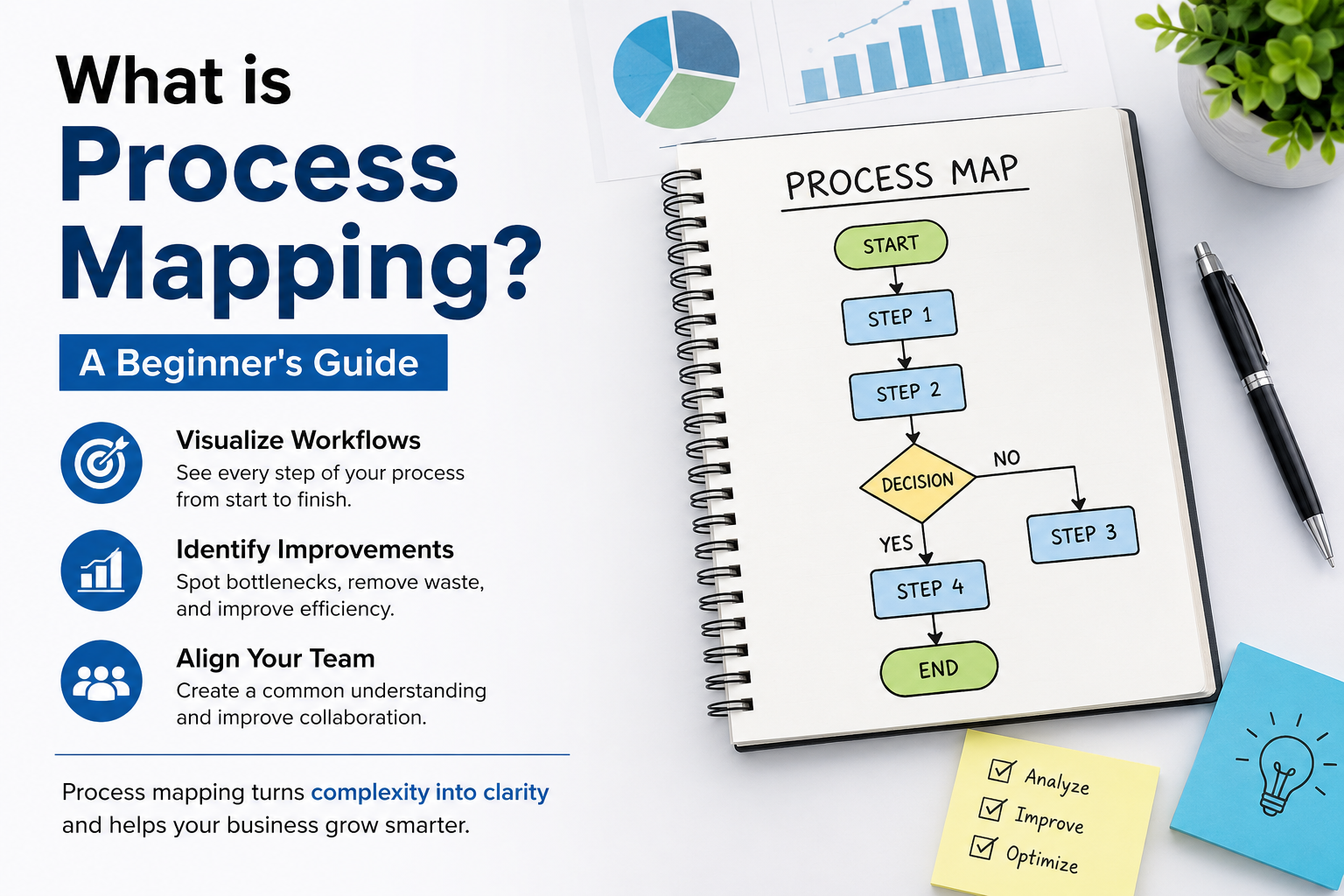

In today's fast-paced business world, efficiency and clarity are paramount. One of the most effective tools for achieving this is process mapping. Whether you are a small startup in India or a large corporation, understanding the fundamentals of business process mapping can lead to significant improvements in your workflow. In this guide, we will explore what process mapping is, its benefits, and how to create effective process flow diagrams.
Understanding Process Mapping
At its core, process mapping is a visual representation of the steps involved in a business process. It helps to clarify each stage of a process, allowing teams to understand their responsibilities and the flow of information. This clarity can be invaluable for streamlining operations and enhancing productivity.
Why is Process Mapping Important?
Process mapping serves several critical functions:
Types of Process Mapping
There are various approaches to business process mapping, each serving different needs:
1. Flowcharts
Flowcharts are one of the most common types of process flow diagrams. They use shapes and arrows to represent the steps in a process and how they relate to one another. Flowcharts are easy to understand and can be used for both simple and complex processes.
2. Swimlane Diagrams
Swimlane diagrams divide processes into lanes that represent different departments or stakeholders. This type of mapping is particularly useful for illustrating interactions between various teams and clarifying responsibilities.
3. Value Stream Mapping
This method focuses on the flow of materials and information required to bring a product or service to the customer. Value stream mapping is essential for identifying waste and enhancing process improvement mapping efforts.
4. SIPOC Diagrams
SIPOC stands for Suppliers, Inputs, Process, Outputs, and Customers. This high-level mapping technique helps to visualize the entire process from start to finish, making it easier to identify key components and stakeholders.
Creating an Effective Process Flow Diagram
Creating a process flow diagram involves several key steps. Here’s a simple guide to get you started:
Step 1: Define the Process
Clearly outline what process you want to map. Involve stakeholders to ensure that all relevant aspects are considered.
Step 2: Gather Information
Collect data on each step of the process. This includes inputs, outputs, and the roles of individuals involved in each stage.
Step 3: Identify the Sequence of Steps
Determine the order of operations and how each step connects with the others. Be sure to account for decision points and alternative paths.
Step 4: Choose a Mapping Tool
There are numerous tools available for creating process maps, ranging from simple drawing software to specialized process mapping software. Choose one that best suits your team's needs.
Step 5: Create the Diagram
Start placing shapes and arrows to represent the steps in the process. Use standard symbols (like ovals for start/end, rectangles for steps, and diamonds for decisions) to keep it clear and professional.
Step 6: Validate and Refine
Share the draft with stakeholders to gather feedback. Ensure that the diagram accurately represents the process and make necessary refinements.
Step 7: Implement and Monitor
Once finalized, implement the process flow diagram in your operations. Monitor its effectiveness and make adjustments as needed.
Benefits of Process Improvement Mapping
Engaging in process improvement mapping can lead to several advantages:
Workflow Mapping: A Key Component of Process Mapping
Workflow mapping is a specific form of process mapping that focuses on the flow of tasks between individuals or teams. It’s particularly beneficial in collaborative environments where multiple stakeholders are involved. By visualizing workflows, organizations can enhance collaboration and ensure that everyone understands their roles in the process.
FAQs About Process Mapping
1. What industries can benefit from process mapping?
Process mapping can benefit virtually any industry, including manufacturing, healthcare, finance, and IT. Its principles can be applied to any business process.
2. How often should a process be mapped or updated?
It’s advisable to review and update process maps regularly or whenever significant changes occur within the organization, such as new technology implementations or changes in team structure.
3. What tools can I use for process mapping?
Several tools are available for process mapping, including Microsoft Visio, Lucidchart, and online tools like Miro or Draw.io. Choose one that fits your team’s needs.
4. How can process mapping improve employee training?
Process maps serve as visual aids that help new employees quickly understand workflows and responsibilities, making training more efficient.
5. Is process mapping a one-time activity?
No, process mapping should be an ongoing activity. Regular reviews help ensure that processes remain efficient and relevant as the business evolves.
Conclusion
In conclusion, process mapping is an invaluable tool for businesses looking to improve efficiency, clarity, and communication. By understanding and implementing various mapping techniques, organizations can streamline their operations and foster a culture of continuous improvement. Whether you're a beginner or looking to refine your skills, the insights provided in this guide will help you harness the power of process mapping.
If you’re ready to take the next step in optimizing your business processes, consider reaching out to a process mapping expert today. Start your journey towards efficiency and clarity now!
Call to Action: For personalized assistance in process mapping and improvement, contact us at [your contact information]. Let’s work together to streamline your business processes!