
Latest Post
Quality Management Courses




In today's competitive business landscape, efficient processes and quality management are crucial for success. This is where Six Sigma methodologies come into play. Among the various levels of Six Sigma training, the Six Sigma Master Black Belt Certification stands out as a prestigious qualification that equips professionals with advanced skills in process improvement and quality management. This article will delve into what a Six Sigma Master Black Belt is, the roles and responsibilities associated with this certification, and the leadership scope it offers, especially in the Indian context.
Understanding Six Sigma and Master Black Belt Certification
Six Sigma is a data-driven approach and methodology for eliminating defects in any process, from manufacturing to transactional and from product to service. The goal is to achieve a process capability that results in fewer than 3.4 defects per million opportunities. The Six Sigma framework includes various levels of certification, from Yellow Belt to Master Black Belt, each representing a different level of expertise and responsibility.
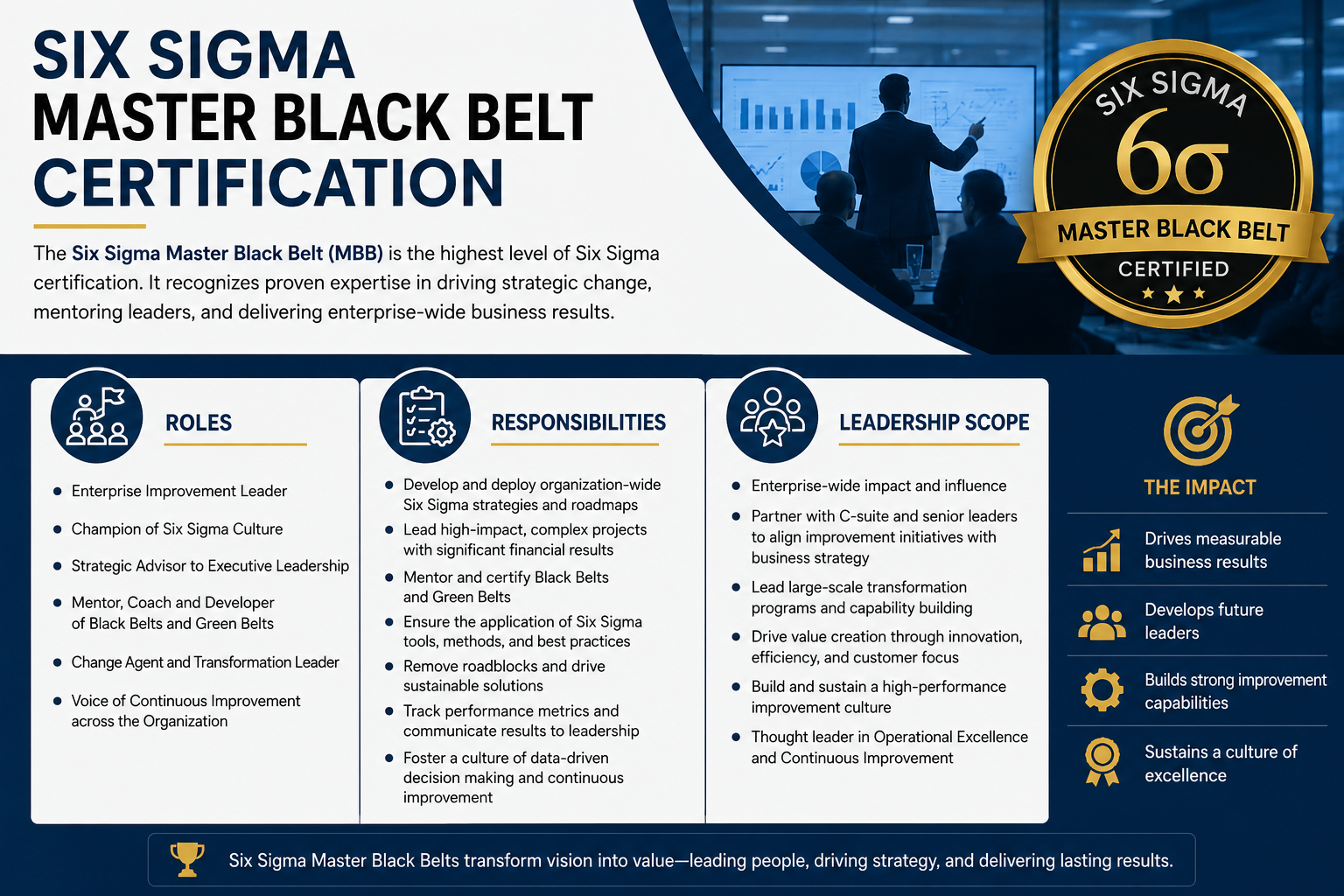
The Master Black Belt Certification is the highest level in the Six Sigma hierarchy. It signifies that an individual has mastered the Six Sigma principles, tools, and methodologies and can lead complex projects and initiatives within an organization.
Roles and Responsibilities of a Six Sigma Master Black Belt
Individuals with a Lean Six Sigma Master Black Belt certification play a pivotal role in organizations striving for operational excellence. Here are some of the key responsibilities they undertake:
1. Leadership and Mentorship
A Master Black Belt is expected to lead project teams and mentor Green and Black Belts. They provide guidance on Six Sigma methodologies, ensuring that projects align with organizational goals. This leadership role is crucial for fostering a culture of continuous improvement within the organization.
2. Project Management
Master Black Belts often manage multiple Six Sigma projects simultaneously. They are responsible for project selection, scope definition, and ensuring that projects meet their objectives. Their expertise in statistics and problem-solving is essential for driving projects to successful completion.
3. Training and Development
Another critical role is to train and develop other Six Sigma practitioners in the organization. This includes conducting Master Black Belt training sessions, workshops, and seminars to build a robust Six Sigma foundation within the workforce.
4. Strategic Planning
Master Black Belts are involved in strategic planning and decision-making at the organizational level. They analyze data and trends to identify areas for improvement and help develop strategies that align with the company’s overall objectives.
5. Data Analysis and Interpretation
Data-driven decision-making is at the heart of Six Sigma. Master Black Belts are skilled in statistical analysis and are responsible for interpreting complex data sets. They use this information to identify process inefficiencies and develop solutions that enhance quality and efficiency.
6. Change Management
Implementing Six Sigma methodologies often requires significant changes within an organization. Master Black Belts are responsible for managing this change, ensuring that all stakeholders are on board and that the transition is smooth.
Leadership Scope of a Six Sigma Master Black Belt
The scope of leadership for a Six Sigma Master Black Belt extends beyond just managing projects. Here’s how they contribute to organizational leadership:
1. Influencing Organizational Culture
By promoting Six Sigma principles, Master Black Belts can help shape a culture that values quality and continuous improvement. This cultural shift can lead to enhanced employee engagement, higher customer satisfaction, and improved business performance.
2. Driving Innovation
Master Black Belts are often at the forefront of innovation within an organization. Their expertise in identifying inefficiencies and developing solutions can lead to new processes, products, and services that drive business growth.
3. Enhancing Customer Satisfaction
By focusing on quality and efficiency, Master Black Belts significantly contribute to improving customer satisfaction. Their work helps ensure that products and services meet or exceed customer expectations, which is crucial in today's competitive market.
4. Building a Sustainable Competitive Advantage
Organizations that adopt Six Sigma methodologies often find themselves with a sustainable competitive advantage. Master Black Belts play a critical role in ensuring that these methodologies are effectively implemented and maintained over time.
Why Pursue a Six Sigma Master Black Belt Certification in India?
In India, the demand for Six Sigma professionals, particularly those with a Master Black Belt certification, is on the rise. As businesses increasingly focus on quality and operational efficiency, having certified professionals in leadership roles is essential. Here are a few reasons to pursue this certification:
1. Career Advancement
A Six Sigma Master Black Belt Certification can open up new career opportunities and significantly enhance your earning potential. Many organizations, particularly in manufacturing, IT, and services sectors, are actively seeking professionals with this expertise.
2. Enhanced Skill Set
The training equips you with advanced problem-solving skills, statistical analysis expertise, and the ability to lead teams effectively. These skills are not only valuable in Six Sigma projects but are also transferable to various business environments.
3. Networking Opportunities
Pursuing certification often allows you to connect with other professionals in the field, providing valuable networking opportunities that can lead to collaborations, partnerships, and job referrals.
4. Contribution to Organizational Success
As a Master Black Belt, you will have a direct impact on your organization’s success. By leading Six Sigma initiatives, you contribute to cost savings, process improvements, and enhanced customer satisfaction, making you an invaluable asset to your company.
FAQs about Six Sigma Master Black Belt Certification
1. What are the prerequisites for Six Sigma Master Black Belt Certification?
Typically, candidates are required to possess a Black Belt certification along with a certain amount of experience in leading Six Sigma projects. Some institutions may also require a specific number of completed projects.
2. How long does it take to achieve Master Black Belt Certification?
The duration varies by training provider, but it usually takes several months of study and project work to complete the certification process.
3. What is the average salary of a Six Sigma Master Black Belt in India?
The average salary can vary greatly based on industry and experience, but it typically ranges from ₹10 lakh to ₹20 lakh per annum, potentially higher in certain sectors.
4. Where can I pursue Six Sigma Master Black Belt training in India?
Many organizations, including universities and training institutes, offer Six Sigma Master Black Belt training across India. It’s essential to choose a certified and recognized program to ensure the quality of education.
Conclusion
The Six Sigma Master Black Belt Certification is more than just a qualification; it is a pathway to becoming a leader in process improvement and quality management. With its increasing relevance in the Indian market, pursuing this certification can significantly enhance your career prospects and enable you to contribute to your organization's success. If you are ready to take the next step in your professional journey, consider enrolling in a Master Black Belt training program today!
Call to Action: Ready to elevate your career? Explore accredited Six Sigma Master Black Belt training programs in India today and become a leader in quality management!