Latest Post





In today's competitive job market, companies are constantly seeking ways to improve their processes and enhance productivity. Six Sigma has emerged as a popular methodology to achieve these goals. However, to implement Six Sigma successfully, organizations need professionals equipped with specific skills. This blog explores the essential skills in Six Sigma that employers look for in candidates, making it a crucial read for aspiring Six Sigma professionals in India.
Understanding Six Sigma
Before diving into the skills required, it's essential to understand what Six Sigma is. Developed in the 1980s by Motorola, Six Sigma is a data-driven approach aimed at eliminating defects and improving processes. It utilizes various tools and techniques to enhance quality and efficiency, making it highly sought after in various industries, including manufacturing, healthcare, and IT.
Key Skills in Six Sigma Professionals
1. Analytical Skills
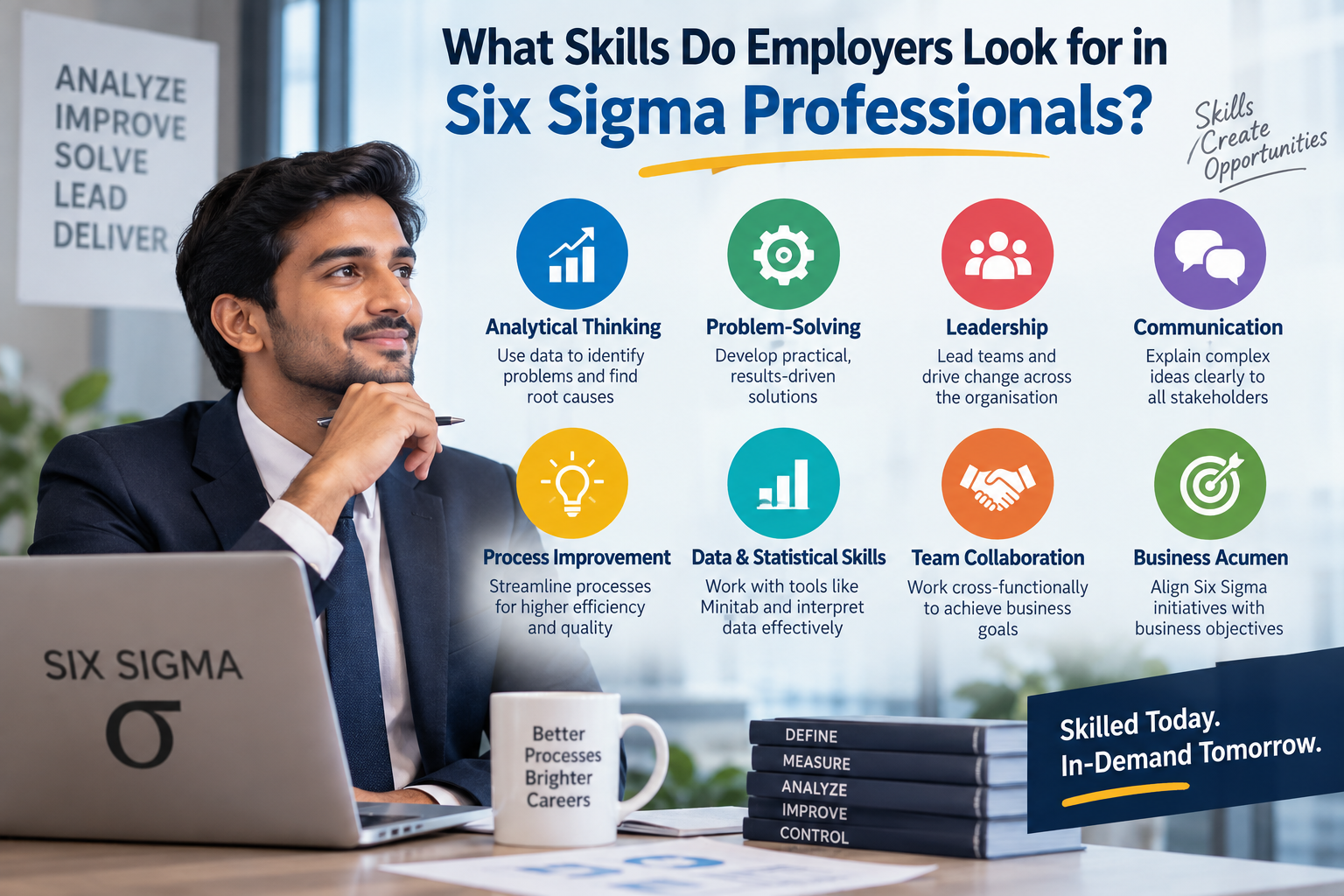
One of the most critical skills in Six Sigma is analytical thinking. Professionals must be able to analyze data effectively to identify trends, patterns, and areas for improvement. Employers look for candidates who can utilize statistical tools and methodologies to interpret complex data sets. Proficiency in software such as Minitab or Excel can significantly enhance a candidate's appeal.
2. Process Mapping
Understanding and mapping processes is fundamental to Six Sigma. This skill involves visualizing the workflow to pinpoint inefficiencies and bottlenecks. Candidates should be adept at creating process flowcharts and diagrams that help teams visualize the process and identify areas for improvement. Knowledge of tools like SIPOC (Suppliers, Inputs, Process, Outputs, and Customers) can be beneficial.
3. Project Management
Six Sigma projects often involve cross-functional teams working towards common goals. Strong project management skills are essential to keep projects on track and within budget. Employers value professionals who can plan, execute, and monitor projects effectively, ensuring that all team members are aligned and objectives are met.
4. Communication Skills
Effective communication is vital in Six Sigma roles. Professionals must convey complex ideas and technical concepts clearly to stakeholders at all levels. This includes writing reports, conducting presentations, and facilitating meetings. Employers prefer candidates who can adapt their communication style to suit different audiences, ensuring that everyone understands the goals and progress of Six Sigma initiatives.
5. Leadership Skills
Six Sigma professionals often take on leadership roles within their teams. Therefore, strong leadership skills are necessary to motivate team members, drive change, and foster a culture of continuous improvement. Employers look for candidates who can inspire others, resolve conflicts, and guide teams towards achieving their objectives.
6. Problem-Solving Skills
At the core of Six Sigma is the focus on identifying and solving problems. Professionals need to develop innovative solutions to overcome challenges. This requires a systematic approach to problem-solving, using tools such as the DMAIC (Define, Measure, Analyze, Improve, Control) framework. Employers seek individuals who can think critically and creatively to find effective solutions.
7. Teamwork and Collaboration
Six Sigma initiatives often require collaboration across different departments and locations. Professionals must have strong teamwork skills to work effectively with diverse groups of people. Employers appreciate candidates who can build relationships, share knowledge, and contribute to a positive team environment.
8. Adaptability
In an ever-changing business landscape, adaptability is crucial. Six Sigma professionals must be open to new ideas, tools, and methodologies. Employers look for candidates who can thrive in dynamic environments and are willing to learn and grow as Six Sigma practices evolve.
9. Attention to Detail
Precision is essential in Six Sigma. Professionals must pay meticulous attention to detail to ensure that every aspect of a process is optimized. Employers prioritize candidates who can identify even the smallest discrepancies and understand their impact on overall quality and efficiency.
10. Technical Proficiency
With the growing reliance on technology, technical skills are increasingly important in Six Sigma roles. Familiarity with data analysis tools, statistical software, and process improvement technologies can set candidates apart. Employers often look for professionals who can leverage technology to enhance Six Sigma projects.
Certifications that Enhance Skills in Six Sigma
While possessing the right skills is vital, obtaining relevant certifications can significantly enhance a candidate's employability. Some of the most recognized certifications in the Six Sigma domain include:
Employers often prefer candidates with these certifications as they provide assurance of the candidate's expertise and commitment to the Six Sigma methodology.
Conclusion: The Path to Becoming a Six Sigma Professional
In summary, employers look for a diverse set of skills in Six Sigma professionals, including analytical thinking, process mapping, and effective communication. By developing these skills and obtaining relevant certifications, aspiring professionals can enhance their employability and contribute significantly to their organizations' success.
As the demand for Six Sigma professionals continues to rise, investing time and effort into building these skills can open doors to various career opportunities in India. Whether you are just starting or looking to advance your career, understanding and honing the necessary skills in Six Sigma is essential.
FAQs
1. What is the primary focus of Six Sigma?
The primary focus of Six Sigma is to improve process quality by identifying and eliminating defects, thereby enhancing overall efficiency and performance.
2. Are Six Sigma certifications worth it?
Yes, Six Sigma certifications are highly regarded in many industries and can significantly enhance your employability and career prospects.
3. How long does it take to get certified in Six Sigma?
The time required to get certified in Six Sigma varies based on the level of certification and the training program you choose. Generally, it can take a few weeks to several months.
4. Can I learn Six Sigma online?
Absolutely! Many reputable organizations offer online training programs and courses for Six Sigma certifications, making it accessible for individuals to learn at their own pace.
5. What industries benefit from Six Sigma?
Six Sigma is applicable across various industries, including manufacturing, healthcare, finance, IT, and service sectors, among others.
Call to Action
If you're looking to build a successful career as a Six Sigma professional, start by honing the skills discussed in this blog. Consider enrolling in a Six Sigma certification course to gain a competitive edge in the job market. For more information on Six Sigma training and resources, visit our website today!