
Latest Post




Quality Management Courses



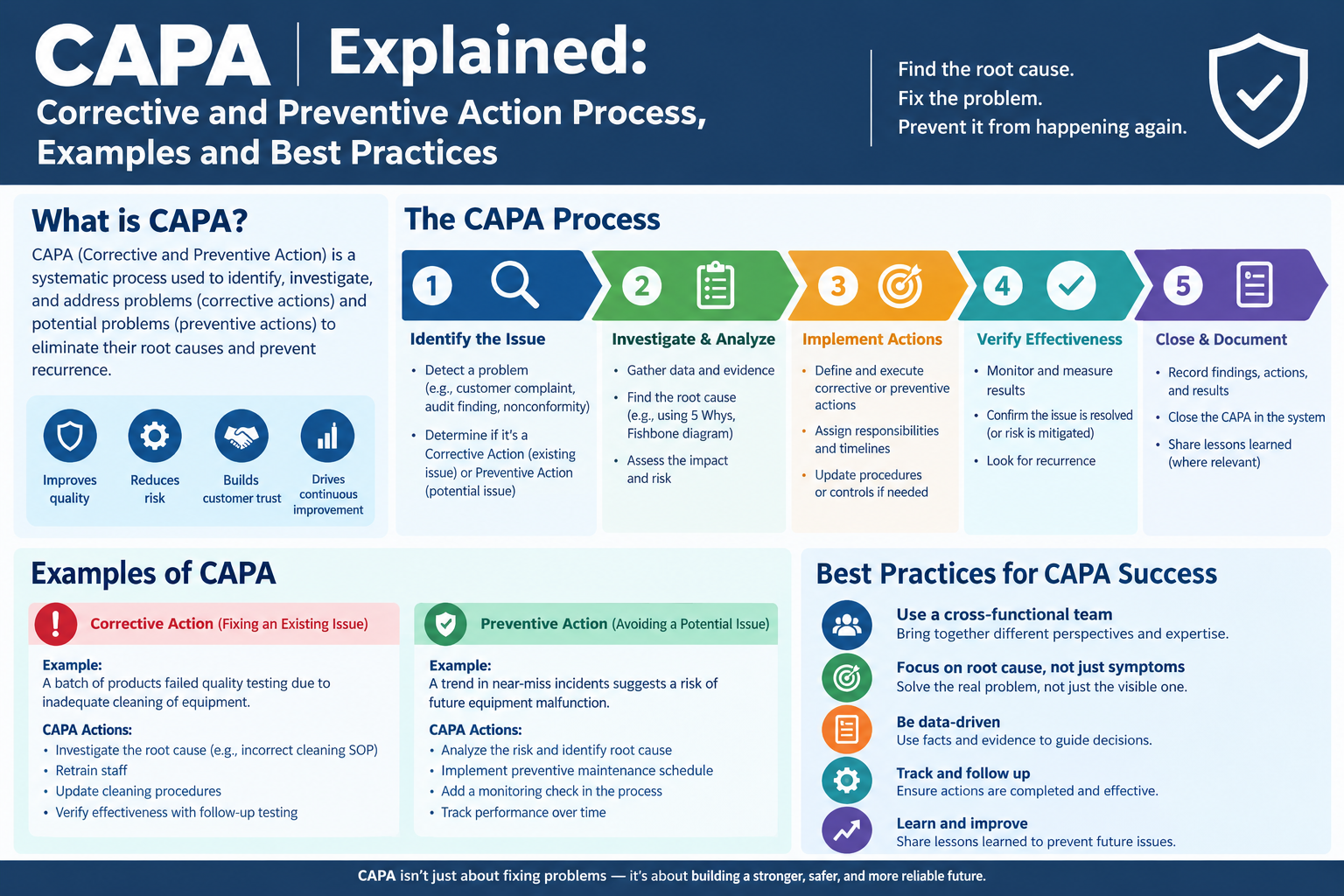

In the realm of quality management, the CAPA process is a critical component that organizations, especially in regulated industries like pharmaceuticals, manufacturing, and healthcare, must adhere to. Understanding the nuances of corrective and preventive action can make a significant difference in maintaining quality standards and ensuring compliance. In this blog, we will delve into the CAPA process, provide examples, and outline best practices to help you implement an effective CAPA in your organization.
What is CAPA?
CAPA stands for Corrective and Preventive Action. It is a systematic approach used to identify, investigate, and rectify non-conformities and potential issues within a process to enhance quality and efficiency. This approach not only addresses existing problems but also aims to prevent future occurrences, thereby fostering a culture of continuous improvement.
The Importance of CAPA in Quality Management
In quality management, the significance of CAPA cannot be overstated. It serves as a vital tool for organizations to:
The CAPA Process: A Step-by-Step Guide
The CAPA process generally follows several key steps:
1. Identification of the Problem
The first step in the CAPA process is identifying the issue or non-conformity. This could be a product defect, a customer complaint, or a deviation from standard operating procedures. Using tools like root cause analysis can help in pinpointing the exact problem.
2. Investigation
Once the problem is identified, a thorough investigation is conducted. This involves collecting data, analyzing the circumstances surrounding the issue, and determining the root cause. The goal is to understand why the problem occurred.
3. Corrective Action
After identifying the root cause, the next step is to implement a corrective action. This action aims to rectify the problem and eliminate the root cause. It may involve changes to processes, additional training for staff, or updates to documentation.
4. Preventive Action
Preventive action focuses on preventing the recurrence of the problem. This may involve systemic changes, such as implementing new procedures, enhancing training programs, or investing in new technology. The key is to ensure that similar issues do not arise in the future.
5. Verification
Once corrective and preventive actions have been implemented, it’s crucial to verify their effectiveness. This involves monitoring the outcomes and assessing whether the actions taken have resolved the issue and prevented its recurrence.
6. Documentation
Every step of the CAPA process should be documented meticulously. Documentation is essential for compliance, auditing, and ensuring that lessons learned are recorded for future reference.
Corrective Action vs Preventive Action
It’s essential to distinguish between corrective action and preventive action, as they serve different purposes:
CAPA Examples
To better understand the CAPA process, let’s look at a few practical examples:
Example 1: Pharmaceutical Industry
A pharmaceutical company discovers a batch of medication has been incorrectly labeled. The CAPA process begins with the identification of the labeling error. An investigation reveals that the error occurred due to a software glitch in the labeling system. The corrective action involves correcting the software issue and relabeling the affected batch. The preventive action might include regular software audits and staff training on system updates.
Example 2: Manufacturing
A manufacturing plant receives complaints about product defects. The CAPA investigation reveals that the defects were due to worn-out machinery. The corrective action involves repairing or replacing the faulty machinery. Preventive actions could include scheduling regular maintenance checks and implementing a machine usage log to monitor wear and tear.
Best Practices for CAPA Implementation
Implementing an effective CAPA process requires careful planning and execution. Here are some best practices to consider:
1. Foster a Quality Culture
Encourage a workplace culture that prioritizes quality. Ensure that all employees understand the importance of CAPA and are trained to report issues without fear of reprisal.
2. Use Data-Driven Decision Making
Utilize data analytics to identify trends and patterns in non-conformities. This can enhance the effectiveness of your CAPA process by focusing on the most critical issues.
3. Engage Cross-Functional Teams
Involve teams from different departments in the CAPA process. Collaboration can lead to a more comprehensive understanding of issues and foster innovative solutions.
4. Regularly Review and Update CAPA Procedures
Continuously evaluate your CAPA procedures to ensure they remain effective and relevant. Updating procedures based on feedback and new learnings is vital for continuous improvement.
5. Leverage Technology
Consider using CAPA management software to streamline the process. Such tools can help in tracking issues, documenting actions taken, and generating reports.
FAQs about CAPA
1. What industries benefit from the CAPA process?
The CAPA process is beneficial in various industries, including pharmaceuticals, manufacturing, healthcare, food and beverage, and any sector where quality control is essential.
2. How long does the CAPA process take?
The duration of the CAPA process can vary based on the complexity of the issue. Simple problems may be resolved quickly, while more systemic issues may require extensive investigation and multiple corrective actions.
3. What are the consequences of not implementing CAPA?
Failing to implement CAPA can lead to recurring issues, decreased product quality, customer dissatisfaction, regulatory penalties, and potential damage to your company’s reputation.
4. How can I train my team on CAPA?
Training can be conducted through workshops, seminars, and online courses. Real-life case studies and role-playing exercises can also help in understanding the CAPA process better.
Conclusion
In conclusion, an effective CAPA process is essential for any organization committed to quality management. By understanding the difference between corrective and preventive action, implementing best practices, and fostering a culture of continuous improvement, organizations can significantly enhance their operational efficiency and product quality. Start your CAPA journey today and see the positive impact on your quality management system!
Call to Action: Interested in improving your organization’s quality management processes? Contact us today for expert guidance on implementing an effective CAPA system tailored to your needs!