Latest Post


Quality Management Courses



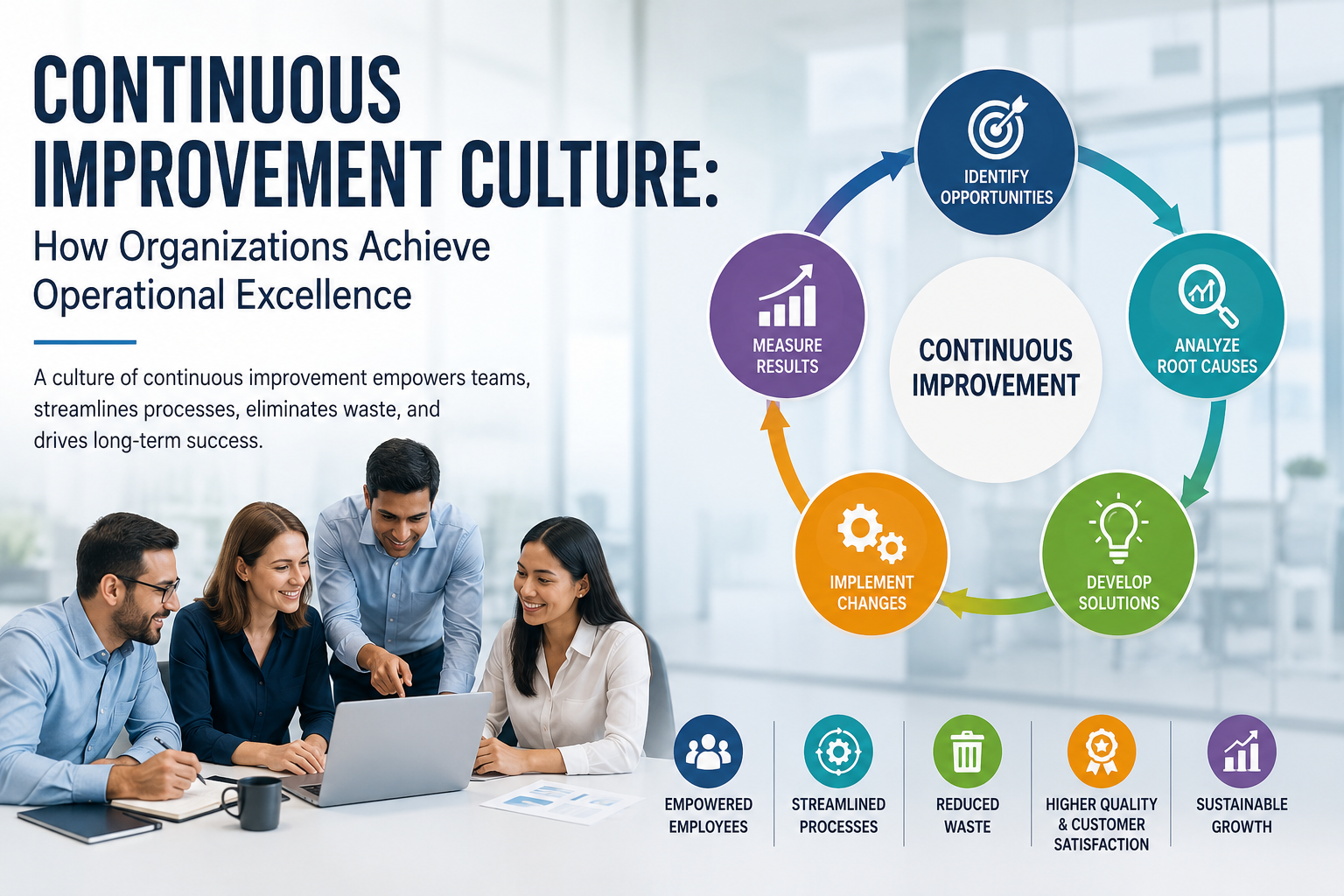

In today’s fast-paced business environment, the concept of a continuous improvement culture has become crucial for organizations striving for operational excellence. This approach not only enhances efficiency but also fosters a spirit of innovation and teamwork among employees. In this blog, we will delve deep into what a continuous improvement culture entails, its significance in achieving operational excellence, and how organizations in India can implement it effectively.
Understanding Continuous Improvement Culture
A continuous improvement culture refers to an organizational mindset that promotes ongoing enhancements in processes, products, and services. It is built on the premise that there is always room for improvement, no matter how efficient an organization might be. This culture is often associated with methodologies like Lean and Six Sigma, which focus on eliminating waste, reducing variation, and improving quality.
The Pillars of Continuous Improvement
To successfully implement a continuous improvement culture, organizations must focus on several key pillars:
The Relationship Between Continuous Improvement and Operational Excellence
Achieving operational excellence is often a strategic goal for many organizations. It involves optimizing processes to deliver maximum value to customers while minimizing waste and costs. A continuous improvement culture is integral to this journey because:
1. It Fosters a Proactive Mindset
Organizations with a continuous improvement culture encourage employees to identify problems before they escalate. This proactive approach ensures that teams are always looking for ways to enhance efficiency, leading to operational excellence.
2. It Enhances Customer Satisfaction
A focus on quality management culture promotes the idea that meeting customer needs is paramount. By continually improving processes, organizations can better align their products and services with customer expectations, ultimately driving satisfaction and loyalty.
3. It Increases Employee Morale
When employees see that their suggestions for improvement are valued and implemented, it boosts their morale. A motivated workforce is more likely to contribute positively to the organization’s goals, further enhancing operational excellence.
Implementing a Continuous Improvement Culture in Indian Organizations
For organizations in India looking to adopt a continuous improvement culture, the following steps can be valuable:
1. Leadership Commitment
Change starts at the top. Leaders must demonstrate a commitment to continuous improvement by actively participating in initiatives and encouraging others to do the same. This sets a tone of accountability and expectation throughout the organization.
2. Training and Empowerment
Investing in training programs that teach Lean principles and other improvement methodologies can empower employees. Workshops that engage teams in problem-solving exercises can also foster a culture of collaboration and innovation.
3. Establishing Clear Metrics
Organizations should define clear metrics to measure the success of their continuous improvement initiatives. These metrics can include cycle time reduction, defect rates, and customer satisfaction scores, which will provide a tangible way to assess progress.
4. Celebrate Successes
Recognizing and celebrating small wins encourages employees and reinforces the value of continuous improvement. This can be done through awards, shout-outs in meetings, or any form of acknowledgment that resonates with the team.
The Role of Technology in Continuous Improvement
Incorporating technology can significantly enhance the effectiveness of a continuous improvement culture. Tools such as data analytics software, process management platforms, and collaboration tools can provide valuable insights and streamline improvement processes.
1. Data Analytics
Utilizing data analytics enables organizations to identify trends and areas for improvement quickly. By analyzing operational data, teams can make informed decisions that lead to more effective improvements.
2. Process Management Systems
Implementing process management systems can help standardize operations, making it easier to identify inefficiencies and areas for improvement. These systems can serve as a foundation for continuous improvement efforts.
3. Collaboration Tools
Technology that facilitates communication and collaboration among teams can enhance the continuous improvement culture. Tools that allow for real-time feedback and idea sharing can help maintain momentum in improvement initiatives.
FAQs About Continuous Improvement Culture
What is a continuous improvement culture?
A continuous improvement culture is an organizational mindset that encourages ongoing enhancement of processes, products, and services, rooted in the belief that there is always room for improvement.
How does continuous improvement relate to operational excellence?
Continuous improvement is a key driver of operational excellence, as it helps organizations optimize processes, enhance quality, and increase customer satisfaction while minimizing waste and costs.
What are some examples of continuous improvement methodologies?
Common methodologies include Lean, Six Sigma, and Kaizen, all of which focus on eliminating waste and improving efficiency.
How can organizations in India implement a continuous improvement culture?
Organizations can implement a continuous improvement culture by fostering leadership commitment, providing training, establishing clear metrics, and celebrating successes.
Conclusion
Creating a continuous improvement culture is not just a strategic advantage; it is a necessity for organizations aiming for operational excellence. By focusing on employee engagement, data-driven decision-making, and leveraging technology, businesses can foster a culture that thrives on improvement and innovation. As Indian organizations continue to evolve, embracing this culture will undoubtedly lead to sustainable growth and success.
If you are looking to enhance your organization's processes and achieve operational excellence, start by cultivating a continuous improvement culture today! Reach out to us for expert guidance and resources tailored to your specific needs.
Call to Action: Ready to transform your organization? Contact us to learn more about our continuous improvement solutions!