
Latest Post



Quality Management Courses



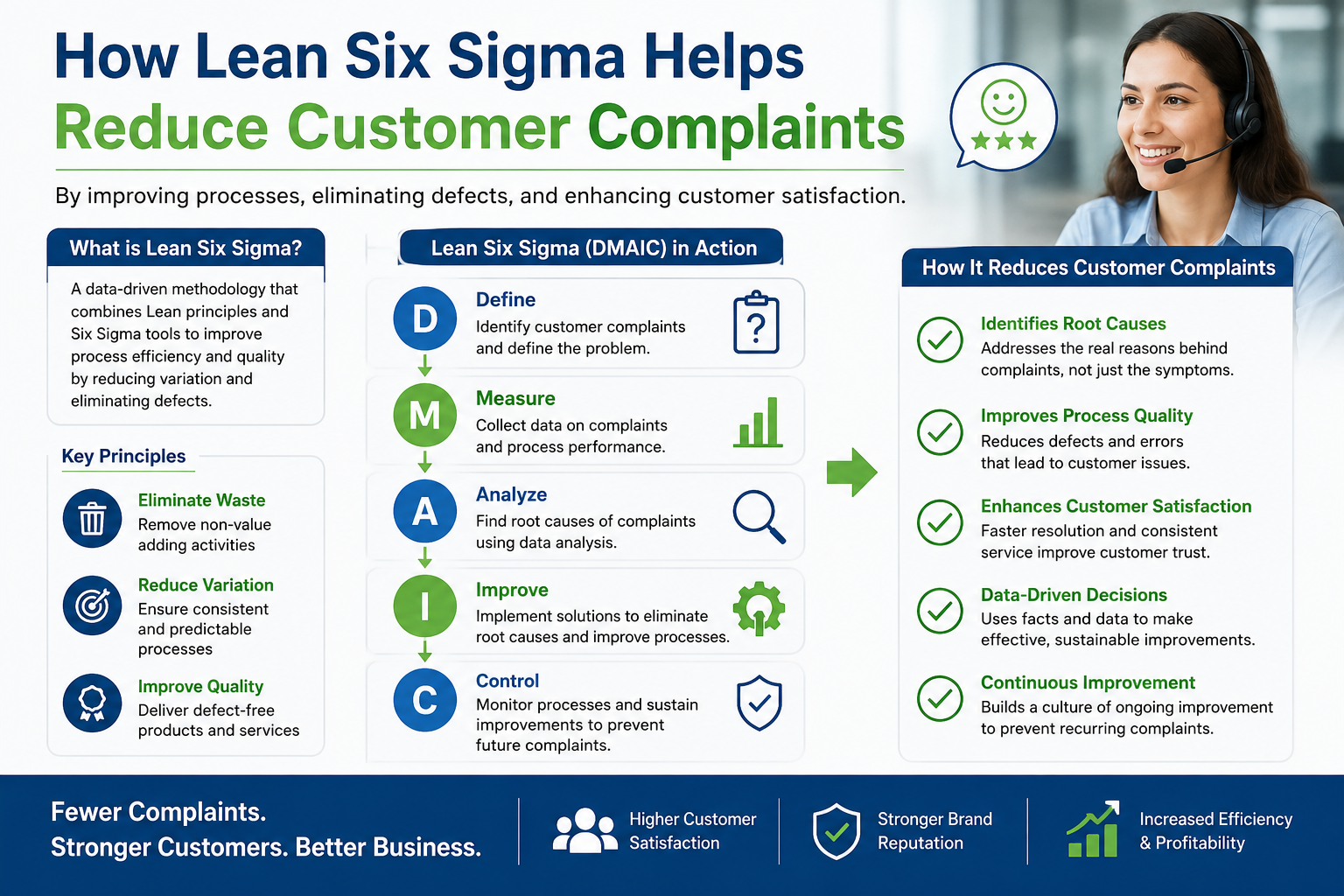

In today's competitive market, customer satisfaction is paramount. Businesses striving for excellence must find effective ways to minimize customer complaints and enhance overall service quality. One proven methodology that has gained traction in many industries is Lean Six Sigma. This approach not only focuses on process improvement but also emphasizes the importance of quality management. In this blog, we will explore how Lean Six Sigma can significantly help in complaint reduction and boost customer satisfaction.
Understanding Lean Six Sigma
Before diving into its benefits, let’s clarify what Lean Six Sigma is. It’s a combination of two powerful methodologies: Lean and Six Sigma. Lean focuses on eliminating waste and improving process flow, while Six Sigma concentrates on reducing variation and improving process quality. Together, these methodologies create a robust framework for organizations to enhance their operations.
The Connection Between Lean Six Sigma and Customer Complaints
Customer complaints often arise from issues related to product defects, service delays, or miscommunication. By implementing Lean Six Sigma, businesses can identify and rectify the root causes of these problems, leading to a significant reduction in complaints. Here’s how:
1. Identifying and Eliminating Waste
One of the core principles of Lean is to identify and eliminate waste. In the context of customer complaints, waste can manifest in various forms—excessive wait times, unnecessary steps in a service process, or poor-quality products. By conducting a thorough analysis using Lean tools, organizations can streamline their processes, thereby reducing the likelihood of complaints.
2. Focusing on Process Improvement
Lean Six Sigma employs a structured approach to process improvement. Using tools like DMAIC (Define, Measure, Analyze, Improve, Control), organizations can systematically identify areas of improvement. For example, a call center may analyze the time taken to resolve customer queries. By optimizing this process, they can enhance customer experience and lower the chances of complaints.
3. Enhancing Quality Management
Quality management is at the heart of Lean Six Sigma. By focusing on quality improvement, businesses can ensure that their products and services meet customer expectations. This can involve setting quality standards, regular audits, and continuous training of employees. A commitment to quality leads to fewer defects and, consequently, fewer customer complaints.
4. Data-Driven Decision Making
Lean Six Sigma emphasizes the use of data to drive decisions. Organizations can collect customer feedback, analyze complaint trends, and gain insights into the factors contributing to dissatisfaction. This data-driven approach allows businesses to make informed changes that can significantly improve customer satisfaction.
Real-Life Applications of Lean Six Sigma in Complaint Reduction
Many Indian companies have successfully implemented Lean Six Sigma to reduce customer complaints and improve satisfaction. Here are a few examples:
1. Manufacturing Sector
A leading automobile manufacturer in India faced numerous complaints regarding defects in their vehicles. By adopting Lean Six Sigma, they identified critical points in the production process that were leading to these defects. Through process optimization and employee training, they not only reduced defects but also improved overall customer satisfaction.
2. Service Industry
A prominent bank in India implemented Lean Six Sigma to tackle customer complaints related to service delays. By mapping the customer journey and analyzing each touchpoint, they identified bottlenecks. Streamlining these processes resulted in faster service delivery and a noticeable reduction in customer complaints.
Benefits of Implementing Lean Six Sigma for Customer Satisfaction Improvement
Implementing Lean Six Sigma not only aids in complaint reduction but also provides several other benefits:
1. Increased Customer Loyalty
When customers notice that their complaints are being addressed and resolved efficiently, their trust in the brand increases. Improved customer satisfaction often leads to enhanced loyalty, resulting in repeat business.
2. Enhanced Brand Reputation
A company known for its commitment to quality and customer satisfaction can build a strong brand reputation. Positive customer experiences lead to word-of-mouth referrals, which can be invaluable for growth.
3. Cost Savings
Reducing customer complaints often translates to lower costs associated with handling returns, refunds, and service recovery efforts. Lean Six Sigma helps organizations save money by optimizing processes and improving quality.
Challenges in Implementing Lean Six Sigma
While the benefits are clear, organizations may face challenges when implementing Lean Six Sigma:
1. Resistance to Change
Employees may be resistant to new methodologies or processes. It’s crucial to foster a culture of continuous improvement and involve employees in the process to mitigate this resistance.
2. Need for Training
Effective implementation of Lean Six Sigma requires training and knowledge. Organizations must invest in training their employees to ensure successful adoption.
FAQs About Lean Six Sigma and Customer Complaints
Q1: What industries can benefit from Lean Six Sigma for complaint reduction?
A1: Lean Six Sigma can be applied across various industries, including manufacturing, healthcare, finance, and retail, to reduce customer complaints.
Q2: How long does it take to see results from Lean Six Sigma implementation?
A2: The timeline for seeing results can vary based on the organization’s size and complexity. However, many companies start noticing improvements within a few months of implementing Lean Six Sigma practices.
Q3: Can small businesses benefit from Lean Six Sigma?
A3: Absolutely! Lean Six Sigma is adaptable and can provide substantial benefits to small businesses by improving processes and enhancing customer satisfaction.
Conclusion
In conclusion, Lean Six Sigma stands out as a powerful methodology for reducing customer complaints and improving overall customer satisfaction. By focusing on process quality improvement and effective quality management, organizations can not only meet but exceed customer expectations. If you're looking to enhance your business operations and foster a culture of continuous improvement, consider implementing Lean Six Sigma today.
Call to Action: Are you ready to take your business to the next level? Join the Lean Six Sigma revolution and start reducing customer complaints today! Contact us for expert guidance and training on Lean Six Sigma methodologies tailored for your organization.