
Latest Post




Quality Management Courses




In today's fast-paced business environment, organizations in India are increasingly recognizing the need for business transformation to stay competitive. One powerful methodology that can significantly aid in this journey is Lean Six Sigma. By focusing on process automation and digital process improvement, Lean Six Sigma provides a structured approach to enhance operational excellence while driving digital transformation. In this blog, we'll explore how Lean Six Sigma supports digital transformation and why it's essential for modern businesses.
Understanding Lean Six Sigma
Lean Six Sigma is a methodological approach that combines the principles of Lean manufacturing and Six Sigma to improve quality, reduce waste, and enhance processes. Lean focuses on eliminating non-value-added activities, while Six Sigma aims to decrease process variation and improve quality. Together, these methodologies create an environment where operational excellence can thrive.
The Role of Lean Six Sigma in Digital Transformation
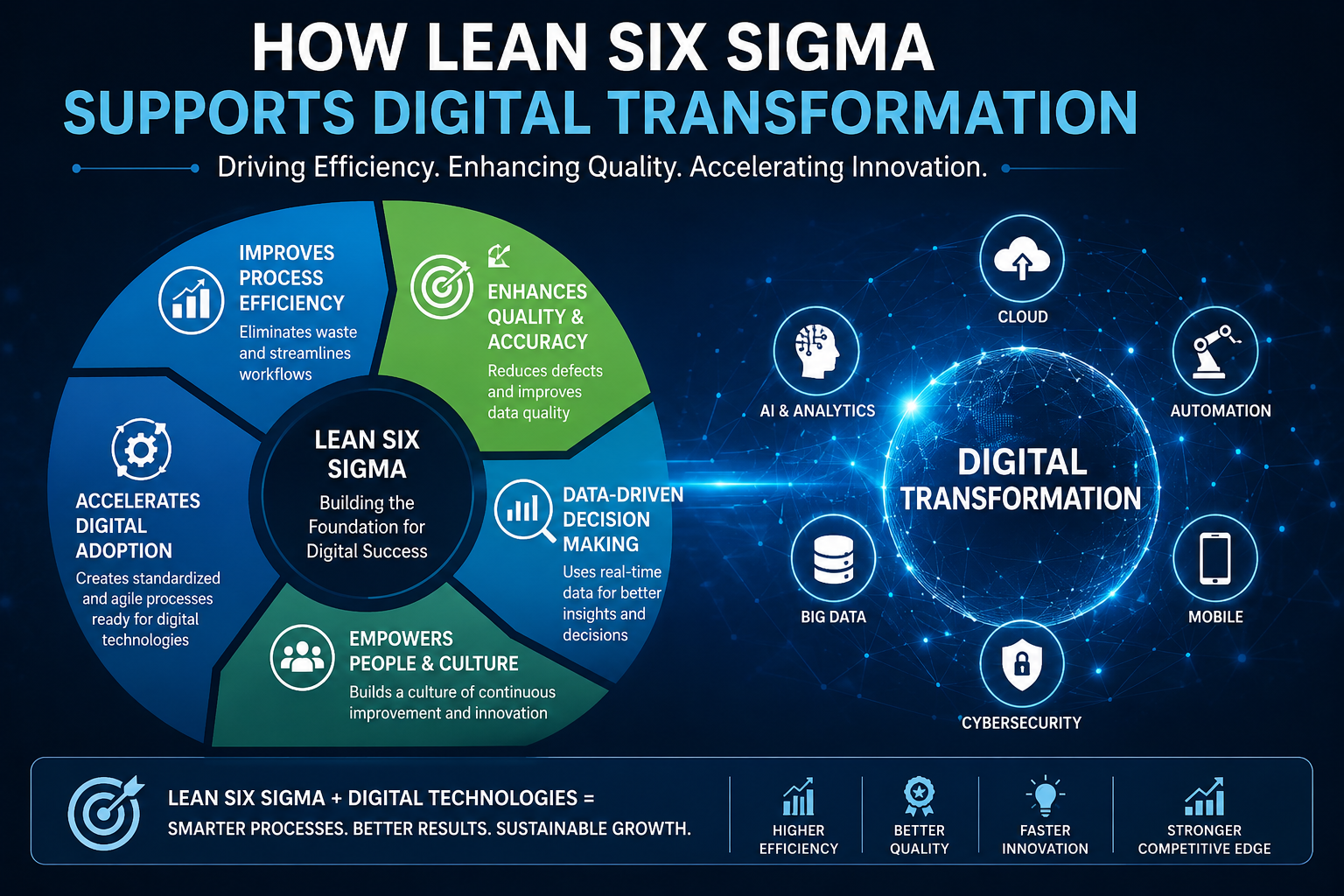
Digital transformation is not just about implementing new technologies; it also involves rethinking how organizations operate. Lean Six Sigma plays a crucial role in this transformation by providing a framework to streamline processes, enhance efficiency, and ensure that digital initiatives are implemented effectively.
1. Streamlining Processes with Lean Six Sigma
One of the primary benefits of Lean Six Sigma is its ability to streamline processes. In the context of digital transformation, this means identifying and eliminating inefficiencies in existing workflows before implementing new digital solutions. By focusing on process optimization, businesses can:
2. Facilitating Process Automation
As organizations embrace digital technologies, process automation becomes a key component of business transformation. Lean Six Sigma methodologies can help determine which processes are ripe for automation by analyzing their efficiency and effectiveness. The benefits of this include:
3. Driving Digital Process Improvement
Digital process improvement is essential for organizations looking to enhance their operational capabilities. Lean Six Sigma provides tools and techniques that can help businesses identify areas for improvement. For instance, the DMAIC (Define, Measure, Analyze, Improve, Control) framework can be applied to digital processes to ensure that improvements are sustainable and measurable.
4. Enhancing Customer Experience
Incorporating Lean Six Sigma into digital transformation initiatives can lead to significant improvements in customer experience. By focusing on process efficiency and quality, businesses can reduce errors, enhance service delivery, and ultimately provide a better experience for their customers. This is particularly important in the Indian market, where customer expectations are rapidly evolving.
5. Aligning Digital Strategy with Business Goals
A successful digital transformation should align with the overarching business strategy. Lean Six Sigma facilitates this alignment by ensuring that all digital initiatives are data-driven and focused on achieving specific business outcomes. This strategic approach ensures that investments in technology yield meaningful results for the organization.
Challenges in Implementing Lean Six Sigma for Digital Transformation
While Lean Six Sigma offers numerous benefits, organizations may face challenges in its implementation. Some common obstacles include:
To overcome these challenges, it's crucial for organizations to foster a culture of continuous improvement and provide adequate training for employees.
Conclusion
In conclusion, Lean Six Sigma serves as a powerful ally in the journey toward digital transformation. By streamlining processes, facilitating process automation, and driving digital process improvement, organizations can enhance their operational excellence and better meet the demands of the modern marketplace. For businesses in India looking to thrive in this digital age, embracing Lean Six Sigma is not just an option; it's a necessity.
FAQs
What is Lean Six Sigma?
Lean Six Sigma is a methodology that combines Lean manufacturing principles with Six Sigma strategies to improve processes, reduce waste, and enhance quality.
How does Lean Six Sigma support digital transformation?
Lean Six Sigma supports digital transformation by streamlining processes, facilitating process automation, and driving digital process improvement, ultimately enhancing operational excellence.
What are the key benefits of implementing Lean Six Sigma?
The key benefits include increased efficiency, reduced operational costs, improved product quality, and enhanced customer experience.
What challenges might organizations face when implementing Lean Six Sigma?
Challenges include resistance to change, lack of training, and inadequate leadership support for digital initiatives.
Call to Action
Are you ready to embrace Lean Six Sigma to support your digital transformation journey? Contact us today to learn how our expertise can help your organization achieve operational excellence and thrive in the digital age!