
Latest Post


Quality Management Courses



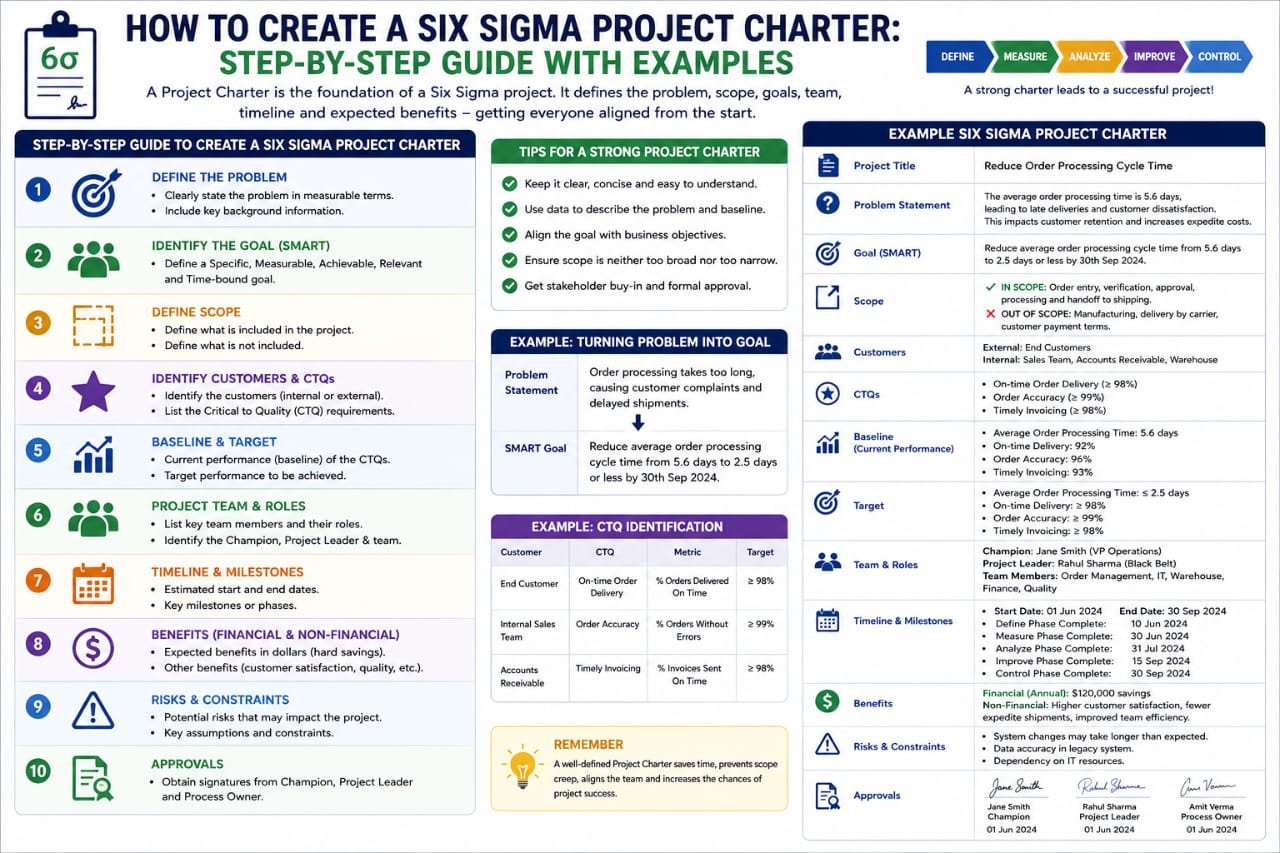

In the competitive landscape of today's business world, organizations are constantly seeking ways to streamline processes and enhance quality. One of the most effective methodologies to achieve these goals is Six Sigma. Central to this approach is the six sigma project charter, which serves as a foundational document guiding teams through their improvement efforts. In this comprehensive guide, we will explore the intricacies of creating a Six Sigma project charter, providing you with insightful examples and templates to facilitate your journey.
What is a Six Sigma Project Charter?
A project charter six sigma is a formal document that outlines the objectives, scope, stakeholders, and overall goals of a Six Sigma project. It acts as a roadmap for the project team and ensures that everyone is aligned with the project's vision. By defining key elements such as the problem statement, project scope, and expected outcomes, a project charter helps to maintain focus and accountability throughout the project lifecycle.
Importance of a Six Sigma Project Charter
The importance of a DMAIC project charter cannot be overstated. Here are a few reasons why:
Steps to Create a Six Sigma Project Charter
Creating a Six Sigma charter can seem daunting, but it can be broken down into manageable steps. Below is a step-by-step guide:
Step 1: Define the Project Title
The first step in creating your six sigma project charter is to define a clear and concise project title. This title should encapsulate the essence of your project and its objectives. For example, “Reducing Customer Complaint Rates in Product X.”
Step 2: Identify the Problem Statement
The problem statement should clearly articulate the issue you are addressing. It should be specific, measurable, and relevant. For instance, “Customer complaints regarding Product X have increased by 25% over the past six months, impacting overall customer satisfaction.”
Step 3: Outline the Project Scope
Defining the scope of your project is crucial. It should include what is included and excluded from the project. For example, “This project will focus on complaints related to Product X from customers in the Delhi-NCR region and will not address complaints related to other products.”
Step 4: Establish Goals and Objectives
Clearly define your goals and objectives. They should be SMART (Specific, Measurable, Achievable, Relevant, Time-bound). For instance, “Reduce customer complaints by 15% within the next three months.”
Step 5: Identify Stakeholders
List all the stakeholders involved in the project. This includes team members, management, and any other parties interested in the project's outcome. For example, “Project Manager, Quality Assurance Team, Customer Service Representatives.”
Step 6: Define the Project Timeline
Outline a timeline for your project, including key milestones and deadlines. For example, “Project kickoff on [date], analysis phase by [date], implementation by [date], and review by [date].”
Step 7: Determine Resources Required
Detail the resources needed for the project, including personnel, tools, and budget. For example, “Two quality analysts, one project manager, and a budget of INR 50,000 for tools and training.”
Step 8: Risk Management Plan
Identify potential risks and how you plan to mitigate them. For instance, “If customer feedback is not collected effectively, we will implement a weekly feedback mechanism.”
Six Sigma Charter Example
To provide clarity, here is a six sigma charter example:
Project Title:
Reducing Customer Complaint Rates in Product X
Problem Statement:
Customer complaints regarding Product X have increased by 25% over the past six months, impacting overall customer satisfaction.
Project Scope:
This project will focus on complaints related to Product X from customers in the Delhi-NCR region and will not address complaints related to other products.
Goals and Objectives:
Stakeholders:
Project Timeline:
Resources Required:
Risk Management Plan:
If customer feedback is not collected effectively, we will implement a weekly feedback mechanism.
Using a Project Charter Template
To simplify the process of creating a Six Sigma project charter, consider using a project charter template. This template can guide you through the necessary sections and ensure that you don't miss any critical elements. Many organizations provide customizable templates that you can adapt to your specific project needs.
Conclusion
Creating a lean six sigma project charter is a vital step in any Six Sigma initiative. By following the outlined steps and utilizing examples and templates, you can develop a comprehensive project charter that sets your team up for success. Remember, a well-crafted project charter is a living document that may evolve as the project progresses, so be open to revisiting and revising it as needed.
FAQs
What is the main purpose of a Six Sigma project charter?
The main purpose of a Six Sigma project charter is to provide a clear and concise overview of the project, outlining its objectives, scope, stakeholders, and expected outcomes to ensure alignment among all participants.
How long should a Six Sigma project charter be?
A Six Sigma project charter should be concise, typically ranging from one to three pages, depending on the project's complexity. It should contain all necessary information without being overly detailed.
Can I modify a Six Sigma project charter template?
Yes, you can and should modify a Six Sigma project charter template to fit the specific needs of your project. Make sure to customize it with relevant details that pertain to your team and objectives.
What tools can help in creating a Six Sigma project charter?
Tools such as Microsoft Word, Google Docs, and specialized project management software can help in creating a Six Sigma project charter. Many organizations also provide online templates and resources to assist in the process.
Call to Action
If you're ready to start your Six Sigma journey, download our customizable project charter template today to help kickstart your project! Join the ranks of successful organizations that have transformed their processes and improved quality with Six Sigma.
For more tips and resources on Six Sigma and process improvement, subscribe to our newsletter and stay updated!