
Latest Post




Quality Management Courses



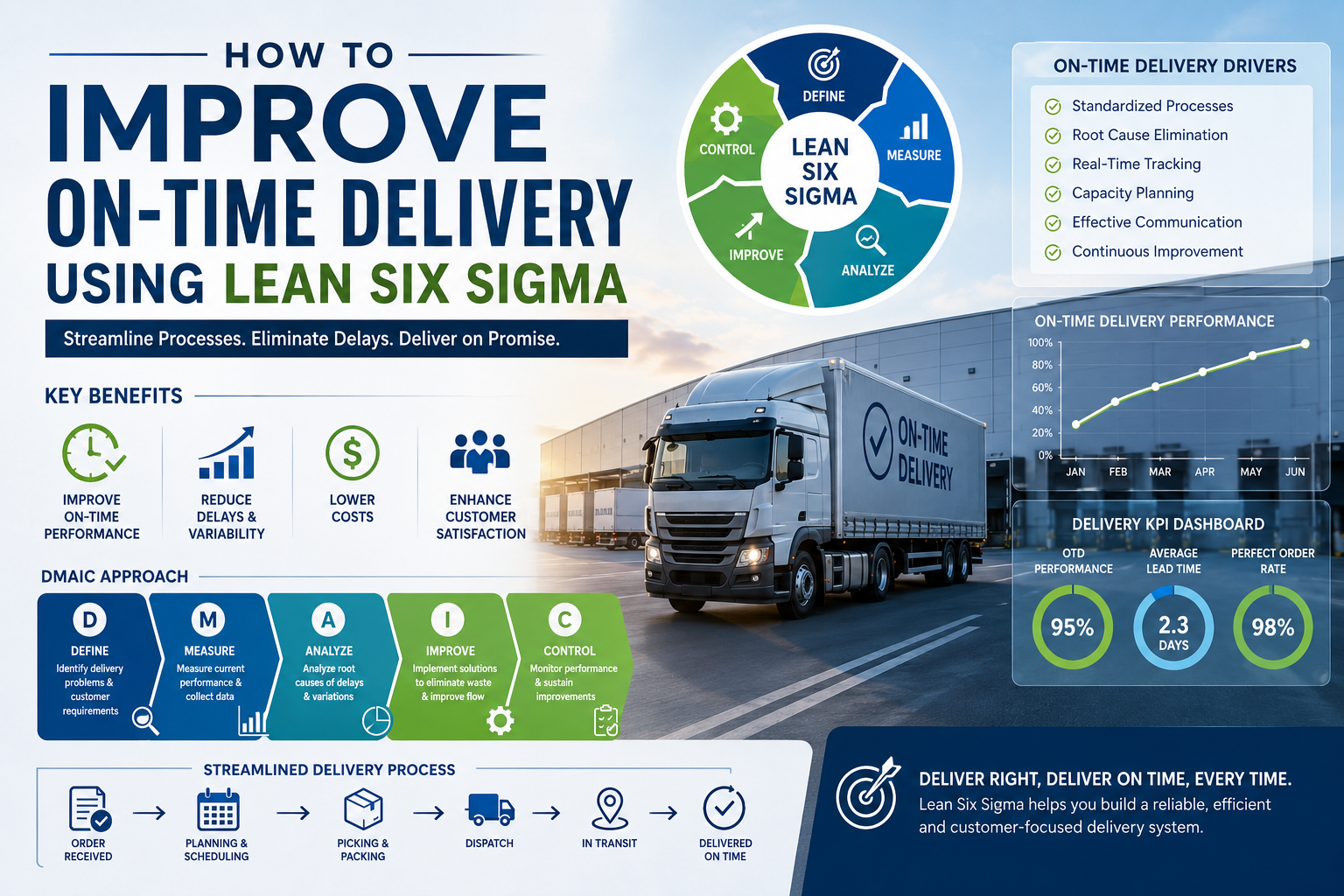

In today's fast-paced market, ensuring on-time delivery is crucial for businesses to maintain customer satisfaction and competitiveness. In India, where logistics and supply chain dynamics are unique, implementing effective strategies for on-time delivery improvement can make a significant difference. One of the most effective methodologies to enhance delivery processes is Lean Six Sigma. This blog will delve into how Lean Six Sigma can be utilized for delivery process improvement, leading to improved lean logistics and overall supply chain optimization.
Understanding Lean Six Sigma
Before we explore its application in on-time delivery, it's essential to understand what Lean Six Sigma entails. Lean focuses on eliminating waste to increase efficiency, while Six Sigma aims to reduce variability and defects in processes. Together, they create a robust approach to process improvement. By using Lean Six Sigma, companies can streamline their operations, enhance productivity, and ultimately improve their on-time delivery rates.
Identifying Key Areas for Improvement
To effectively improve on-time delivery, businesses must first identify the key areas within their logistics and supply chain processes that require enhancement. Here are some common areas to consider:
1. Order Processing
Delays often arise from inefficient order processing. Analyzing the order management system can reveal bottlenecks. Lean Six Sigma tools such as Value Stream Mapping can help visualize and improve these processes.
2. Inventory Management
Proper inventory management is essential for timely deliveries. Utilizing techniques like Just-In-Time (JIT) can help minimize inventory levels while ensuring that products are available when needed.
3. Transportation Efficiency
Transportation is a critical component of logistics. Assessing routes, vehicle capacity, and delivery schedules can highlight opportunities for improvement. Lean methodologies can help optimize these factors.
4. Supplier Relationships
Strong relationships with suppliers are vital for maintaining a smooth supply chain. Lean Six Sigma can help in evaluating supplier performance and ensuring they meet delivery commitments.
Implementing Lean Six Sigma for On-Time Delivery Improvement
Once areas for improvement have been identified, the next step is to implement Lean Six Sigma methodologies. Here are some practical steps to follow:
1. Define the Problem
Clearly define the issues affecting on-time delivery. This may involve gathering data on delivery times, customer feedback, and operational challenges. Establishing a clear problem statement is crucial for the subsequent steps.
2. Measure Current Performance
Utilize metrics to assess current performance levels. Key performance indicators (KPIs) such as order fulfillment rates, cycle times, and delivery times will provide a baseline to measure improvements.
3. Analyze the Data
Conduct a thorough analysis of the collected data to identify root causes of delays. Techniques like the Fishbone Diagram and Pareto Analysis can be beneficial in pinpointing specific areas that require attention.
4. Improve Processes
Once the root causes are identified, develop and implement solutions. This may include streamlining workflows, retraining staff, or investing in technology to enhance efficiency. Lean tools such as 5S (Sort, Set in order, Shine, Standardize, Sustain) can be instrumental in achieving operational excellence.
5. Control and Sustain Improvements
After implementing changes, it's crucial to monitor the results continuously. Establish control measures to ensure that improvements are maintained over time. Regular reviews and adjustments based on performance metrics can help sustain the gains achieved.
Benefits of Lean Six Sigma in Delivery Process Improvement
Implementing Lean Six Sigma for delivery process improvement offers numerous benefits, especially in the context of Indian logistics:
1. Enhanced Customer Satisfaction
Timely deliveries lead to happier customers and repeat business. By improving on-time delivery rates, companies can enhance their reputation and customer loyalty.
2. Reduced Operational Costs
Streamlined processes often result in lower operational costs. Eliminating waste and inefficiencies can lead to significant savings, enabling companies to allocate resources to other critical areas.
3. Increased Efficiency
Lean Six Sigma fosters a culture of continuous improvement, driving operational efficiency. Teams become more agile and responsive to changes in demand, leading to better overall performance.
4. Stronger Supplier Relationships
By working closely with suppliers to improve the supply chain, businesses can ensure timely delivery of materials, which directly impacts the ability to meet customer demands.
Real-World Examples of Lean Six Sigma in Action
Several Indian companies have successfully implemented Lean Six Sigma methodologies to enhance their logistics and on-time delivery:
1. Tata Motors
Tata Motors adopted Lean Six Sigma to streamline its manufacturing processes. By focusing on waste reduction and process optimization, the company significantly improved its delivery timelines, enhancing customer satisfaction.
2. Infosys
In the IT sector, Infosys utilized Lean Six Sigma to refine its project delivery processes. The result was a marked improvement in project completion times, directly translating to better service delivery for clients.
FAQs About Lean Six Sigma and On-Time Delivery Improvement
1. What is the primary goal of Lean Six Sigma?
The primary goal of Lean Six Sigma is to improve process efficiency by eliminating waste and reducing variability, ultimately leading to enhanced customer satisfaction and lower operational costs.
2. How can Lean Six Sigma be applied to logistics?
Lean Six Sigma can be applied to logistics by analyzing and optimizing various aspects such as order processing, inventory management, and transportation efficiency to improve overall delivery performance.
3. What metrics should I track for on-time delivery improvement?
Key metrics include order fulfillment rates, delivery times, cycle times, and customer satisfaction scores. Tracking these metrics helps identify areas for improvement and measure progress.
4. Is Lean Six Sigma suitable for small businesses?
Absolutely! Lean Six Sigma methodologies can be tailored to fit businesses of all sizes, allowing small companies to implement effective process improvements without significant investment.
Conclusion
Improving on-time delivery is not just about meeting deadlines; it’s about enhancing overall customer experience and operational efficiency. By leveraging Lean Six Sigma methodologies, businesses in India can achieve significant on-time delivery improvement and optimize their logistics processes. The journey may require time and commitment, but the results are well worth the effort.
If you’re ready to transform your delivery processes and achieve excellence in logistics, consider integrating Lean Six Sigma into your operations today. For more information and tailored solutions, contact us to discuss how we can help your business thrive!