
Latest Post




Quality Management Courses



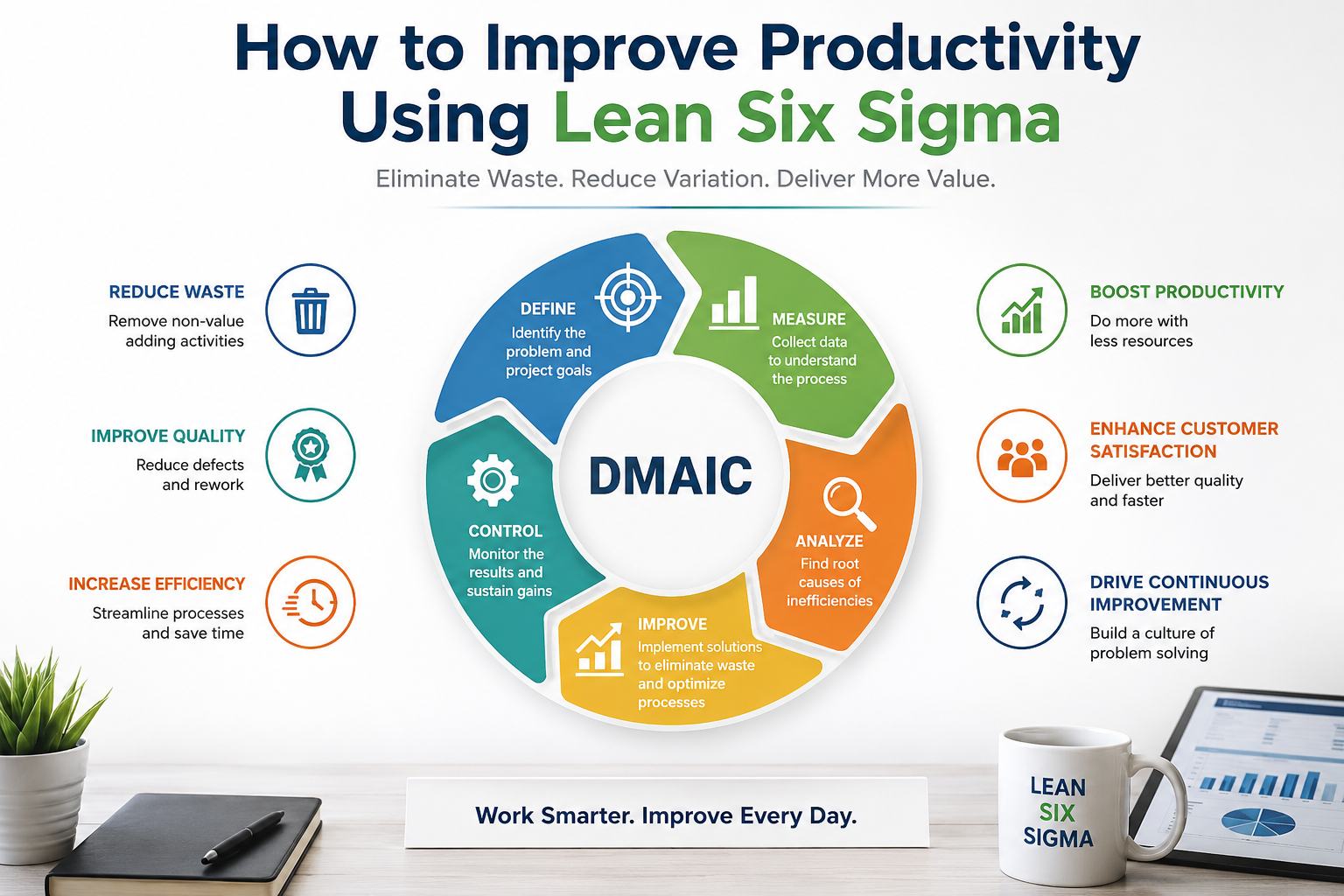

In the fast-paced world of business, improving productivity is a constant pursuit for organizations across various sectors. In India, where competition is fierce and resources are often limited, adopting methodologies like Lean Six Sigma can lead to significant productivity improvement. This blog explores how Lean Six Sigma can boost workplace efficiency and drive operational excellence.
Understanding Lean Six Sigma
Before diving into the ways Lean Six Sigma can enhance productivity, it’s essential to understand what it is. Lean Six Sigma combines two powerful methodologies:
Together, these methodologies help organizations streamline operations, improve quality, and increase overall productivity. By focusing on continuous improvement, Lean Six Sigma fosters a culture of operational excellence.
The Importance of Productivity Improvement
Productivity improvement is crucial for businesses, especially in India, where economic growth is dependent on efficient use of resources. Increased productivity leads to:
By integrating Lean Six Sigma into your organization, you can achieve these benefits and ensure sustainable growth.
Strategies to Implement Lean Productivity
1. Define Clear Goals and Objectives
To embark on a Lean Six Sigma journey, start by defining clear goals related to productivity improvement. Whether it’s reducing cycle time, lowering costs, or enhancing quality, having specific objectives will guide your efforts and help measure success.
2. Train Your Employees
Investing in training is vital for Lean Six Sigma success. Equip your employees with the necessary skills and knowledge through workshops and certification programs. A well-trained workforce will be more capable of identifying inefficiencies and implementing effective solutions, leading to significant enhancements in workplace efficiency.
3. Utilize Data-Driven Decision Making
Data is a powerful tool in Lean Six Sigma. Use data analytics to identify the root causes of inefficiencies and track progress. By relying on facts rather than assumptions, you can make informed decisions that lead to operational excellence.
4. Focus on Process Mapping
Visualizing processes through mapping can help identify bottlenecks and waste. Create detailed process maps to analyze workflows and pinpoint areas for improvement. This step is crucial in understanding how Lean productivity can be achieved.
5. Engage in Continuous Improvement
Lean Six Sigma is not a one-time effort but a continuous journey. Foster a culture of improvement where employees are encouraged to suggest changes and improvements. Regularly review processes and outcomes to ensure ongoing productivity enhancement.
Measuring Six Sigma Productivity
To evaluate the impact of Lean Six Sigma initiatives on productivity, implement key performance indicators (KPIs). Some valuable KPIs include:
Monitoring these metrics will provide insights into your operational performance and highlight areas needing attention.
Real-Life Success Stories in India
Many Indian companies have successfully implemented Lean Six Sigma to achieve productivity improvement. For instance:
These success stories demonstrate that Lean Six Sigma can significantly impact workplace efficiency, making it a valuable methodology for organizations across India.
Common Challenges in Implementing Lean Six Sigma
While the benefits of Lean Six Sigma are substantial, organizations may face challenges during implementation:
Addressing these challenges head-on will pave the way for successful implementation and productivity improvement.
FAQs
1. What is the primary goal of Lean Six Sigma?
The primary goal of Lean Six Sigma is to enhance productivity and quality by eliminating waste and reducing variation in processes.
2. How can I start implementing Lean Six Sigma in my organization?
Begin by defining clear goals, training employees, engaging in process mapping, and fostering a culture of continuous improvement.
3. Is Lean Six Sigma suitable for all industries?
Yes, Lean Six Sigma can be applied across various industries, including manufacturing, healthcare, IT, and service sectors.
4. What are some common tools used in Lean Six Sigma?
Common tools include value stream mapping, Pareto charts, fishbone diagrams, and control charts.
5. How long does it take to see results from Lean Six Sigma initiatives?
Results can vary based on the organization’s commitment and the scope of the initiatives, but many companies see improvements within a few months.
Conclusion
Improving productivity using Lean Six Sigma is not just a strategy; it’s a transformative journey that can lead to operational excellence. By focusing on waste reduction, quality improvement, and employee engagement, Indian organizations can significantly enhance workplace efficiency. Don’t wait to start your Lean Six Sigma journey—embrace the change and witness the positive impact on your productivity.
Call to Action
If you’re ready to enhance your organization’s productivity and embrace Lean Six Sigma, contact us today for consultation and training programs tailored to your needs. Let’s embark on this journey towards operational excellence together!