Latest Post

Quality Management Courses



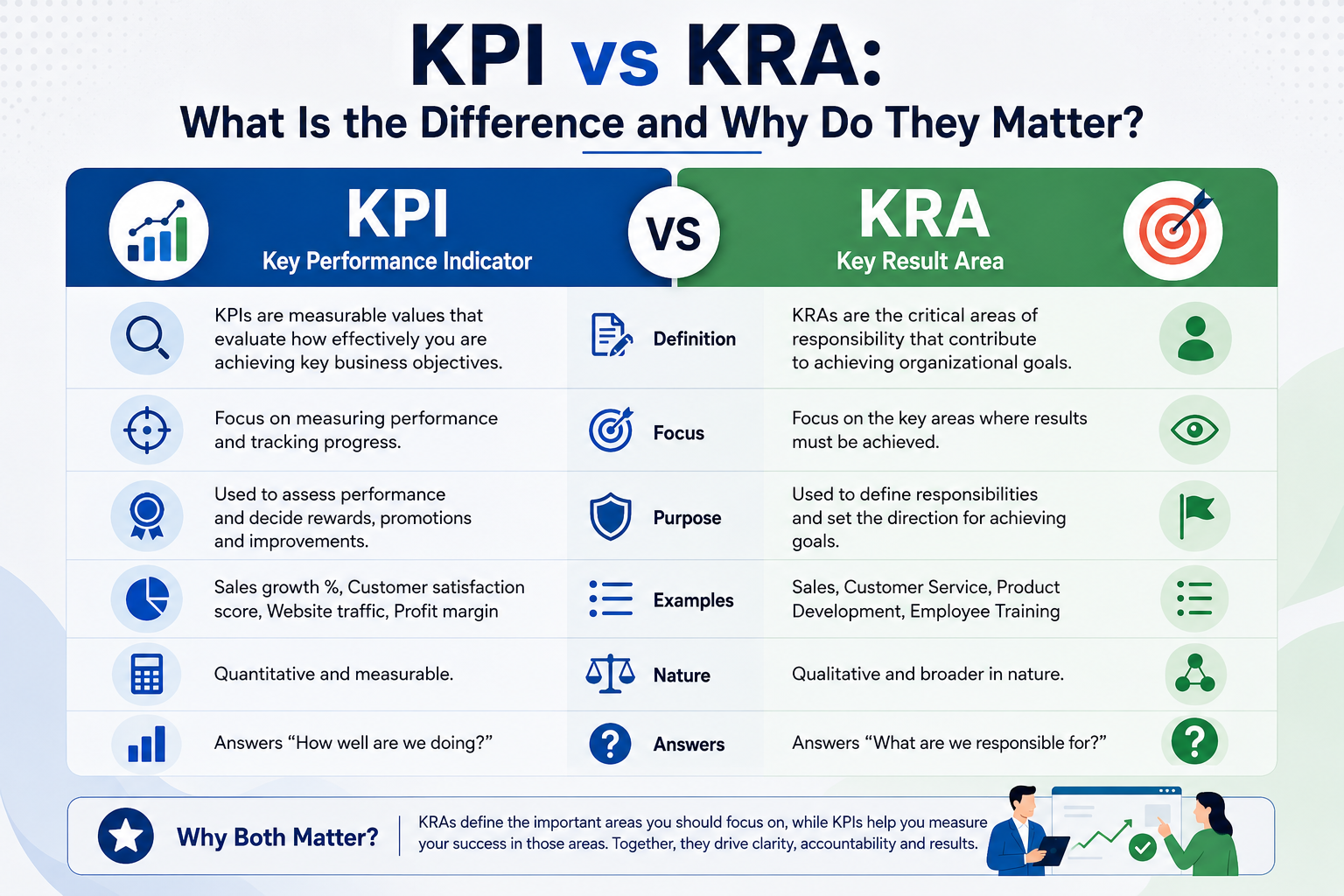

In the world of business and management, understanding performance measurement is crucial for success. Two common terms that often arise in this context are Key Performance Indicators (KPIs) and Key Result Areas (KRAs). While they are frequently used interchangeably, they serve distinct purposes in employee performance measurement. In this blog, we will explore the difference between KPI and KRA, provide examples, and discuss why they matter for any organization, especially in the Indian context.
What Are KPIs?
Key Performance Indicators (KPIs) are measurable values that demonstrate how effectively a company is achieving its key business objectives. They provide a clear framework for evaluating success and are often used to gauge performance over time.
Characteristics of KPIs
KPI Examples
Some common KPI examples include:
What Are KRAs?
Key Result Areas (KRAs) refer to the specific areas of responsibility that an employee must focus on to achieve their goals and contribute effectively to the organization. KRAs define what an employee is expected to accomplish in their role.
Characteristics of KRAs
KRA Examples
Some common KRA examples include:
KPI KRA Difference: Key Distinctions
Now that we understand what KPIs and KRAs are, let’s delve into the KPI KRA difference. Here are the key distinctions:
1. Definition
KPIs are quantitative measures used to evaluate performance, while KRAs are qualitative areas of responsibility that define what an employee should focus on.
2. Focus
KPIs focus on the outcomes and results of an employee’s work, whereas KRAs focus on the specific areas where the employee is expected to perform and deliver results.
3. Measurement
KPIs are numerical and can be easily tracked and analyzed over time. In contrast, KRAs are more descriptive and may require qualitative assessments.
4. Application
KPIs are typically used at various organizational levels, from the individual to the corporate level, while KRAs are more specific to individual roles and responsibilities.
Why Do KPIs and KRAs Matter?
Understanding the difference between KPI and KRA is essential for effective employee performance measurement and organizational success. Here’s why they matter:
1. Clarity of Expectations
By defining KRAs, organizations provide employees with clear expectations regarding their roles and responsibilities, leading to greater accountability.
2. Targeted Performance Measurement
KPIs allow organizations to measure performance against specific goals, enabling them to identify areas for improvement and make informed decisions.
3. Improved Employee Engagement
When employees understand how their work contributes to the organization's success through KRAs and KPIs, they are more likely to be engaged and motivated.
4. Strategic Alignment
Both KPIs and KRAs help ensure that individual employee objectives align with broader organizational goals, fostering a unified approach to success.
Implementing KPIs and KRAs in Your Organization
For Indian businesses, implementing KPIs and KRAs can significantly impact performance management. Here are some steps to consider:
1. Define Organizational Goals
Start by establishing clear organizational goals that will guide the development of KPIs and KRAs.
2. Identify Key Result Areas
Determine the specific areas of responsibility for each role and ensure they align with organizational objectives.
3. Develop Key Performance Indicators
Create measurable KPIs for each KRA, ensuring they are relevant and time-bound.
4. Communicate Expectations
Ensure that all employees understand their KRAs and associated KPIs. Regular communication is key to maintaining focus.
5. Monitor and Adjust
Regularly review KPIs and KRAs to ensure they remain relevant and adjust them as necessary based on changing business needs.
FAQs
What is the primary purpose of KPIs?
The primary purpose of KPIs is to measure how effectively an organization is achieving its key business objectives.
How often should KPIs be reviewed?
KPIs should be reviewed regularly, ideally on a quarterly basis, to ensure they remain aligned with organizational goals.
Can KRAs change over time?
Yes, KRAs can change based on evolving business needs, employee roles, and organizational objectives.
How can KPIs improve employee performance?
KPIs provide employees with measurable goals, allowing them to track their progress and stay motivated to achieve targets.
Conclusion
Understanding the KPI vs KRA distinction is vital for any organization looking to improve employee performance measurement. By clearly defining KRAs and establishing relevant KPIs, businesses can create a framework for accountability, engagement, and strategic alignment. Whether you are a small startup or a large enterprise in India, leveraging these tools effectively can lead to significant improvements in organizational performance.
If you’re looking to implement or improve your performance measurement strategies, don’t hesitate to reach out to us for expert guidance. Let's work together to achieve your organizational goals!