
Latest Post



Quality Management Courses



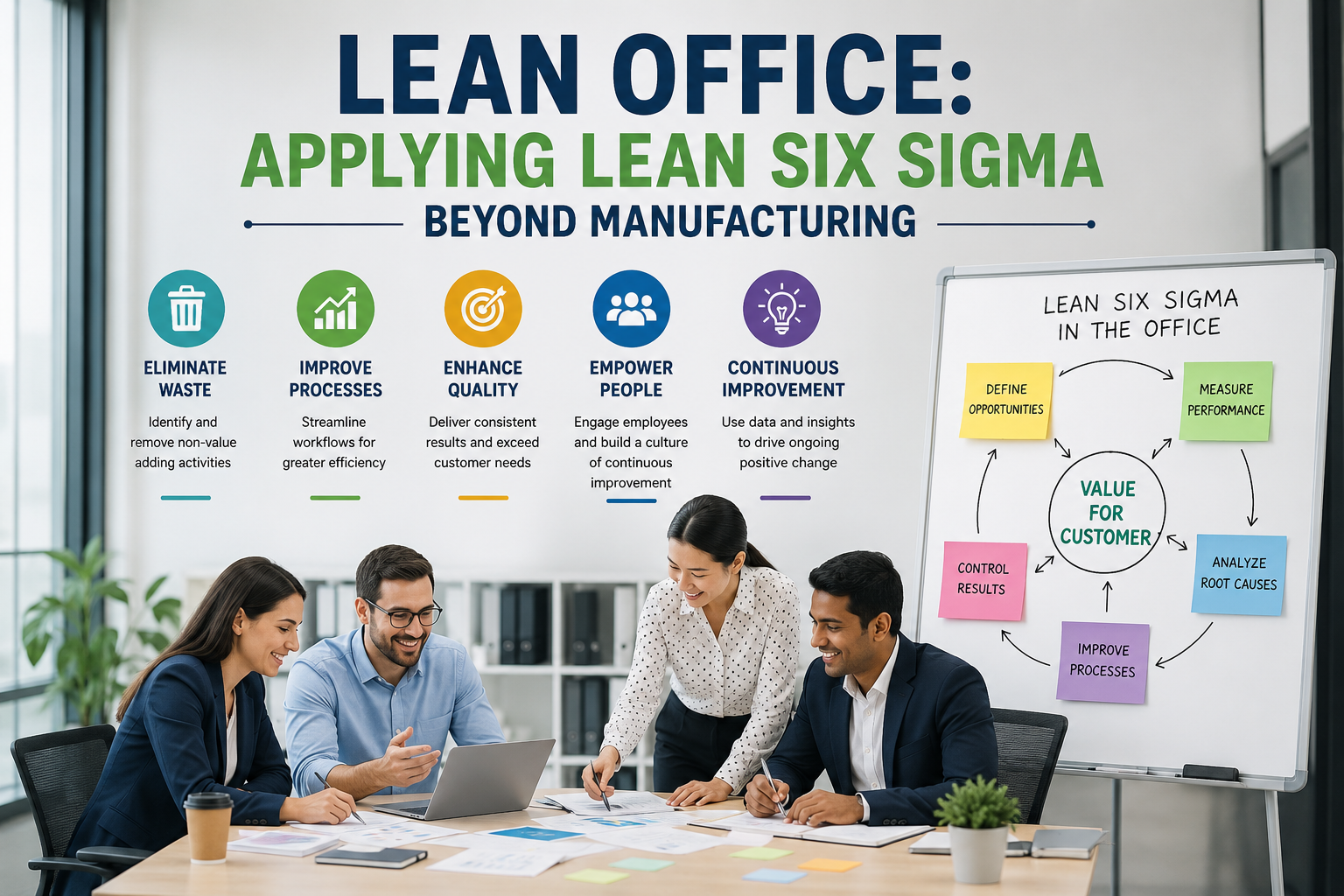

In the increasingly competitive business landscape of India, organizations are constantly seeking ways to improve their operational efficiency. While the principles of Lean Six Sigma have long been associated with manufacturing, these methodologies can also be effectively applied to administrative processes. In this blog post, we will explore the concept of a lean office and how it can revolutionize your office processes, enhance office efficiency, and lead to significant office process improvement.
Understanding Lean Six Sigma
Before delving into the application of Lean Six Sigma in an office environment, it's essential to understand what these methodologies entail. Lean focuses on eliminating waste and optimizing processes, while Six Sigma emphasizes reducing variability and improving quality. Together, they provide a robust framework for continuous improvement.
The Need for a Lean Office
As businesses evolve, so do their administrative processes. Many organizations in India struggle with inefficiencies that can lead to wasted time, resources, and ultimately, money. The need for a lean management office becomes paramount, especially in sectors such as IT, finance, and customer service, where administrative tasks can easily become bottlenecks.
Identifying Waste in Office Processes
To implement a lean office, the first step is identifying waste in current administrative processes. Common forms of waste in an office setting include:
Steps to Implement Lean Office Practices
Implementing a lean office requires a structured approach. Here’s a step-by-step guide to help you get started:
1. Define Your Objectives
Begin by defining clear objectives for your office process improvement initiatives. What specific problems are you trying to solve? Are you aiming to reduce turnaround times, minimize errors, or enhance customer satisfaction? Having defined goals helps in measuring success.
2. Map Your Processes
Document your current administrative processes using flowcharts or process mapping tools. This visualization will help identify inefficiencies and areas for improvement. Tools like SIPOC (Suppliers, Inputs, Process, Outputs, Customers) can be beneficial here.
3. Analyze the Data
Collect and analyze data related to your office processes. Look for patterns and bottlenecks that hinder efficiency. Use Six Sigma tools like Pareto charts or root cause analysis to pinpoint the main issues.
4. Implement Improvements
Once you have identified inefficiencies, develop and implement solutions. This could involve streamlining communication processes, automating repetitive tasks, or reorganizing team structures. The goal is to eliminate waste and enhance productivity.
5. Monitor and Adapt
After implementing changes, continuously monitor the results. Use key performance indicators (KPIs) to measure the effectiveness of your improvements. Be prepared to adapt your strategies based on feedback and performance data.
Benefits of a Lean Office
Adopting lean management principles in your office can yield numerous benefits, including:
Real-World Examples of Lean Office Implementation
Several organizations in India have successfully implemented lean office principles. For instance, a leading IT firm restructured its project approval process, reducing the average approval time from two weeks to just three days. Another financial services company adopted automation tools to streamline its document processing, which resulted in a 30% reduction in processing times.
Challenges in Implementing Lean Office Practices
While the benefits of a lean office are clear, organizations may face challenges during implementation. Common hurdles include:
Overcoming Challenges
To overcome these challenges, it's crucial to foster a culture of continuous improvement within the organization. Provide training and resources to employees, communicate the benefits of lean practices, and celebrate successes to build momentum.
FAQs
What is a lean office?
A lean office refers to the application of Lean Six Sigma principles to administrative processes, focusing on eliminating waste and improving efficiency.
How can I improve office efficiency?
Improving office efficiency can be achieved by mapping processes, identifying waste, implementing improvements, and continuously monitoring performance.
What are the key principles of Lean Six Sigma?
The key principles include defining customer value, identifying waste, creating flow, establishing pull, and continuously improving processes.
Can lean principles be applied in non-manufacturing sectors?
Yes, lean principles can be effectively applied in various sectors, including healthcare, finance, and IT, to enhance administrative processes.
Conclusion
Embracing a lean office approach can significantly enhance your organization's operational efficiency and productivity. By focusing on continuous improvement and eliminating waste in administrative processes, you can achieve remarkable results. Whether you’re in finance, IT, or any other sector, the principles of Lean Six Sigma can help transform your office into a streamlined, efficient environment.
Ready to take the first step towards a lean office? Start by mapping your processes today! For more tips and resources on office process improvement, subscribe to our newsletter or contact us for personalized guidance.