Latest Post



Quality Management Courses



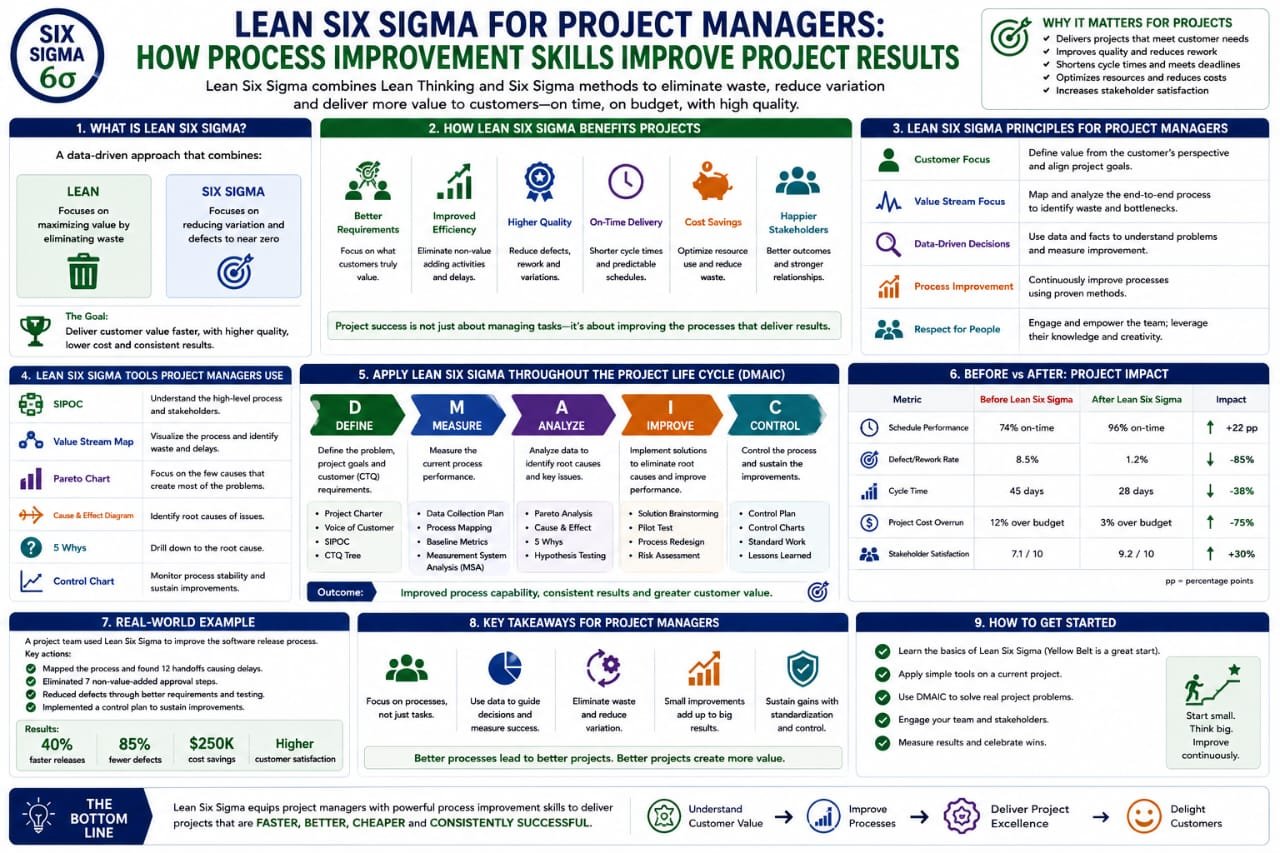

In the fast-paced world of project management, the ability to deliver projects on time, within budget, and with high quality is paramount. This is where Lean Six Sigma for project managers comes into play. By adopting the principles of Lean and Six Sigma, project managers can significantly enhance their efficiency and effectiveness. In this blog, we will explore how process improvement skills derived from Lean Six Sigma methodologies can lead to improved project results, especially in the Indian context.
Understanding Lean Six Sigma
Before diving into its application for project managers, it is essential to understand what Lean and Six Sigma entail. Lean focuses on eliminating waste and maximizing value for the customer, while Six Sigma aims to reduce variation and improve quality. Together, they create a powerful methodology for driving project process improvement.
The Principles of Lean Six Sigma
The core principles of Lean Six Sigma include:
Why Lean Six Sigma Matters for Project Managers
For project managers in India, embracing Lean Six Sigma is not just beneficial; it is often necessary in a highly competitive market. Here are several reasons why:
1. Enhanced Efficiency
By applying Lean principles, project managers can identify and eliminate wasteful activities in their projects. This leads to smoother workflows, reduced cycle times, and ultimately, enhanced productivity. For instance, a project manager can streamline communication processes by eliminating unnecessary meetings, thus saving time and resources.
2. Improved Quality
Six Sigma tools and techniques help project managers focus on quality improvement. By measuring and analyzing project outcomes, managers can identify defects and implement corrective actions. This focus on quality translates into fewer project revisions, reduced costs, and higher customer satisfaction.
3. Data-Driven Decision Making
Lean Six Sigma equips project managers with robust data analysis tools. By leveraging data, they can make informed decisions rather than relying on gut feelings. This analytical approach reduces risks and enhances the likelihood of project success.
4. Better Stakeholder Engagement
Implementing Lean Six Sigma fosters a culture of continuous improvement within project teams. By involving team members in process improvement initiatives, project managers can enhance stakeholder engagement and commitment, leading to better project outcomes.
Implementing Lean Six Sigma in Project Management
Now that we understand the benefits, how can project managers in India implement Lean Six Sigma methodologies in their projects? Here’s a step-by-step approach:
Step 1: Training and Certification
For project managers, obtaining a certification in Lean Six Sigma project management can provide the necessary skills and knowledge. Numerous institutes in India offer training programs that can help project managers become proficient in these methodologies.
Step 2: Define Project Goals
Start by defining clear project goals using the SMART criteria (Specific, Measurable, Achievable, Relevant, Time-bound). This ensures that everyone involved understands the project’s objectives and what success looks like.
Step 3: Map the Process
Use process mapping tools to visualize the current workflow. This helps identify areas of waste and inefficiency. Tools like value stream mapping can be particularly useful in this stage.
Step 4: Analyze Data
Collect relevant data throughout the project lifecycle. Analyze this data to identify trends, patterns, and areas for improvement. Employ statistical tools to support your analysis and validate your findings.
Step 5: Develop and Implement Solutions
Based on your analysis, develop solutions to address the identified issues. Engage your team in brainstorming sessions to ensure buy-in and gather diverse perspectives. Implement the solutions and monitor their effectiveness.
Step 6: Continuous Monitoring and Improvement
Lean Six Sigma is not a one-time effort. Establish mechanisms for continuous monitoring and improvement. Regularly review project performance and make necessary adjustments to processes to sustain gains over time.
Case Studies: Success Stories of Lean Six Sigma in Indian Projects
Several Indian organizations have successfully implemented Lean Six Sigma methodologies to enhance project outcomes. Here are a couple of examples:
1. Tata Consultancy Services (TCS)
TCS has utilized Lean Six Sigma to improve its software development processes. By reducing defects and cycle times, the company has significantly enhanced customer satisfaction and project delivery timelines.
2. Mahindra & Mahindra
Mahindra & Mahindra adopted Lean Six Sigma in its manufacturing processes, leading to substantial cost reductions and improved product quality. The implementation resulted in a 30% reduction in defects over two years.
FAQs on Lean Six Sigma for Project Managers
Q1: What is the difference between Lean and Six Sigma?
A1: Lean focuses on eliminating waste to enhance efficiency, while Six Sigma emphasizes reducing variability and improving quality. Together, they complement each other in process improvement initiatives.
Q2: How can I get certified in Lean Six Sigma?
A2: Numerous training institutes in India offer Lean Six Sigma certification programs. Look for accredited organizations that provide both online and offline training options to suit your schedule.
Q3: Can Lean Six Sigma be applied to non-manufacturing projects?
A3: Absolutely! Lean Six Sigma methodologies can be applied across various sectors, including services, healthcare, and IT, to improve processes and outcomes.
Q4: How long does it take to see results from Lean Six Sigma implementation?
A4: The timeline for seeing results varies based on the project and the extent of implementation. However, organizations often report improvements within a few months of applying Lean Six Sigma principles.
Conclusion
Incorporating Lean Six Sigma for project managers can lead to remarkable improvements in project delivery and outcomes. By focusing on process improvement, project managers can enhance efficiency, quality, and stakeholder engagement. Whether you're managing projects in IT, manufacturing, or services, the principles of Lean Six Sigma can guide you towards success.
Are you ready to elevate your project management skills with Lean Six Sigma? Start your journey today by enrolling in a certification program and transform your projects into success stories!
Call to Action: Explore our extensive range of Lean Six Sigma certification courses tailored for project managers in India. Equip yourself with the skills needed to drive process improvements and achieve remarkable project results!