
Latest Post



Quality Management Courses



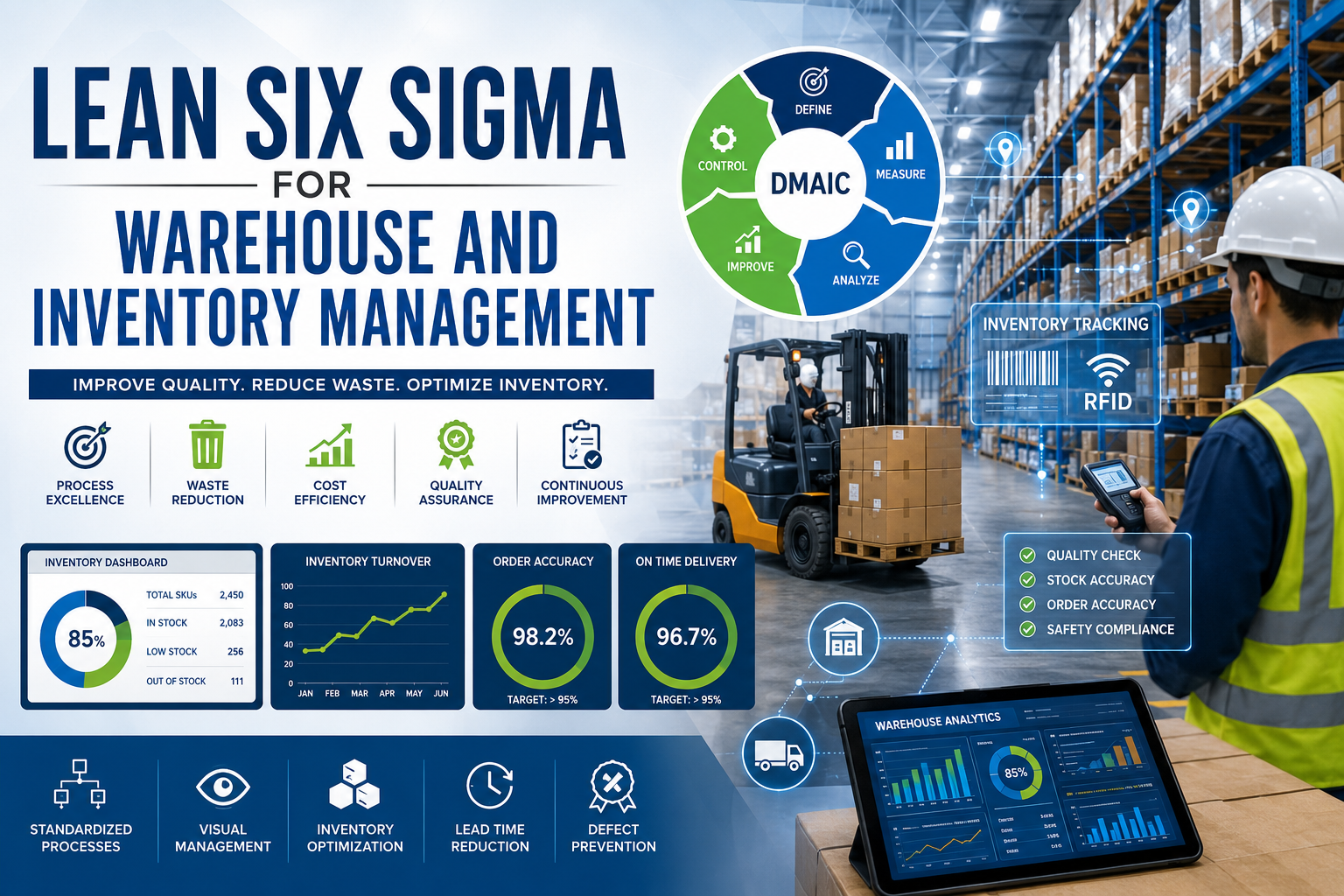

In today's competitive market, efficient warehouse and inventory management are crucial for businesses aiming to enhance productivity and reduce costs. Implementing Lean Six Sigma methodologies can revolutionize operations, leading to lean warehouse management and optimized inventory processes. This blog will delve into the principles of Lean Six Sigma, its application in warehouse management, and how it can benefit your business.
Understanding Lean Six Sigma
Lean Six Sigma is a powerful combination of two methodologies: Lean, which focuses on eliminating waste and improving flow, and Six Sigma, which emphasizes reducing variation and improving quality. Together, they provide a comprehensive approach to process improvement.
Principles of Lean
The Lean methodology is built on five core principles:
Principles of Six Sigma
Six Sigma operates on a set of statistical tools and techniques aimed at improving quality. The key principles include:
Benefits of Lean Six Sigma in Warehouse Management
Integrating Lean Six Sigma into your warehouse operations offers numerous benefits, including:
1. Enhanced Efficiency
By identifying and eliminating waste, Lean Six Sigma helps streamline operations. This leads to warehouse process improvement and ensures that resources are utilized effectively, reducing unnecessary costs.
2. Improved Accuracy
Implementing Six Sigma principles can significantly enhance inventory accuracy. By analyzing processes and addressing variations, businesses can maintain correct stock levels and minimize errors in order fulfillment.
3. Cost Reduction
With Lean Six Sigma, organizations can achieve substantial cost savings. By reducing waste and enhancing productivity, businesses can lower operational costs, ultimately impacting the bottom line positively.
4. Increased Customer Satisfaction
Efficient warehouse and inventory management lead to timely deliveries and improved service levels. Satisfied customers are more likely to return and recommend your business to others, enhancing your reputation in the market.
Implementing Lean Six Sigma in Warehouse and Inventory Management
To effectively implement Lean Six Sigma in your warehouse, consider the following steps:
1. Assess Current Processes
Begin by mapping out your current warehouse processes. Identify bottlenecks, redundancies, and areas of waste. This assessment is crucial for understanding the baseline performance of your operations.
2. Set Clear Objectives
Define specific goals you want to achieve through Lean Six Sigma. Whether it’s reducing lead times, improving order accuracy, or decreasing inventory holding costs, having clear objectives will guide your efforts.
3. Engage Employees
Successful implementation requires buy-in from all employees. Conduct training sessions to familiarize your team with Lean Six Sigma concepts and encourage them to participate in the improvement process actively.
4. Utilize Data Analytics
Data is a cornerstone of Lean Six Sigma. Use data analytics to monitor performance, identify trends, and measure the impact of changes. This will enable you to make informed decisions based on real-time insights.
5. Continuous Improvement
Lean Six Sigma is not a one-time initiative; it’s a continuous journey. Regularly review processes, gather feedback, and make necessary adjustments to sustain improvements and foster a culture of excellence.
Case Studies: Lean Six Sigma Success in Indian Warehouses
Example 1: A Leading FMCG Company
A major Fast-Moving Consumer Goods (FMCG) company in India implemented Lean Six Sigma in its distribution centers. By analyzing their processes, they identified key areas for improvement. After implementing changes, they reduced order processing time by 30% and improved inventory accuracy to 99.5%.
Example 2: An E-commerce Retailer
An Indian e-commerce retailer adopted Lean Six Sigma to enhance its warehouse operations. By streamlining their picking and packing processes, they achieved a 25% reduction in operational costs while improving customer satisfaction ratings significantly.
Challenges in Implementing Lean Six Sigma
While the benefits of Lean Six Sigma are evident, certain challenges may arise during implementation:
1. Resistance to Change
Employees may resist new processes or methodologies. It’s essential to communicate the benefits of Lean Six Sigma clearly and involve them in the transition.
2. Lack of Training
Without proper training, employees may struggle to understand and apply Lean Six Sigma principles correctly. Invest in comprehensive training programs to equip your team with the necessary skills.
3. Insufficient Leadership Support
Leadership support is crucial for successful implementation. Leaders should champion the initiative, allocate resources, and encourage a culture of continuous improvement.
FAQs About Lean Six Sigma in Warehouse Management
Q1: What is Lean Warehouse Management?
A1: Lean Warehouse Management focuses on eliminating waste and improving efficiency in warehouse operations, ensuring that resources are used effectively to meet customer demands.
Q2: How does Six Sigma apply to warehouse operations?
A2: Six Sigma applies statistical tools and techniques to identify and eliminate defects in warehouse processes, leading to improved quality and efficiency.
Q3: Can Lean Six Sigma help with inventory optimization?
A3: Yes, Lean Six Sigma methodologies can significantly enhance inventory optimization by reducing excess inventory levels, improving accuracy, and streamlining order fulfillment processes.
Q4: How long does it take to see results from Lean Six Sigma implementation?
A4: Results can vary depending on the complexity of processes and the commitment of the team, but many organizations begin to see improvements within a few months of implementing Lean Six Sigma practices.
Conclusion
Implementing Lean Six Sigma in warehouse and inventory management can drive significant improvements in efficiency, accuracy, and customer satisfaction. As businesses in India strive for operational excellence, adopting these methodologies can provide a competitive edge in the market. Start your Lean Six Sigma journey today and transform your warehouse operations for the better!
If you’re interested in learning more about Lean Six Sigma and how it can benefit your warehouse management, contact us for expert guidance and support!