
Latest Post



Quality Management Courses



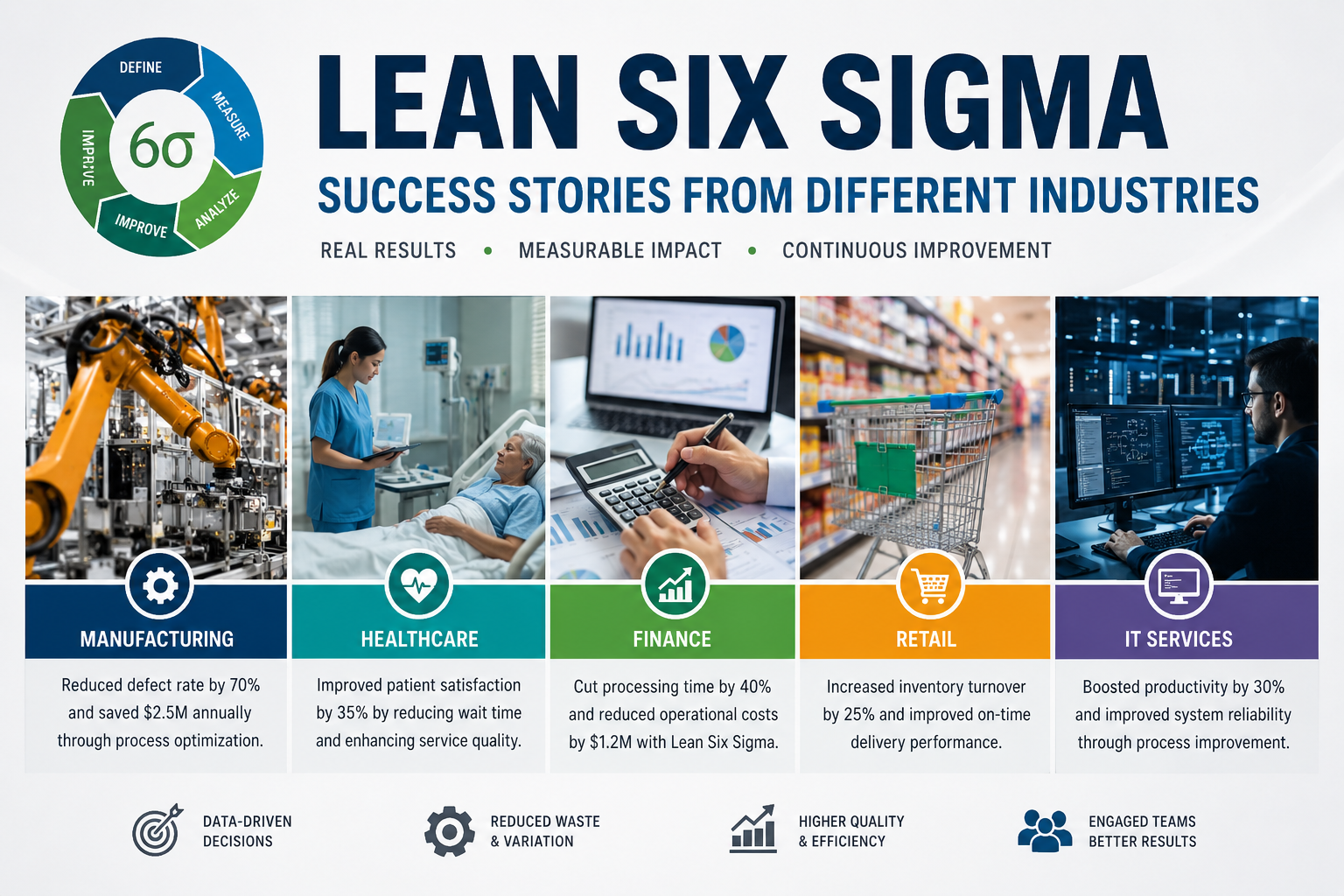

In the ever-evolving landscape of business, companies are constantly seeking innovative strategies to enhance efficiency, reduce waste, and improve quality. One such methodology that has gained immense popularity across various sectors is Lean Six Sigma. This approach combines the principles of Lean, which focuses on eliminating waste, with Six Sigma, which emphasizes reducing variability and improving quality. In this blog, we will delve into lean six sigma success stories from different industries, showcasing how organizations have transformed their operations and achieved remarkable results.
Understanding Lean Six Sigma
Before we explore the success stories, it’s essential to understand what Lean Six Sigma entails. This methodology is not just a set of tools; it’s a cultural shift that promotes continuous improvement. By systematically identifying and eliminating inefficiencies, businesses can streamline their processes, enhance customer satisfaction, and ultimately boost profitability.
The Lean Six Sigma Framework
Lean Six Sigma employs a structured approach known as DMAIC (Define, Measure, Analyze, Improve, Control). This framework provides a roadmap for organizations to identify problems, analyze data, implement solutions, and maintain improvements. The success stories we will discuss illustrate how diverse industries have effectively applied this framework to achieve significant gains.
Success Stories Across Industries
1. Manufacturing: General Electric (GE)
General Electric, a global leader in manufacturing, is often cited as a prime example of six sigma case studies. In the late 1990s, GE adopted Six Sigma to improve quality and reduce defects in its manufacturing processes. Through rigorous training and implementation of Six Sigma principles, GE managed to save over $12 billion in operational costs within just a few years.
The company focused on data-driven decision-making, which led to enhanced product quality and customer satisfaction. By embedding Six Sigma into its corporate culture, GE not only improved its bottom line but also positioned itself as an industry leader in quality management.
2. Healthcare: Virginia Mason Medical Center
In the healthcare sector, Virginia Mason Medical Center in Seattle is a shining example of business improvement examples achieved through Lean Six Sigma. Facing challenges related to patient wait times and treatment delays, the facility implemented Lean principles to streamline its processes.
By mapping out patient flow and identifying bottlenecks, the center significantly reduced wait times, increased patient satisfaction, and improved overall care quality. The results were astounding: patient satisfaction scores soared, and the facility saved millions in operational costs.
3. Banking: HSBC
HSBC, one of the world’s largest banking and financial services organizations, adopted Lean Six Sigma to enhance its operational efficiency. The bank faced challenges related to process inefficiencies and customer service delays. Through lean transformation, HSBC implemented Six Sigma methodologies to analyze customer feedback and improve service delivery.
The results were impressive. The bank achieved a 25% reduction in processing times for loan applications, leading to higher customer satisfaction and retention rates. By fostering a culture of continuous improvement, HSBC has maintained its competitive edge in the financial sector.
4. Retail: Walmart
Walmart, a giant in the retail industry, has long been recognized for its commitment to efficiency and cost reduction. The company employs Lean Six Sigma principles to optimize its supply chain management. By analyzing inventory levels and streamlining distribution processes, Walmart has successfully reduced waste and improved product availability.
This approach has not only enhanced customer satisfaction but has also contributed to significant cost savings. Walmart’s success serves as a prime example of how lean transformation can drive success in the highly competitive retail sector.
5. Information Technology: Dell
Dell Technologies has integrated Lean Six Sigma into its manufacturing and supply chain processes to enhance operational efficiency. Facing challenges related to product delivery times and inventory management, Dell utilized Six Sigma methodologies to analyze and improve its processes.
As a result, the company achieved a 40% reduction in product lead times and significantly improved customer satisfaction levels. Dell’s success story illustrates the potential of Lean Six Sigma in driving innovation and efficiency in the IT industry.
Key Takeaways from Lean Six Sigma Success Stories
The success stories from various industries highlight several key takeaways:
FAQs about Lean Six Sigma
1. What industries can benefit from Lean Six Sigma?
Lean Six Sigma can be applied across various industries, including manufacturing, healthcare, finance, retail, and information technology. Any sector looking to improve processes and enhance quality can benefit from this methodology.
2. How long does it take to see results from Lean Six Sigma?
The timeframe for seeing results can vary based on the complexity of the processes being addressed and the organization’s commitment to the methodology. Some organizations report improvements within a few months, while others may take longer to realize substantial changes.
3. Is Lean Six Sigma only for large organizations?
No, Lean Six Sigma is applicable to organizations of all sizes. Small and medium-sized enterprises can also leverage its principles to improve efficiency and quality.
4. What is the role of leadership in Lean Six Sigma implementation?
Leadership plays a vital role in the successful implementation of Lean Six Sigma. Leaders must champion the initiative, provide resources, and foster a culture of continuous improvement throughout the organization.
Conclusion
Lean Six Sigma has proven to be a transformative methodology for organizations across various industries. By focusing on quality improvement and operational efficiency, businesses can enhance customer satisfaction, reduce costs, and drive sustainable growth. The success stories highlighted in this blog serve as powerful examples of how Lean Six Sigma can lead to remarkable outcomes.
If your organization is looking to embark on a journey of continuous improvement, consider adopting Lean Six Sigma principles. With the right approach, your business could be the next success story!
Call to Action
Ready to transform your operations and achieve remarkable results? Contact us today to learn more about how Lean Six Sigma can benefit your organization. Let’s work together to craft your success story!